




KATHMANDU: Youths from the Gen-Z generation had called a peaceful protest on September 8, expressing frustration over what they described as the failure of political leadership to run the state in a good governance-oriented manner. The crackdown that followed on September 9 escalated into a more rebellious-style protest, ultimately leading to the fall of the government led by KP Sharma Oli.
However, in the elections triggered in the aftermath of the Gen-Z movement, candidates from almost all political parties are again seeking votes by projecting anti-establishment hopes and sweeping development promises.
Nepal’s Constitution clearly delineates the powers and responsibilities of federal, provincial and local governments. Yet candidates contesting for the House of Representatives are widely seen raising issues that fall under the jurisdiction of local and provincial governments, offering development pledges that critics say undermine the spirit of federalism.
Observers argue that such practices risk trapping the country in a cycle of “electoralism” rather than advancing democracy toward institutionalized good governance.
Top leaders echo local development rhetoric
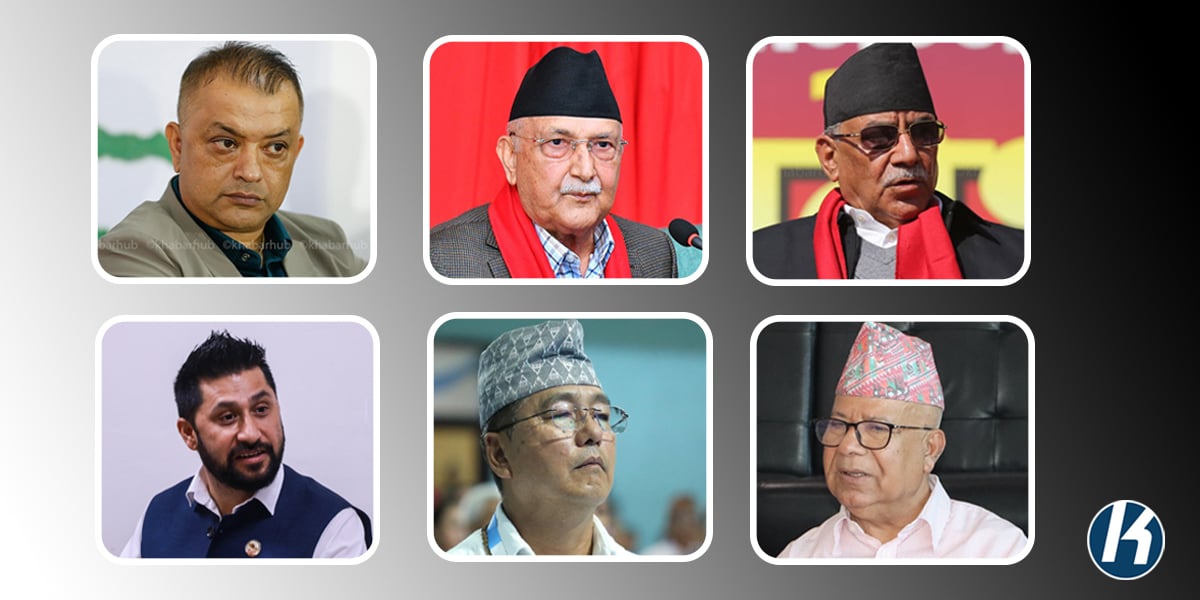
On Saturday, the Jhapa-5 committee of the CPN-UML made public 30 reasons to elect Oli. The list included issues ranging from national politics to matters that fall squarely within the domain of local authorities.
Among the commitments highlighted were the operation of Jhapa’s controversial business tower, embankment works along the Ratuwa, Mawa and Kamal rivers, replacement of dilapidated community school buildings with child-friendly infrastructure, and the arrangement of subject-specific teachers in local schools.
Similarly, Gagan Thapa, President of the Nepali Congress, who is contesting from Sarlahi-4, has projected himself as a potential prime ministerial candidate following the elections. In his campaign outreach, Thapa has emphasized both national and local issues, pledging to make Sarlahi-4 exemplary in terms of physical infrastructure, education and health. He has told voters that he would work based on expert recommendations for the area’s development.
Likewise, Pushpa Kamal Dahal, coordinator of Nepali Communist Party, contesting from Rukum East, has blended national political agendas with local development promises. Presenting Bharatpur as a model, he has vowed to transform Rukum East in a similar manner.
Beyond the top leaders, candidates across parties are raising local issues such as drinking water, roads, buildings, temples and river embankments in their campaign materials. Social media platforms are flooded with posters highlighting projects typically initiated and executed by local governments.
‘This is electoralism, not democracy’
Constitutional and administrative expert Kashi Raj Dahal said that the trend of House of Representatives candidates focusing on local issues is unlikely to produce meaningful national outcomes and instead reflects an unhealthy tilt toward “electoralism.”
“Our average voter has not yet developed advanced civic awareness. When voters themselves raise issues like roads and streetlights, candidates echo the same,” he said. “The purpose of electing a Member of Parliament is to legislate, formulate policies, form a government and hold it accountable. But in the past, we saw Parliament sessions fail to meet quorum because lawmakers were more interested in lobbying ministries and the planning commission for development projects than in lawmaking.”
Dahal argued that both weak voter education and limited civic awareness have shaped this dynamic, creating a mismatch between constitutional roles and campaign narratives.
“We should be telling voters that we are lawmakers — we draft laws and policies. Local governments address local problems, provincial governments handle provincial matters, and the federal government deals with national and pride projects,” he said. “But neither voters fully grasp this distinction nor do candidates present themselves accordingly.”
He added that even during the 2008 Constituent Assembly elections, candidates had sought votes by promising local infrastructure projects, despite the primary objective being constitution drafting. The current election, he noted, follows the Gen-Z movement and should have centered on commitments to good governance, legal reform and accountability.
“After the Gen-Z protests, the campaign should have focused on ensuring good governance, strengthening institutions and holding the government accountable through legislation. That kind of narrative has not taken root,” Dahal observed.
As campaigning intensifies, analysts warn that unless parties realign their promises with constitutional mandates, Nepal risks perpetuating a pattern where elections revolve around short-term populist assurances rather than structural democratic reform.




Comment