




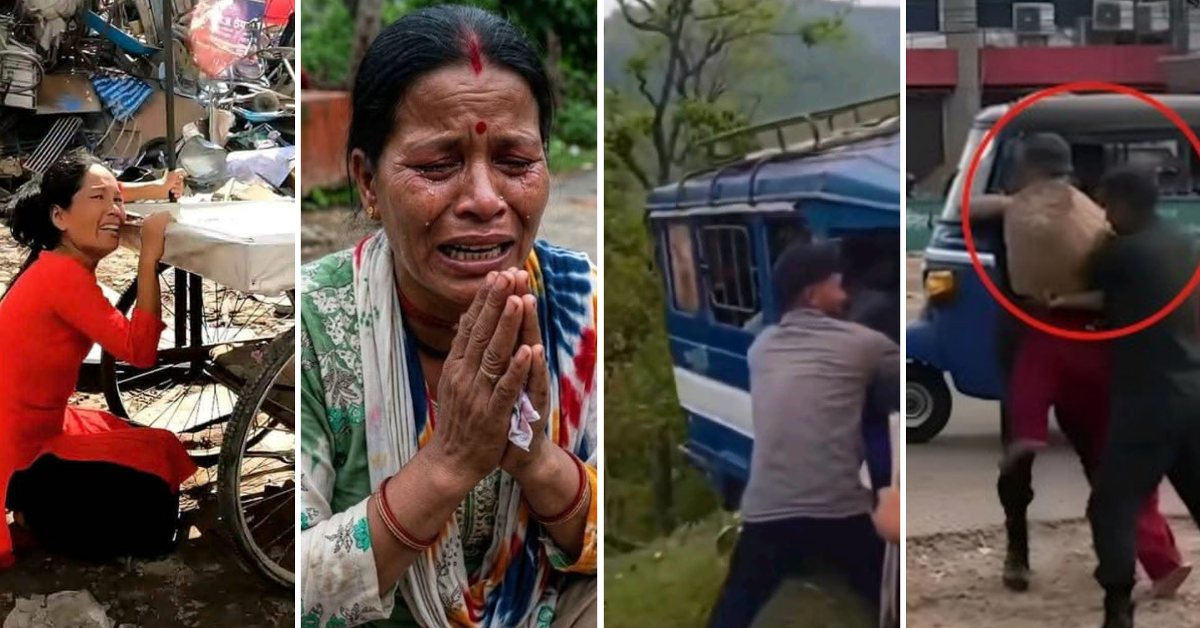
KATHMANDU: A series of recent incidents involving street vendors, landless settlers, students and low-income families has reignited debate over how the state treats Nepal’s most vulnerable citizens.
From the destruction of a woman’s mobile shop in Kailali to the demolition of informal settlements in Kathmandu, critics argue that authorities are increasingly enforcing rules without adequately considering the human consequences for those whose livelihoods depend on informal means of survival.
The incidents have triggered widespread public criticism and renewed questions about whether government actions are addressing poverty—or merely pushing the poor further to the margins.
A woman’s livelihood thrown off a cliff
The latest controversy emerged in Kailali after a video showing an auto-rickshaw used as a roadside shop being pushed off a cliff went viral on social media.
The vehicle belonged to 44-year-old Dhanadevi Dhami of Godawari Municipality-4, Baspani, who had been using the auto-rickshaw to run a small retail business along the Gaimare Danda roadside.
According to the Division Forest Office in Dhangadhi, the vehicle was removed during an anti-encroachment campaign in which 47 structures were cleared from forest land. The office said the auto-rickshaw accidentally fell down the slope while officials were attempting to move it because it could not be driven away.
Officials maintained that repeated requests had been made to remove the structure before enforcement action was taken.
Dhami, however, says the government destroyed her only source of income without following due process. With the auto-rickshaw gone, she says her family’s primary means of survival has been wiped out.
Landless settlers still waiting for solutions
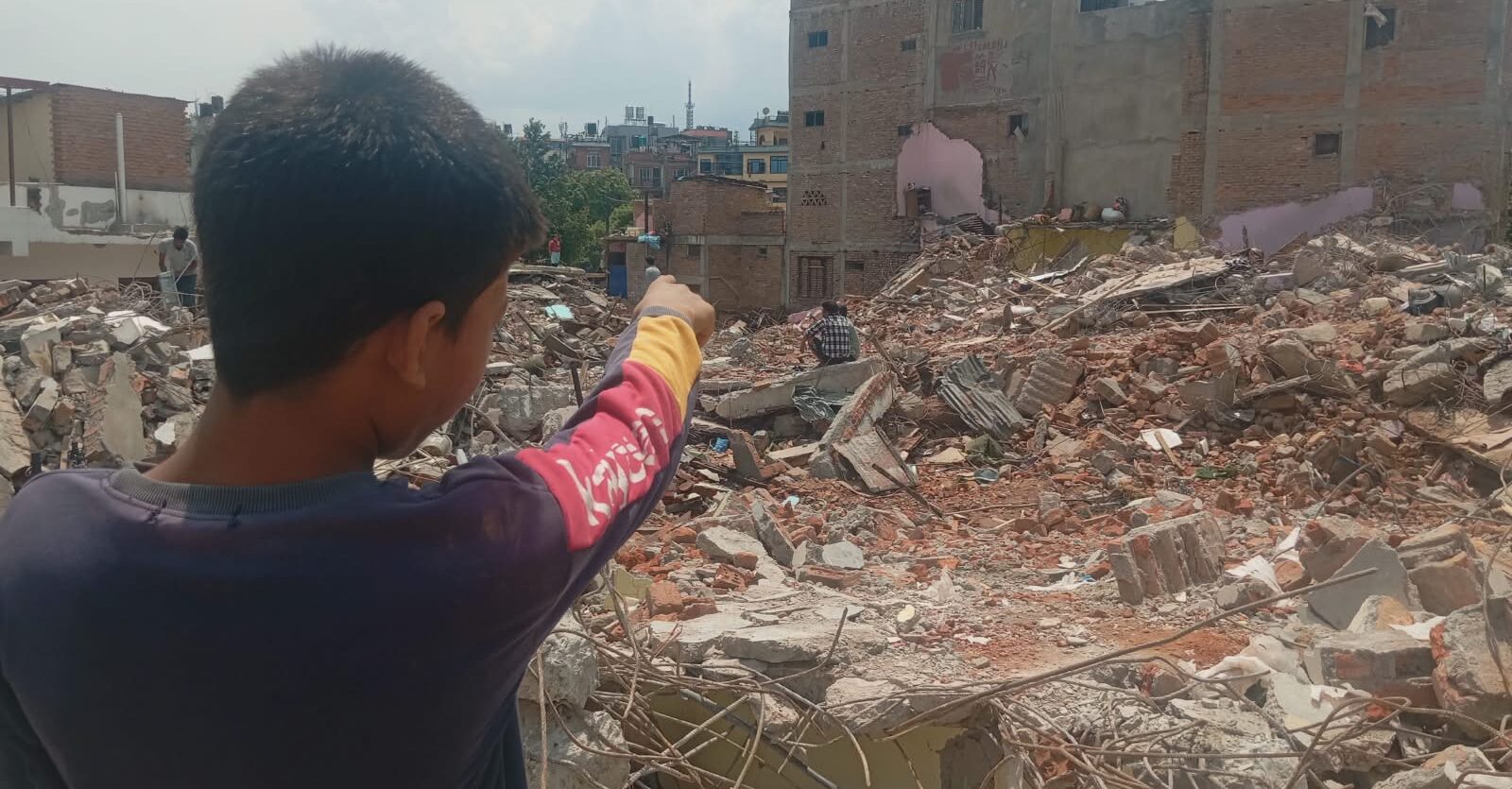
Questions have also been raised over the government’s handling of landless settlements in Kathmandu.
On April 23, authorities launched a major eviction campaign in the Thapathali settlement, saying genuine landless families would be identified and managed separately from illegal occupants. Residents were asked to vacate the area with assurances that alternative arrangements would be made within weeks.
Police and security personnel were deployed during the operation, and bulldozers were used to clear structures in several parts of the capital.
While some residents left voluntarily, many families who were relocated to holding centres say they are now living in difficult conditions. Reports from the centres indicate inadequate sanitation, limited access to healthcare and poor living arrangements for children, elderly people and new mothers.
Nearly two months after the eviction campaign, concerns persist that authorities have yet to complete the identification and rehabilitation process promised to displaced families.
Students lose phones worth millions
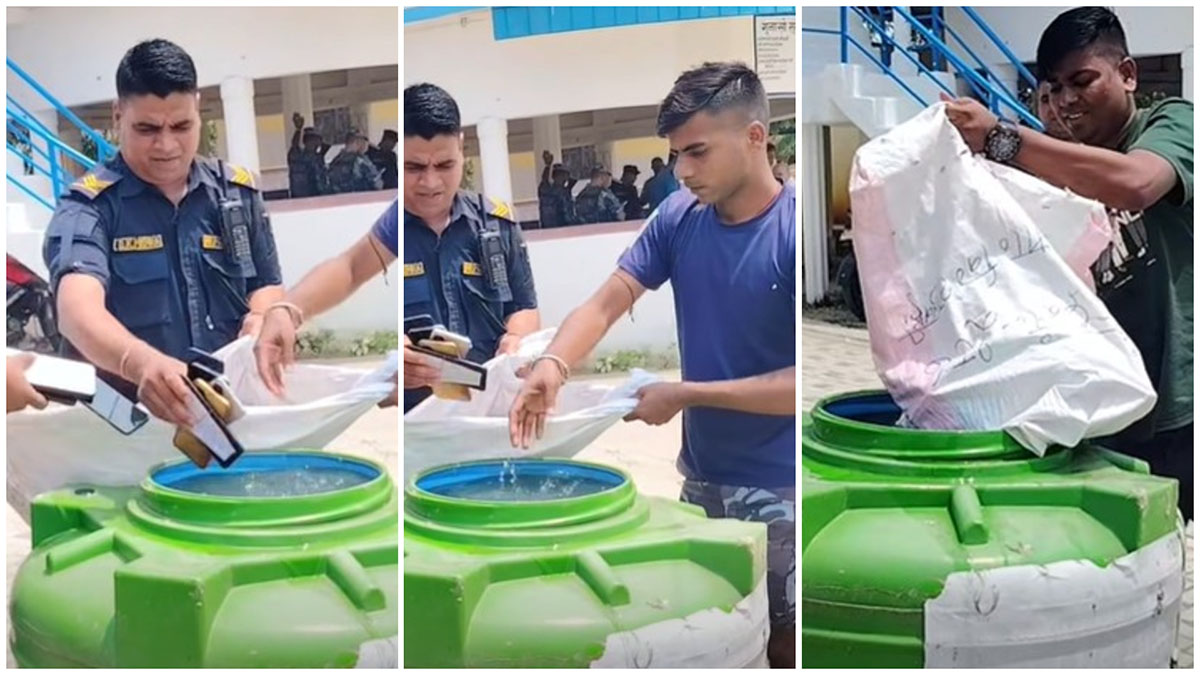
Another controversial incident occurred in Siraha, where confiscated mobile phones belonging to students were destroyed by district authorities.
The devices had been seized during Secondary Education Examination (SEE) and Grade 11 and 12 examinations to prevent cheating and maintain examination integrity.
Authorities submerged nearly 500 mobile phones and smartwatches in water before destroying them completely, claiming the action was necessary to prevent future misuse.
The collection reportedly included seven iPhones, 489 Android phones and five smartwatches, with an estimated value exceeding Rs 10 million.
The move drew criticism from parents and student groups, who argued that the devices contained important personal documents, family photographs, videos and contact information that were lost permanently.
Student organizations have since demanded compensation, accountability and justice for affected students.
Street vendor’s fruit scattered on the road
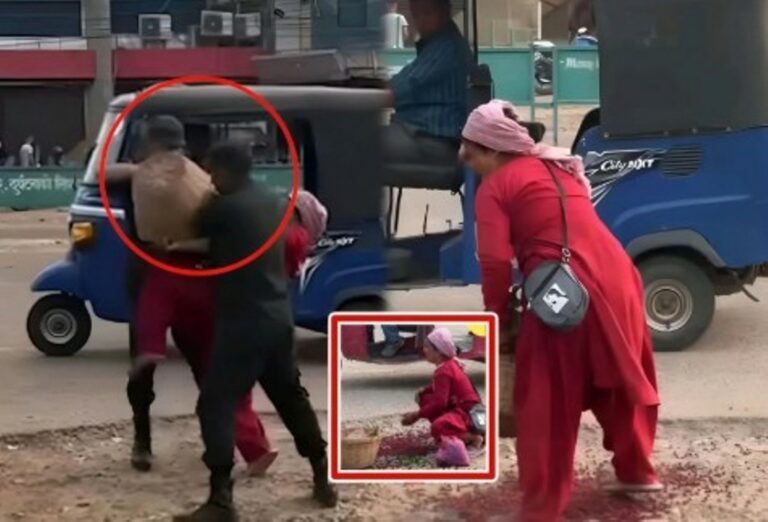
A similar public backlash followed an incident in Surkhet involving a woman selling kafal, a seasonal wild fruit.
A video circulated online showed municipal police throwing away the fruit being sold by 42-year-old Dhamila Chaulagain, originally from Kalikot and currently residing in Birendranagar.
Chaulagain had been selling kafal near the entrance of the Birendranagar bus park when municipal officers intervened. Rather than asking her to relocate, officers allegedly seized and scattered the fruit on the ground.
After the video attracted widespread criticism, Birendranagar Municipality later provided Rs 10,000 in compensation.
The incident occurred amid broader efforts by local governments to remove informal roadside businesses and regulate footpath trade.
Critics say poverty is being criminalized
The incidents have prompted criticism from politicians, civil society members and social commentators.
CPN-UML leader Usha Kiran Timilsina questioned the rationale behind actions that target the livelihoods of struggling citizens.
“People need to understand why someone relies on an old auto-rickshaw to survive. Why are authorities destroying phones, overturning vehicles and taking such actions against ordinary citizens?” she wrote on social media.
Similarly, Rastriya Swatantra Party leader Rajiv Khatri called for action against those responsible for the destruction of the auto-rickshaw in Kailali, arguing that no authority should arbitrarily damage private property.
Many observers have linked recent actions to a broader trend of aggressive enforcement campaigns by both federal and local governments aimed at regulating public spaces, removing informal settlements and controlling street trade.
Sociologist says poverty reflects state failure
Sociologist Sabita Prasai believes the recent incidents highlight deeper structural inequalities within Nepali society.
Speaking to Khabarhub, she argued that street vending and informal settlements are often consequences of unemployment and economic hardship rather than deliberate violations of the law.
“The government itself is creating divisions between the rich and the poor,” she said. “These people are trying to survive because the state has failed to provide adequate employment opportunities.”
Prasai described the forced displacement of vulnerable communities without proper alternatives as a form of structural violence.
She acknowledged that cities must be managed and public spaces regulated, but argued that enforcement should be accompanied by proportional solutions, including alternative housing, livelihood support and social protection measures.
“The issue is not whether cities should be organized,” she said. “The issue is whether marginalized communities are being given fair opportunities before enforcement measures are imposed.”
As debates continue, the recurring question remains whether current policies are addressing the root causes of poverty or merely shifting its burden onto those least able to bear it.






Comment