




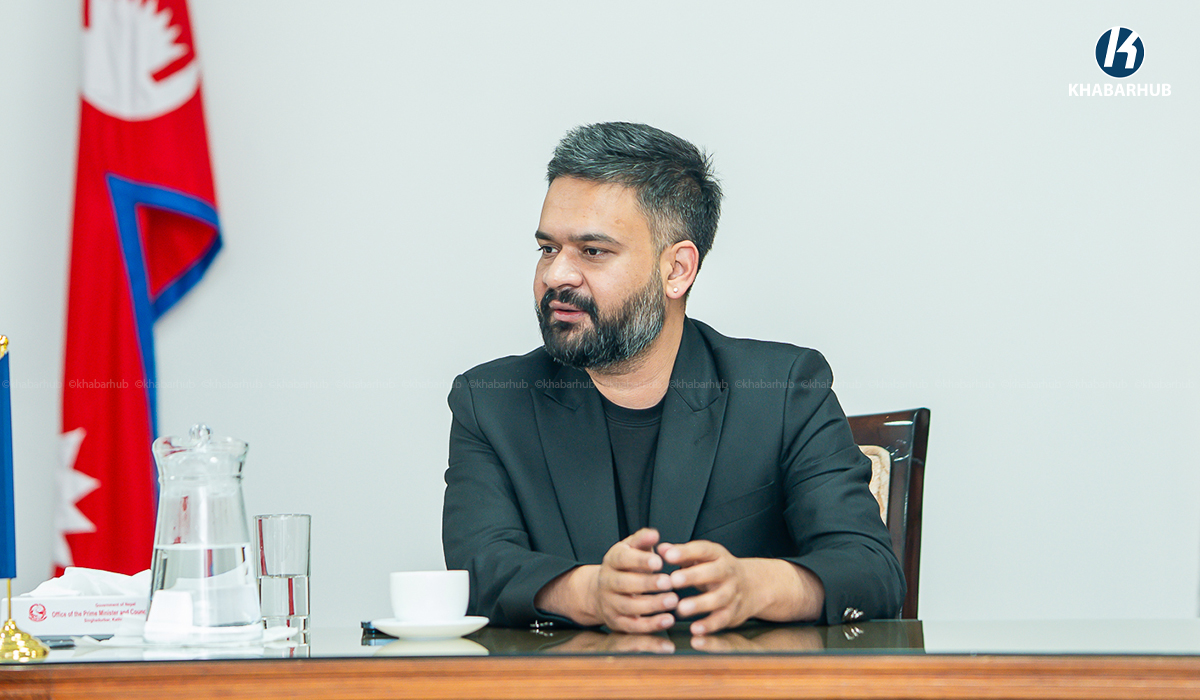
KATHMANDU: The government led by Prime Minister Balen Shah has prepared a draft of a ‘national commitment’ document based on the manifestos, pledges, and commitment papers of six national parties represented in Parliament.
The Office of the Prime Minister and Council of Ministers has sought feedback and suggestions from the concerned political parties on the draft by April 23.
According to the Prime Minister’s Office, the draft has been prepared on the basis of the manifestos and commitment documents of six political parties that secured national recognition in the election held on March 5, 2026.
The document forms the third point of the government’s 100-point governance reform agenda announced on March 26 following the formation of the new government.
The government stated that the commitment will be linked with policies, programmes, budgets, and reform agendas for the fiscal year 2026/27 and the coming years.
Implementation of the commitments will be incorporated into the annual programmes and budgets of all ministries and agencies, while monitoring will be carried out by the Development Management Division under the Prime Minister’s Office.
Key commitments
Economic stability and reform
The government aims to utilize the youth demographic dividend to achieve an average economic growth rate of 7 percent within five years. It has also set targets of raising per capita income to 3,000 US dollars and expanding the country’s gross domestic product to 100 billion dollars.
The private sector will be promoted as the main engine for employment generation, production, and investment. The government has also pledged to end rent-seeking practices, policy manipulation, and cartelization to create an industry-friendly environment.
It has also proposed a legal guarantee to keep tax rates stable for 10 years and to simplify industrial registration and renewal processes through digital systems.
Measures to encourage production-oriented foreign direct investment and a plan to reduce the multidimensional poverty rate to 10 percent within five years have also been included.
Agriculture and self-reliance
The draft highlights reforms in trade agreements with India and customs procedures to support import substitution.
Other measures include introducing farmer credit cards, crop insurance, concessional loans, and a contribution-based farmer pension scheme. The government also plans to expand irrigation to an additional 300,000 hectares of land within five years.
Promotion of indigenous seeds, organic farming practices, and high-value cash crops has also been prioritized.
Tourism and civil aviation
The government aims to double tourist spending within five years and plans to observe 2027 as the National Wellness Year.
It also proposes the development of major religious and cultural tourism centers including Pashupatinath Temple, Lumbini, Muktinath Temple, and Janaki Temple.
The draft also emphasizes operating the Pokhara International Airport and Gautam Buddha International Airport at full capacity and expanding direct international flights from major global cities.
Energy, infrastructure, and employment
The government has set a target of generating 30,000 megawatts of electricity within the next decade, prioritizing large hydropower projects such as the Budhi Gandaki Hydropower Project and the Dudhkoshi Hydropower Project.
Energy trade with India and Bangladesh will also be expanded.
The plan includes creating 1.5 million jobs within five years and prioritizing remote work, digital employment, and skill development.
Good governance and administrative reform
The draft includes provisions for investigating the assets of public officials, introducing whistleblower protection laws, and enacting legislation to address conflicts of interest.
The number of federal ministries will be maintained at 17, while the Prime Minister’s Office will be developed into a central monitoring hub for large national projects.
The government also plans to recruit 25 percent new and capable personnel into public service within five years and gradually eliminate paper-based administrative processes by introducing time-card systems.
Social justice and diaspora engagement
The draft mentions a formal apology for historical injustices and emphasizes proportional representation of Dalits, women, Madhesis, indigenous communities, and minorities in state mechanisms.
It also proposes a policy allowing Non-Resident Nepalis to retain lifelong affiliation with Nepal and plans to issue diaspora bonds to attract investment in infrastructure.
Environment and disaster management
The government plans to grant additional authority to the Chure Conservation Authority and strengthen international advocacy for climate justice.
It also aims to improve disaster risk reduction through early warning systems and the use of digital technologies.
Although the draft incorporates elements from the manifestos of major political parties, the government has presented it as a “national consensus document” and stated that it will be directly reflected in upcoming policy programmes and budgets.





Comment