




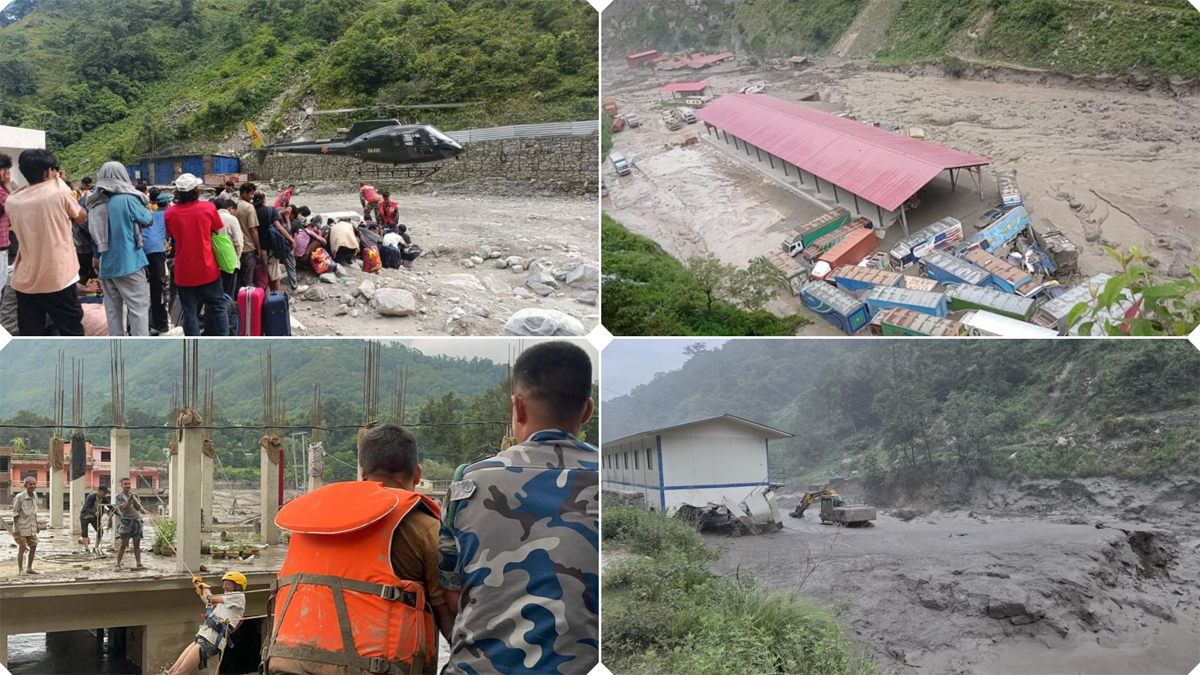
KATHMANDU: Authorities are collecting DNA samples from relatives of victims across the country to scientifically identify those who died or went missing in the Bhote Koshi river floods.
The process aims to facilitate the return of remains to the families of the victims.
Central Police Spokesperson Abinarayan Kafle stated that relatives can provide blood samples at their respective district police offices.
In the Kathmandu Valley, samples are collected at the Nepal Police Hospital, while in other districts, health workers at district hospitals coordinate the collection and send the samples to the central forensic laboratory. So far, samples have been collected from 37 districts.
According to police data, a total of 3,023 samples have been collected, including 1,286 from the recovered remains and 1,737 from the relatives of the deceased and missing.
These samples are currently being tested at the Nepal Police Forensic Laboratory and the National Forensic Science Laboratory.
The identification process involves extracting DNA from the teeth or bones of the deceased. In cases where bodies are not intact, other parts of the body are used for sampling.
Fingerprints are also being collected where possible to cross-reference with official government records. For DNA matching, parents, children, and siblings are given priority.
Relatives are required to present identification documents such as citizenship cards, national identity cards, or driving licenses. For children, a birth certificate or school ID is mandatory.
For relatives residing abroad, samples must be processed through official forensic laboratories in their respective countries using ‘autosomal STR profiling’ before being submitted.





Comment