




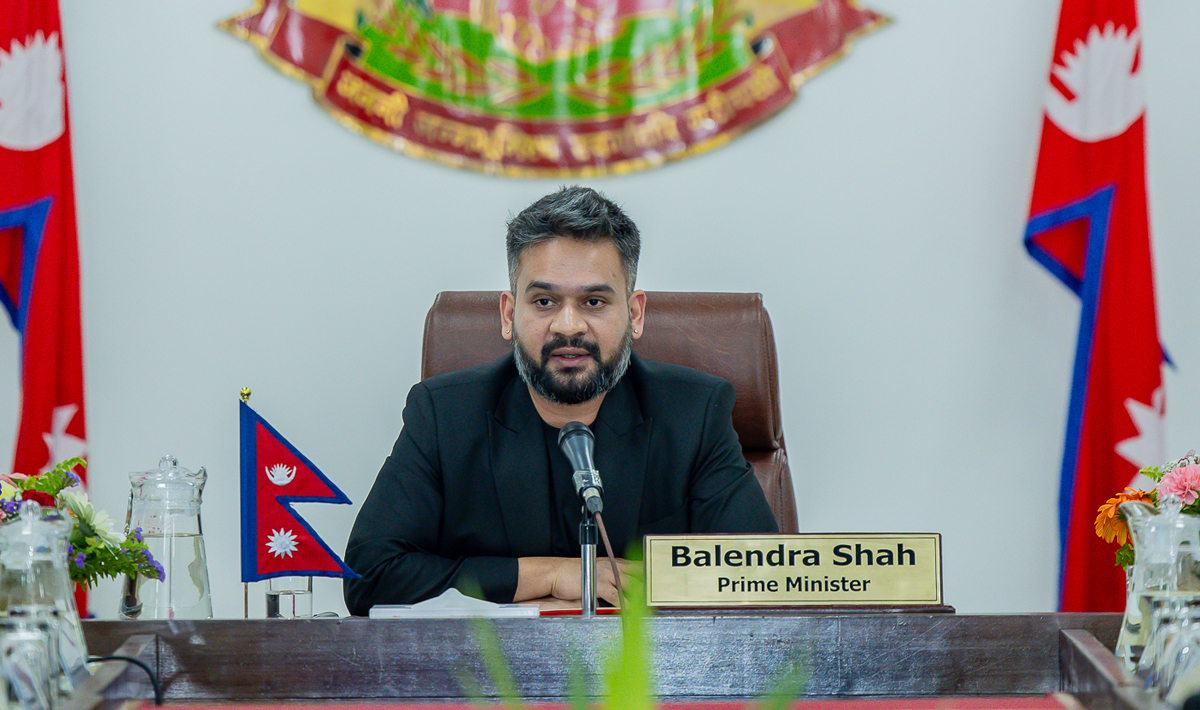
KATHMANDU: Prime Minister Balen Shah’s government has completed its first 100 days in office, marking the milestone with a mix of ambitious governance reforms and growing debate over its governing style and adherence to established state procedures.
Formed with a near two-thirds majority following the March 5 elections, the government began its tenure by endorsing a 100-point governance reform agenda, promising to strengthen good governance and establish a new administrative culture.
During its first 100 days, the government introduced a series of measures, including revoking hundreds of political appointments through an ordinance, reducing the number of ministries, holding joint meetings with foreign ambassadors, shutting down betting websites, abolishing party-affiliated organizations in universities and trade unions in the civil service, and forming a high-level asset investigation committee.
While several initiatives have been backed by new legislation, others have been implemented through executive decisions, prompting debate over whether the government is establishing new governance standards or departing from established constitutional and administrative practices.
Prime minister’s working style under scrutiny
Prime Minister Shah’s leadership style has been the subject of public discussion since taking office.
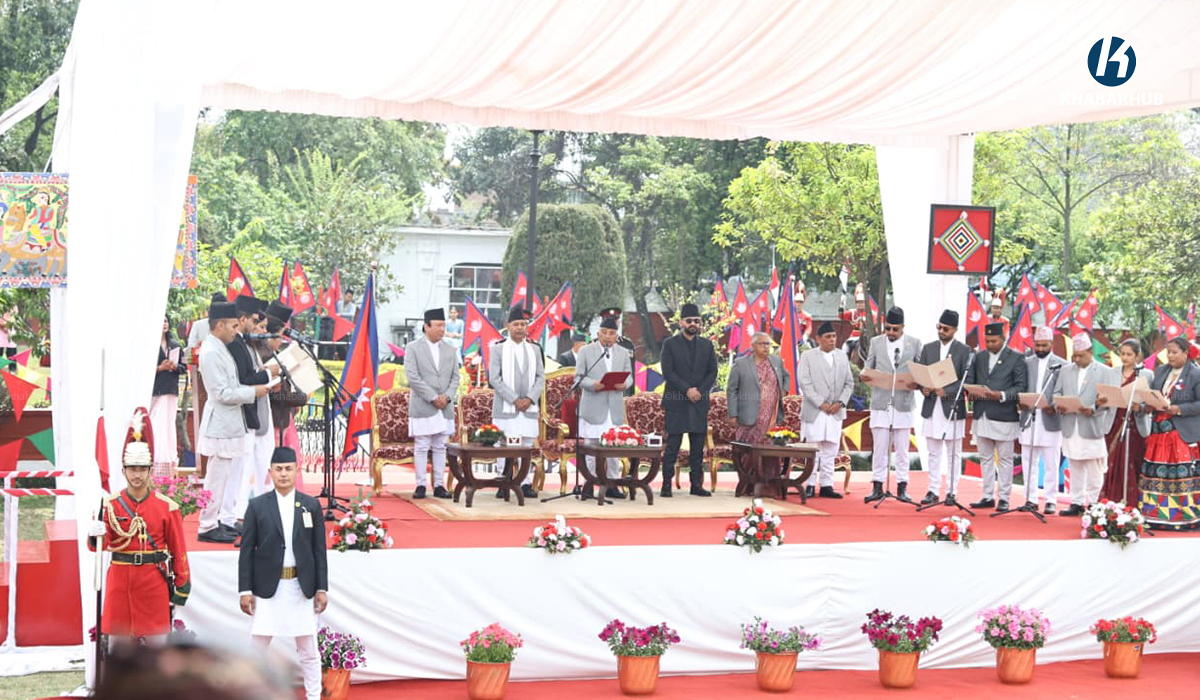
During his swearing-in ceremony, Shah took the oath only after Hindu and Buddhist religious chants were recited—a departure from previous political practice.
His approach also drew criticism during the presentation of the government’s annual policies and programmes, when he did not respond to questions raised by lawmakers in Parliament, breaking with a long-standing parliamentary convention.
The government’s review of its first 100 days also differed from past practice. Shah did not attend the event, and most cabinet ministers were absent. Instead, government Press Adviser Deepa Dahal moderated the programme, while Chief Secretary Suman Raj Aryal played no visible role.
Questions have also been raised over the involvement of individuals without formal constitutional roles in government affairs.
Reports that the prime minister’s advisers met officials from the Commission for the Investigation of Abuse of Authority (CIAA) at the Prime Minister’s Office before the anti-graft body filed a corruption case related to a passport procurement contract sparked debate over executive influence. Although the issue generated widespread discussion, neither the CIAA nor the government has publicly clarified the matter in detail.
Similarly, when Chief Secretary Aryal retired on July 10, he was formally presented with a letter of appreciation by the prime minister’s political adviser Asim Shah rather than the prime minister himself, a move that departed from previous administrative practice.
More recently, after heavy rainfall inundated a temporary holding centre for displaced squatters in Kirtipur, criticism emerged over the absence of cabinet ministers at the site. Instead, a member of the prime minister’s informal team was seen coordinating activities and interacting with the media, raising further questions over the role of unofficial advisers in government operations.
Former bureaucrats divided

Former senior civil servants have offered differing assessments of the government’s first 100 days.
Former Chief Secretary Krishna Hari Baskota said the government should be given time to demonstrate the results of its reforms.
“The government came to power with a strong public mandate, and governments with such mandates often introduce new approaches,” Baskota said. “Its performance should ultimately be judged by its results.”
However, he noted that given the government’s comfortable parliamentary majority, institutional reforms should ideally be implemented through legislation to avoid questions over their legal basis.
Former Secretary Gopi Nath Mainali acknowledged the government’s efforts to improve governance and public service delivery but expressed concern that some recent decisions suggest a lack of confidence in existing state institutions.
“The government has taken important steps in promoting good governance and improving service delivery,” Mainali said. “At the same time, some appointments and decisions create the impression that it does not fully trust established state mechanisms.”
Mainali warned that while introducing new administrative values is positive, weakening long-established institutional norms could make it more difficult to implement government policies effectively.
He said the government would likely achieve better results by strengthening and mobilizing existing state institutions rather than bypassing them.






Comment