




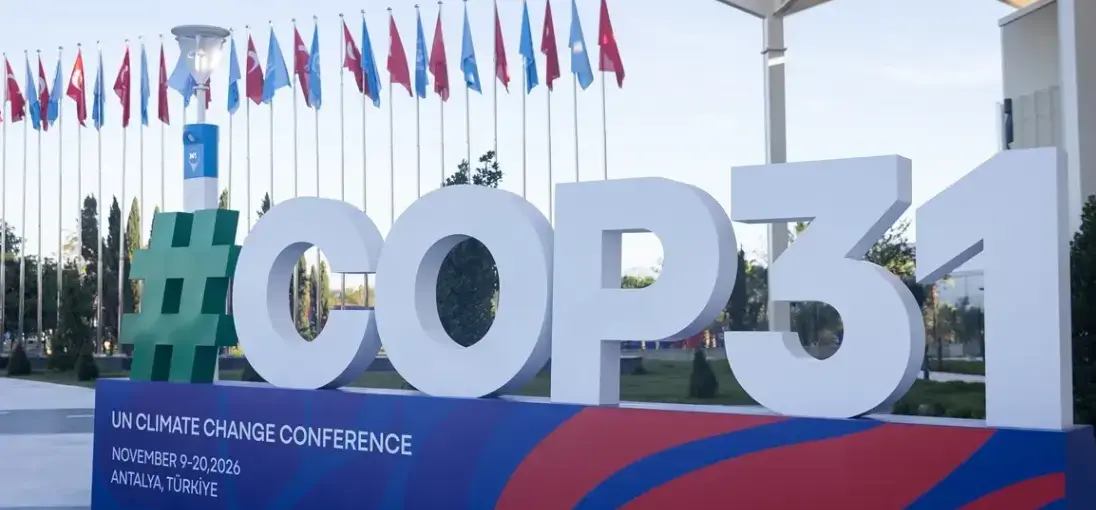
ANTALYA (TÜRKİYE): Senior officials at the 31st United Nations Climate Change Conference (COP31) have called for effective implementation of global climate commitments, accelerated expansion of clean energy, improved access to climate finance and stronger disaster resilience.
Addressing a high-level session of heads of state and government, UN Climate Change Executive Secretary Simon Stiell, COP31 President and Türkiye’s Minister of Environment, Urbanization and Climate Change Murat Kurum, and COP31 Negotiation Chair Chris Bowen underscored that climate change has emerged as one of the most pressing global challenges, requiring stronger and more effective international cooperation.
Executive Secretary Stiell emphasized that climate action must be linked to national security, economic stability and people’s livelihoods. He also called for increased support to developing countries that are particularly vulnerable to climate impacts. He noted that international cooperation had helped lower projections of global temperature rise from more than 4 degrees Celsius to around 2.6 degrees Celsius.
He said COP31 should focus on implementing national climate targets, accelerating the electrification of economies, increasing financial support for climate adaptation and improving developing countries’ access to climate finance.
COP31 President Kurum said climate change was closely connected to energy, industry, agriculture, economic development and national security. Referring to the global average temperature exceeding 1.5 degrees Celsius above pre-industrial levels in 2024, he cited floods in Nepal and Pakistan, along with rising sea levels threatening Pacific island nations, as clear evidence of the growing severity of the climate crisis.
He stressed the importance of aligning national climate targets with budgets and investment plans, simplifying access to climate finance and making disaster resilience a priority in national development policies. He also highlighted Türkiye’s target of increasing electricity’s share in final energy consumption to 35 percent by 2035.
Negotiation Chair Bowen said the world was simultaneously confronting energy security challenges, armed conflicts and the climate crisis. He warned that every additional fraction of a degree in global warming would have consequences for human lives, economies and the environment, underscoring the urgency of collective action.
Noting that global investment in clean energy reached USD 2.2 trillion last year, twice the amount invested in fossil fuels, Bowen called for further acceleration of the clean energy transition.
He also urged greater investment in climate adaptation and resilience in vulnerable countries, emphasizing the need to make climate finance faster, simpler and fairer. He called for translating national climate plans into practical and implementable projects while addressing inequalities in access to climate finance.
All three speakers highlighted the importance of multilateral cooperation, adequate financial resources and effective implementation of commitments, stressing that COP31 must deliver tangible outcomes in addressing the global climate crisis.





Comment