





KATHMANDU: Economic Digest presents a brief yet comprehensive roundup of major business developments in Nepal, delivered in clear and accessible summaries.
The developments highlighted in the report reveal a broader picture of Nepal’s ongoing struggle to balance economic modernization with institutional reliability and regional inclusion. On one hand, the expansion of digital financial services, hydropower investment, rooftop solar projects, entrepreneurship programs, and wellness tourism reflects a growing orientation toward innovation, renewable energy, and private-sector-led growth.
The completion of financial closure for the Dudhkhola Hydropower Project and the launch of margin trading indicate increasing sophistication in both infrastructure financing and capital markets. On the other hand, the severe impact of government system outages on vehicle owners in Ilam exposes the fragility of public digital infrastructure and raises concerns about accountability when technical failures impose financial penalties on citizens.
Investments in remote healthcare facilities and agricultural cold storage show efforts to reduce geographic inequality and strengthen rural productivity, while the rise in Kailash tourism through Rasuwagadhi highlights the economic importance of cross-border connectivity. Overall, the report suggests that Nepal is making visible progress in energy, tourism, finance, and local development, but the benefits of these advances will depend on whether governance systems become more resilient, citizen-centered, and capable of delivering services consistently across both urban and remote regions.
NEPSE falls 9.04 points as turnover reaches Rs 3.67 billion
The Nepal Stock Exchange (NEPSE) opened the week in negative territory, slipping by 9.04 points, or 0.34 percent, to close at 2,641.05 on Monday. The sensitive index also declined by 2.20 points to 461.36. A total of 10.96 million shares of 352 listed companies changed hands through 53,524 transactions, producing a turnover of Rs 3.674 billion. Share prices of 82 companies advanced, while 180 declined and 14 remained unchanged. Corporate Development Bank recorded the highest gain of 8.47 percent, and Solu Hydropower topped the turnover chart with transactions worth Rs 463.7 million.
Gold slips to Rs 301,500 as silver edges higher
Gold prices fell slightly in the domestic market on Monday, while silver prices increased. According to the Federation of Nepal Gold and Silver Dealers’ Association, gold declined by Rs 200 per tola to Rs 301,500, down from Rs 301,700 on Sunday. Silver, however, rose by Rs 25 per tola to reach Rs 4,670.
Government forms task force to examine Biratnagar Jute Mill revival
The government has created a task force of experts to study the financial, technical, and legal condition of the Biratnagar Jute Mill and recommend possible options for reviving its operations. The decision was taken at a meeting of secretaries held at the Office of the Prime Minister and Council of Ministers. The task force will be coordinated by the joint secretary responsible for public enterprises at the Ministry of Industry, Commerce and Supplies. It will assess the mill’s infrastructure, machinery, assets, liabilities, and previous studies and government decisions, and submit a report with revival strategies within one month.
Finance Minister meets representatives of 20 multinational firms
Finance Minister Swarnim Wagle has begun high-level consultations with representatives of 20 major multinational companies operating in Nepal as part of efforts to improve implementation of the fiscal year 2026/27 budget. The discussions are focused on budget-related incentives, operational difficulties, investment expansion, employment generation, profit repatriation, and measures needed to facilitate business operations. According to the Ministry of Finance, the talks are intended to identify policy and administrative barriers affecting further investment. Participating companies include Ncell Axiata, Dabur Nepal, Unilever Nepal, Gorkha Brewery, Hongshi Shivam Cement, Bottlers Nepal (Terai), Asian Paints (Nepal), Varun Beverages Nepal, Himalaya Airlines, and Huaxin Cement Narayani.
Nepal ranks second worldwide in electric vehicle market share
Nepal has become the world’s second-largest market for new electric vehicle sales by market share, trailing only Norway. According to the National Transport Policy 2026, electric vehicles now account for more than 70 percent of Nepal’s private car imports. By the end of fiscal year 2025/26, the number of registered electric vehicles had reached 63,280, supported by around 2,000 charging stations operated by both public and private entities. During the same fiscal year, Nepal imported 10,845 electric vehicles worth Rs 25.559 billion, indicating a continuing shift toward cleaner transportation.
Construction of Foreign Ministry headquarters to start next fiscal year
The government is preparing to begin construction of a permanent headquarters for the Ministry of Foreign Affairs in the next fiscal year, with Rs 500 million allocated for the project. Responding to lawmakers in the House of Representatives on Monday, Foreign Minister Shisir Khanal said preliminary preparations have already progressed and the proposed building will be constructed on the site currently occupied by the Ministry of Home Affairs. Consultants have been selected for architectural and engineering work, and the preliminary design is awaiting approval. Khanal also said the ministry has created a dedicated Archive Management Section to preserve historically important records, including 655 treaties and agreements consisting of 412 bilateral and regional agreements and 243 multilateral agreements.
Telecom regulator proposes three-phase roadmap for nationwide 5G rollout
The Nepal Telecommunications Authority has proposed a three-phase strategic plan to expand 5G mobile services across the country by 2030. Under the draft roadmap, 2025-2026 will be devoted to testing, public awareness, and regulatory preparation, while 2027-2030 will focus on commercial network expansion. The framework follows a technology-neutral approach, allowing service providers to choose deployment strategies based on market and technical requirements. It also emphasizes fiber-network expansion, use of 5G in healthcare, agriculture, and smart-city infrastructure, and stronger cybersecurity and data-management systems.
Janakpurdham exceeds revenue target with Rs 203.7 million collection
Janakpurdham Sub-Metropolitan City collected Rs 203.7 million in revenue during the last fiscal year, surpassing its original target of Rs 171.5 million, largely due to stronger arrears recovery. The collection was Rs 37.2 million higher than the previous fiscal year, when revenue stood at Rs 166.4 million. Major revenue sources included property tax, rental tax, recommendation fees, map approval fees, business taxes, administrative fines, and other service charges, reflecting improved fiscal performance and local revenue mobilization.
Chitwan National Park removes entry fees for breeding centers
Visitors can now enter the elephant breeding center in Khorsor and the crocodile breeding center in Kasara free of charge after Chitwan National Park abolished observation fees. The fees previously collected by the National Trust for Nature Conservation were removed from July 20 because current regulations do not authorize the park to charge such fees. Earlier, foreign tourists paid Rs 100, domestic tourists Rs 50, and students Rs 30. The elephant breeding center had been generating about Rs 7 million annually, while the crocodile breeding center generated roughly Rs 4 million.
TAAN advises trekkers to avoid damaged Dharapani-Larke trail
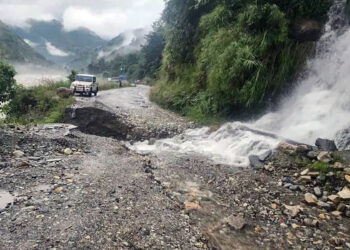
The Trekking Agencies’ Association of Nepal (TAAN) has urged trekkers not to use the Dharapani-Larke Pass Trail in Nasho Rural Municipality of Manang after heavy rainfall on August 5 and 6 caused serious damage. According to TAAN, flooding damaged the Budebagar section at Tilche and washed away parts of the trail and a suspension bridge over Surkhi Khola. The association said trekkers should avoid the route until repairs are completed and local authorities declare it safe. TAAN added that it will continue monitoring the situation and provide further updates.
Jumla transport office revenue rises to Rs 19.4 million
The Transport Management Service Office in Jumla collected Rs 19.4 million in revenue in fiscal year 2025/26, about Rs 5 million more than in the previous fiscal year. Officials said the increase was driven by a higher number of driving licences issued, growth in vehicle registration, and faster service delivery. The revenue came from route permits, vehicle registration books, advance income tax, arrears recovery, vehicle taxes, and the issuance of licences for different categories of drivers.
Lumbini launches wellness tourism drive with religious tourism
Lumbini Province has started a campaign to promote wellness tourism alongside religious tourism in an effort to encourage visitors to stay longer in the region. Tourism entrepreneurs met in Bhairahawa at a discussion organized by Tranquility Spa, where wellness packages featuring yoga, meditation, massage, hydrotherapy, steam baths, body scrubs, fitness activities, and therapeutic services were introduced. Participants said combining wellness experiences with traditional tourism packages could help extend visitor stays and strengthen the local hospitality sector.
Rasuwagadhi records sharp increase in Kailash pilgrims
A total of 13,523 pilgrims travelled to Kailash Mansarovar through the Rasuwagadhi border point in fiscal year 2025/26, an increase of 18.75 percent compared with the previous year. Immigration officials said the route remained highly popular despite major disruptions caused by flash floods and the collapse of the Miteri Bridge, which kept the crossing closed for nearly six months. Most travellers were Indian citizens, while visitors from Nepal, China, the United States, and Australia also used the route. Officials said easier access and lower costs compared with alternative routes continue to make Rasuwagadhi attractive for religious tourism and cross-border trade.
Kailali grant distribution questioned over procedural breaches
The Cottage and Small Industries Office in Kailali has been criticized for distributing grants beyond the limits set by official procedures. While district offices are authorized to provide grants of up to Rs 300,000, the office reportedly awarded Rs 385,000 to a garment business. Audit findings also showed that some grant recipients failed to submit verified declarations regarding earlier financial assistance within the required period. In addition, local authorities were found not to have carried out post-grant field monitoring to assess production results and compliance with grant conditions.
Gauthali becomes fourth highest-grossing Nepali film
The Nepali film Gauthali has earned Rs 177.1 million within 24 days of release, becoming the fourth highest-grossing film in Nepali cinema history. According to figures released by the Film Development Board, more than 715,000 tickets had been sold by August 9. Released on July 17, the film surpassed the lifetime collections of Jaari and Chhakka Panja 4. Directed by Kapil Rijal, the film stars Arun Chhetri and Simran Khadka in the lead roles and was produced by Suman Giri and Kapil Rijal.
Govt system failures leave Ilam vehicle owners facing double penalties
Vehicle owners in Ilam and other parts of Koshi Province have complained of financial hardship after repeated failures in government online systems prevented them from renewing route permits and paying vehicle taxes within the legally required grace period. Many said they reached transport offices on time but were unable to complete the process because the servers were not functioning. When the systems were restored after the deadline had expired, authorities imposed double tariffs and additional penalties. Provincial officials acknowledged the problem but said existing laws do not allow immediate waiver of the fines without an amendment by the provincial assembly, leaving citizens to bear extra costs caused by technical failures in the government’s digital system.
100-ton cold storage built in remote Syangja farming area
A cold storage facility with a capacity of 100 tons has been completed in Ratnapur of Chapakot Municipality-8, Syangja, providing relief to farmers involved in commercial potato farming. The project was built through cost-sharing between the Gandaki Provincial Government and Chapakot Municipality at a cost of Rs 16 million. Previously, farmers had to transport potatoes to distant storage centers, which increased transportation expenses. The new facility is expected to reduce storage and logistics costs and make it easier for local farmers to manage their produce.
Sipradi and Prime Renewables launch AI-managed rooftop solar plant
Sipradi Trading and Prime Renewables have jointly commissioned an 86.4-kilowatt rooftop solar photovoltaic plant at the Sipradi workshop in Kapan. The system, completed in three months, uses artificial intelligence-based energy management technology and is expected to produce around 140,000 units of electricity annually. Company officials said the facility will power electric vehicle charging, repair, and servicing operations with solar energy and could serve as a model for sustainable industrial energy use. The project also supports national goals related to carbon reduction and clean mobility.
Remote Chidichour in Arghakhanchi gets a 15-bed hospital
A new 15-bed basic hospital has begun operation in Chidichour of Bhumikasthan Municipality-7, Arghakhanchi, bringing essential healthcare services to a remote area. The hospital was established under the federal government’s policy of providing one hospital in every municipality and was inaugurated by local authorities. It offers general treatment, laboratory testing, and X-ray services and is staffed by a medical officer, nurses, health assistants, and administrative personnel. The project was funded through allocations from both the federal government and the municipality. Residents of nearby villages will no longer have to travel to the district headquarters for routine medical care.
U.S.-supported entrepreneur accelerator concludes in Kathmandu
A business accelerator supported by the U.S. Embassy in Nepal has completed its final phase in Kathmandu after selecting 20 entrepreneurs from regional workshops across the country. Participants attended a three-day residential program covering business expansion, investment readiness, export opportunities, market management, artificial intelligence, and strategic communication. The program ended with a pitching session before investors, industry experts, and business partners. Organized by the International Development Institute in partnership with Adhyanta Advisory, the initiative aimed to promote innovation and strengthen economic cooperation between Nepal and the United States.
Financial closure completed for 65-MW Dudhkhola hydropower project
The 65-megawatt Dudhkhola Hydropower Project promoted by Mountain Energy has achieved financial closure, clearing the way for faster construction. NMB Bank acted as the lead bank and Sanima Bank as the co-lead bank for the financing arrangement. Project developers said the completion of financial closure reflects growing confidence among financial institutions in private-sector hydropower investment in Nepal. Once completed, the project is expected to add significant electricity generation capacity to the national grid.
Crystal Kanchenjunga Securities starts margin trading service
Crystal Kanchenjunga Securities, stock broker No. 50, has launched margin trading in accordance with regulations of the Securities Board of Nepal and procedures of the Nepal Stock Exchange. Under the service, eligible investors can trade listed shares by depositing a 30 percent initial margin and obtaining financing of up to 70 percent of the transaction amount. The facility covers transactions ranging from Rs 1 million to Rs 20 million and includes structured fees and administrative discounts intended to improve market liquidity and investor participation.





Comment