




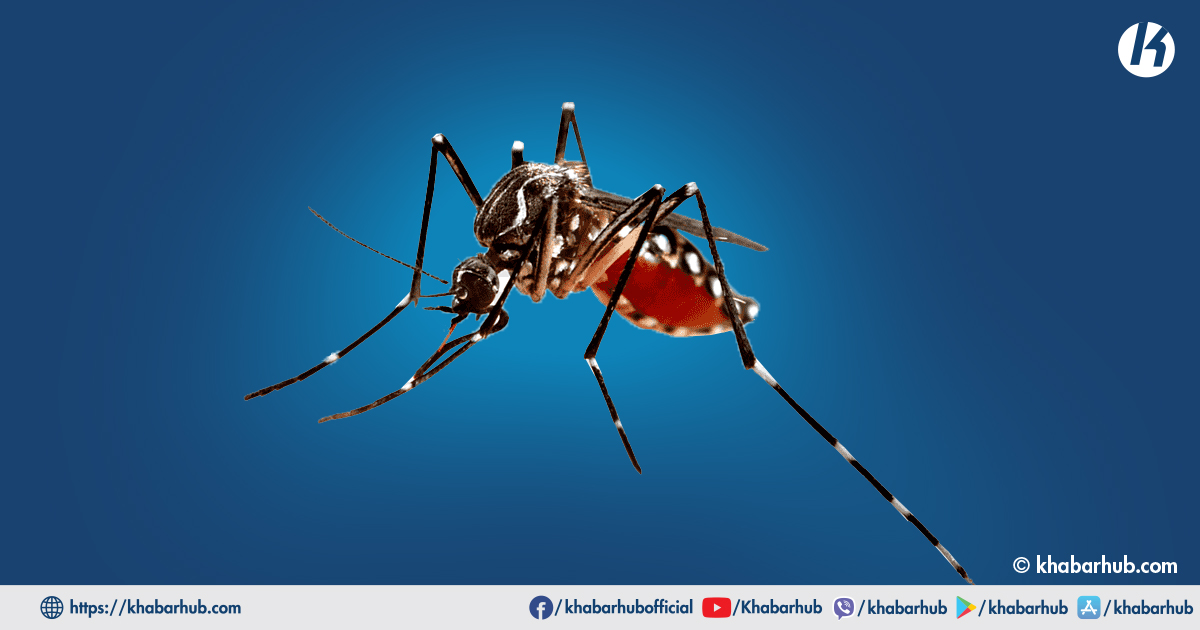
KATHMANDU: The government has announced plans to reduce dengue infection rates by 60 percent over the next five years through a multi-sectoral prevention and control strategy.
The Ministry of Health and Population has prepared a comprehensive national plan involving federal, provincial, and local governments to coordinate efforts against the mosquito-borne disease.
According to the plan, the government aims not only to significantly reduce infection rates but also to bring dengue-related mortality down to below 0.01 percent.
Officials said the strategy focuses on strengthening surveillance systems, early warning mechanisms, and rapid response measures to control the spread of dengue before outbreaks intensify.
A key component of the plan includes enhancing an “early warning system” to alert high-risk communities before mosquito breeding peaks, as well as improving an integrated vector surveillance system to ensure timely interventions.
The government also plans to expand public awareness campaigns and strengthen communication strategies to reduce the risk of infection.
As part of preventive measures, authorities will promote a weekly “Clean Friday” campaign, encouraging intensified sanitation efforts to eliminate mosquito breeding sites.
Health officials noted that dengue, once largely confined to the Tarai region, has now spread across all 77 districts in recent years due to rising temperatures and climate change impacts.
So far this year, 915 dengue cases have been reported across 68 districts, with one confirmed death, according to health authorities.
To coordinate national response efforts, the government has formed a Dengue Task Force led by the Epidemiology and Disease Control Division.






Comment