




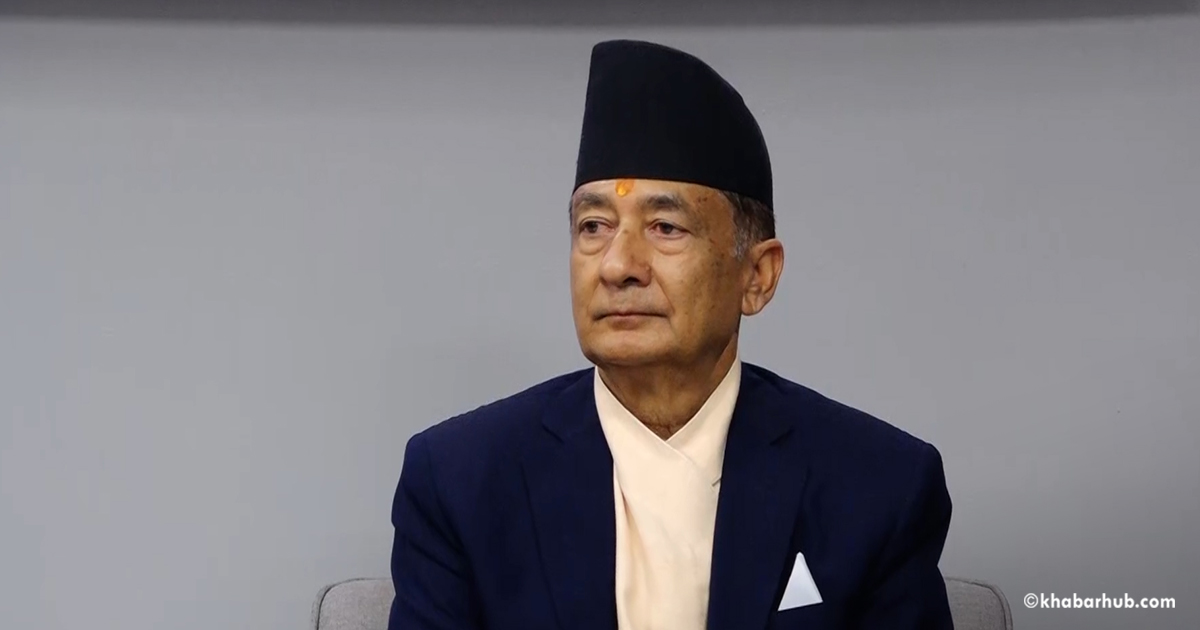
KATHMANDU: The Special Court has ordered the release of Nepali Congress leader and former minister Gyanendra Bahadur Karki on bail of Rs 1.5 million in a corruption case related to the construction of Pokhara Regional International Airport.
A bench comprising Special Court members Narayan Prasad Paudel, Dilliratna Shrestha and Umesh Koirala issued the order on Monday.
Karki was charged in connection with alleged irregularities involving tax exemptions granted during the construction of the airport.
The Commission for Investigation of Abuse of Authority (CIAA) had filed a corruption case at the Special Court on June 24, seeking recovery of more than Rs 3.62 billion in damages in connection with alleged financial irregularities in the airport project.
The case names Karki, who served as finance minister, along with senior government officials and representatives of the foreign contractor company.
According to the CIAA, the contract between the Civil Aviation Authority of Nepal and China CAMC Engineering Company Ltd. required the contractor to pay applicable taxes and duties. However, taxes were allegedly exempted through an “Implementation Agreement” contrary to the original contractual provisions.
The anti-graft body alleged that payments were made inclusive of taxes, but the taxes that should have been deposited with the state were not paid, resulting in an undue double benefit to the contractor.
The CIAA has alleged that the arrangement caused a loss of approximately Rs 3.625 billion in public funds.
Former finance minister Karki, then-secretaries Shankar Prasad Adhikari and Maheshwar Neupane, and several other senior government officials have been named as defendants in the case.
The charge sheet also names former joint secretaries Kewal Prasad Bhandari, Suresh Acharya and Danduraj Ghimire, former project director general Sanjiv Gautam and other officials.
Wang Bo, chairman of China CAMC Engineering Company Ltd., and Yang Zhigang, the project manager, have also been named as alleged accomplices.
The CIAA has sought recovery of the alleged losses, fines and imprisonment for all defendants under Nepal’s Prevention of Corruption Act, 2002.
The court’s bail order does not amount to a determination of guilt, and the corruption case will proceed according to law.




Comment