




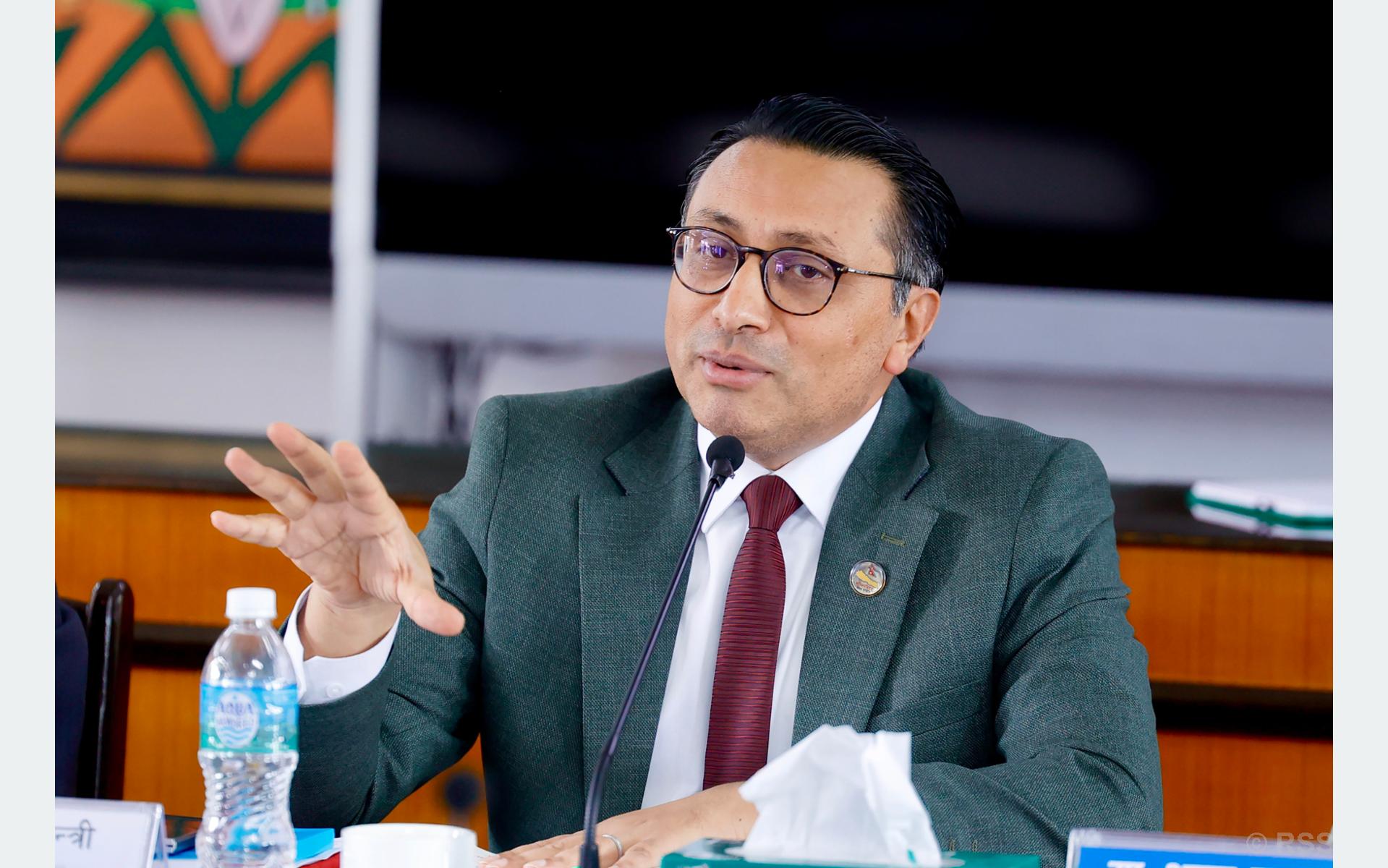
KATHMANDU: Finance Minister Dr. Swarnim Wagle has been included in TIME magazine’s list of the 100 Most Influential Climate Leaders of 2026 for his efforts to highlight Nepal’s climate vulnerability and advocate for international compensation for climate-related losses.
In a profile published on Monday, the magazine recognised Wagle’s campaign for climate justice following the devastating glacial floods that hit Nepal in August, claiming more than 1,500 lives and displacing thousands of people.
Highlighting the unequal impact of climate change, TIME noted that developing countries contribute only a small share of global greenhouse gas emissions but bear a disproportionate burden of its consequences. The magazine also highlighted Wagle’s efforts to keep the issue at the forefront of international discussions.
In the aftermath of the disaster, Nepal formally approached China, the United States and India—the world’s three largest greenhouse gas emitters—seeking compensation for climate-related losses and damages.
With the estimated recovery cost reaching approximately $5 billion, Wagle also urged the international community to extend support through the Loss and Damage Fund, a global financing mechanism designed to assist vulnerable countries in recovering from climate-induced destruction.
According to TIME, the United Nations provisionally approved $21.6 million in funding for Nepal from the Loss and Damage Fund on October 22, marking the mechanism’s first-ever allocation.
Wagle’s recognition comes as Nepal intensifies its climate diplomacy at the 31st Conference of the Parties to the United Nations Framework Convention on Climate Change (COP31), which began in Antalya, Türkiye, on Monday.
The Finance Minister departed for Türkiye on Monday to participate in the conference, where Nepal is expected to advocate for increased climate financing, stronger adaptation support and greater international recognition of the specific vulnerabilities facing mountainous countries.
Nepal has consistently maintained that countries contributing the least to global greenhouse gas emissions are disproportionately affected by climate change. The impacts include rising temperatures, accelerated glacier melting, glacial lake outburst floods and increasingly unpredictable weather patterns.
The country has also been calling for more accessible climate financing and stronger international commitments to address loss and damage, particularly in vulnerable mountain communities.






Comment