




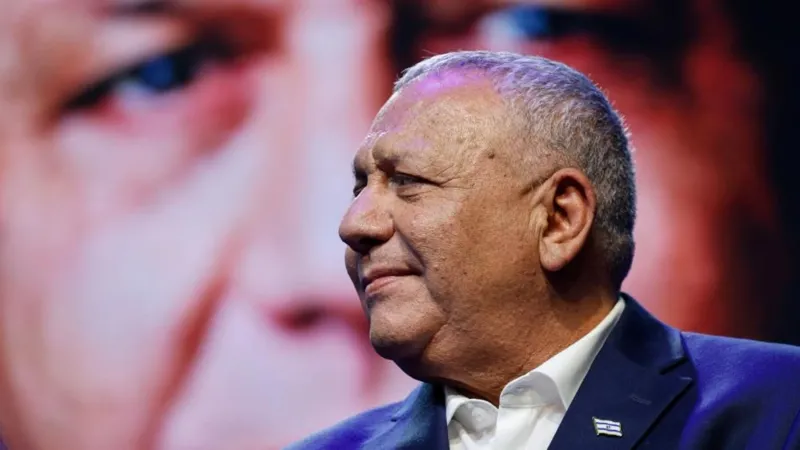
JERUSALEM: Israeli President Isaac Herzog has tasked opposition leader Gadi Eisenkot with forming a new coalition government after last week’s parliamentary election failed to give either major political bloc a clear majority in the Knesset.
Herzog made the decision following consultations with political parties represented in the incoming parliament. Eisenkot will have 28 days to secure the support needed to form a government, with a possible 14-day extension.
“Now is the time to form a national emergency government. I will do everything to ensure we are worthy,” Eisenkot, a former military chief, wrote on X following the announcement.
The election left Israel’s political landscape divided, with Prime Minister Benjamin Netanyahu’s right-wing Likud party and its far-right and ultra-Orthodox allies securing 53 seats in the 120-member Knesset. Eisenkot’s centrist Yashar party and three other Jewish opposition parties in his bloc won 48 seats.
Meanwhile, two Arab-led alliances, the United Arab List and the Joint List, secured a combined 19 seats, marking an unprecedented result following increased voter turnout among Arab communities.
Their combined strength could make them decisive in determining the next government’s formation. However, nearly all Jewish political parties had pledged before the election that they would not cooperate with the Arab-led alliances to establish a government.
According to a statement from Herzog’s office, the president informed both Eisenkot and Netanyahu of his decision after completing consultations with representatives of the political parties.
During the consultations, Eisenkot received 67 recommendations to be appointed prime minister, compared with 46 for Netanyahu, the statement said.
Under Israel’s political system, no single party has ever secured an outright parliamentary majority, making coalition arrangements essential for forming governments.
The president has considerable discretion in selecting the candidate tasked with forming a government. The decision does not necessarily have to favour the leader of the party that wins the largest number of parliamentary seats but may instead go to the person considered most capable of assembling a governing coalition.
(Inputs from BBC)






Comment