




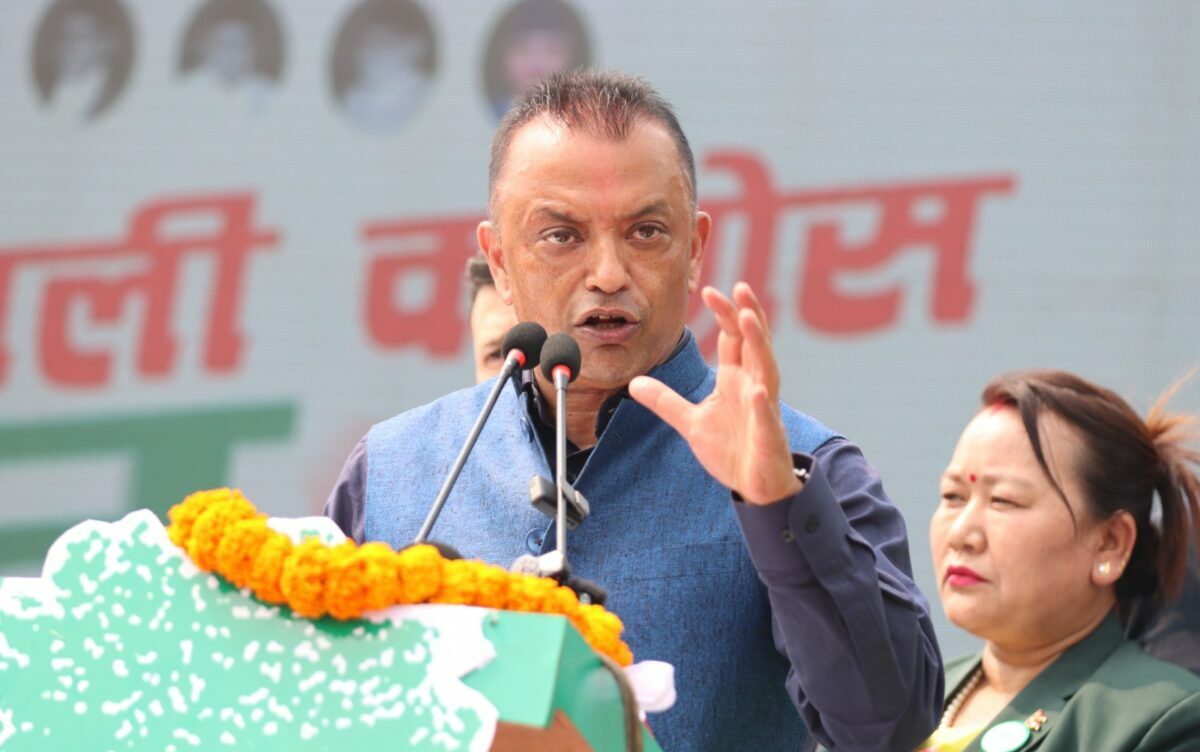
KATHMANDU: Fresh questions are being raised about the political accountability of Gagan Thapa after the Nepali Congress suffered a major setback in the recent House of Representatives election.
Thapa, who has long projected himself as a political leader advocating democracy, rule of law, good governance, and ethical politics, now faces scrutiny after the party’s disappointing electoral performance under his leadership.
Not only did the party suffer a humiliating defeat in the parliamentary election, but all office-bearers elected during the party’s special general convention, including Thapa himself, also lost their respective races.
The outcome has sparked debate over whether Thapa will demonstrate the same standards of political morality and accountability that he has often demanded from other leaders.
Thapa and Vice President Bishwo Prakash Sharma had long attempted to position themselves as reformist figures within both national politics and the internal structure of the Nepali Congress. Following the Gen‑Z Movement in Nepal, the duo intensified criticism of the party’s previous leadership, arguing that internal weaknesses had undermined the party’s credibility.
Their campaign eventually led to the convening of a special party convention after a majority of representatives demanded leadership change. The convention installed a new leadership team, though many senior leaders, including former party president Sher Bahadur Deuba, did not participate.
Heading into the parliamentary election, the Congress launched a campaign, signaling a break from past leadership and promising reform.
However, critics argue that the candidate selection process did not reflect the promised transformation. The party fielded several controversial figures, including leaders who had faced corruption allegations or legal controversies.
Among them were former deputy prime minister Bijay Kumar Gachhadar, as well as candidates linked to past criminal cases and corruption convictions.
During the election campaign, Thapa also took a strong stance against both the Nepali Communist Party and the Rastriya Swatantra Party, arguing that no political force other than the Nepali Congress could provide a viable solution to the country’s political challenges. His supporters even promoted the slogan “Abaki Bar, Gagan Sarkar,” portraying Thapa as a potential prime ministerial candidate.
However, the election results suggest that voters did not endorse that narrative.
Following his defeat in Sarlahi-4, Thapa took to social media to congratulate the winning candidate, Amaresh Kumar Singh of the Rastriya Swatantra Party. In his message, he said he would continue to work toward addressing the problems he witnessed in the constituency.
So far, however, Thapa has not issued a public statement accepting responsibility for the party’s overall election outcome in his capacity as party president.
As discussions intensify on social media and in political circles, observers say the coming days will reveal whether the Congress leader will apply the same ethical standards he once urged others to follow.






Comment