




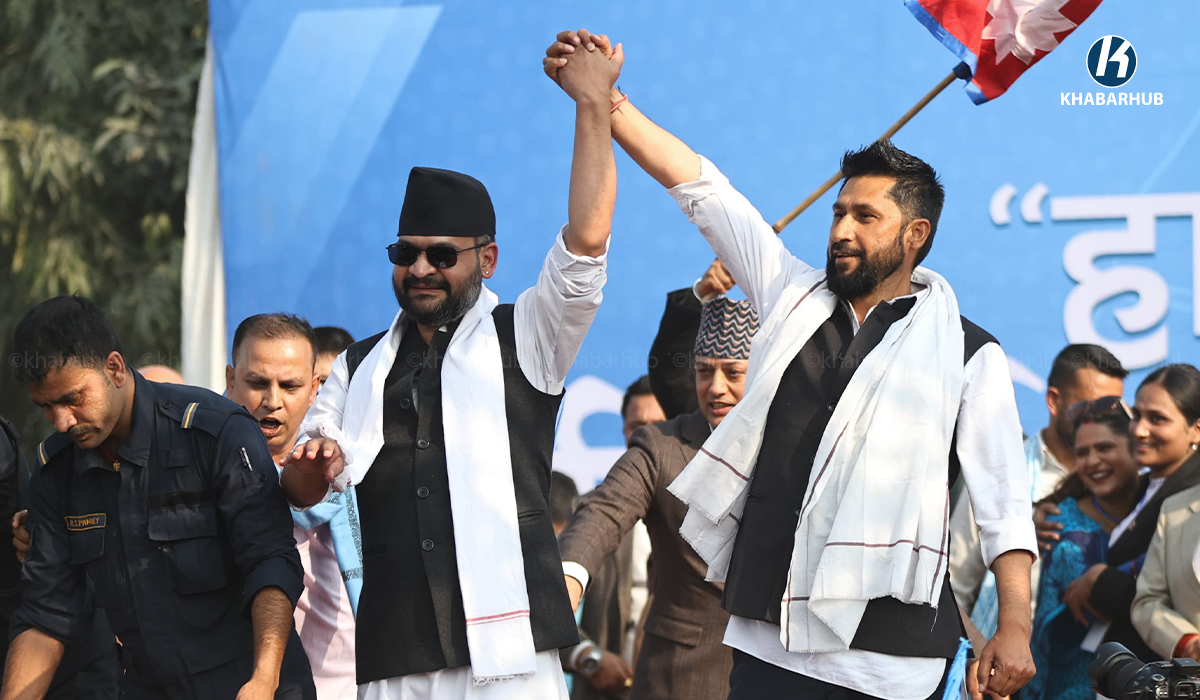
KATHMANDU: Senior leader Balen Shah of the Rastriya Swatantra Party (RSP) is set to become the next Prime Minister, following the party’s strong performance in the House of Representatives election.
With preliminary results showing victories in 45 constituencies and leading positions in 74 more, the RSP is on course to secure an outright majority. Party leaders have repeatedly reassured the public that there is no internal dispute over the premiership.
First-ranking vice-chairperson DP Aryal said the party’s top leaders, including Rabi Lamichhane and Balen Shah, were the reason voters supported the party, and the parliamentary leader—and future Prime Minister—will be Balen Shah.
RSP’s ideological leaders, including Sobita Gautam and Shishir Khanal, also confirmed there is no ambiguity: the party will respect the voters’ mandate and appoint Balen Shah as parliamentary leader, enabling him to serve as Prime Minister.
Vice-chair Biraj Bhakt Shrestha added that the party’s constitution allows the parliamentary leader to be chosen by elected MPs, independent of the party chairperson, ensuring a smooth transition. Chairperson Ravi Lamichhane will remain in his role, while Balen Shah will assume parliamentary leadership and the premiership.
Constitutional expert Bhimarjun Acharya noted that given the current results, the RSP is positioned to form a single-party government without obstacles. The combined tally of direct and proportional seats exceeds the 138-seat majority threshold in the 275-member House of Representatives.
The government formation process is expected to begin shortly, with swearing-in ceremonies for the new MPs at the new parliament building in Baneśwar. The outgoing Prime Minister Sushila Karki has expressed readiness to hand over authority respectfully once the new mandate is formalized.
The RSP leadership has repeatedly stressed transparency and fidelity to voter expectations, ensuring that Balen Shah’s premiership reflects both party decisions and public mandate.






Comment