




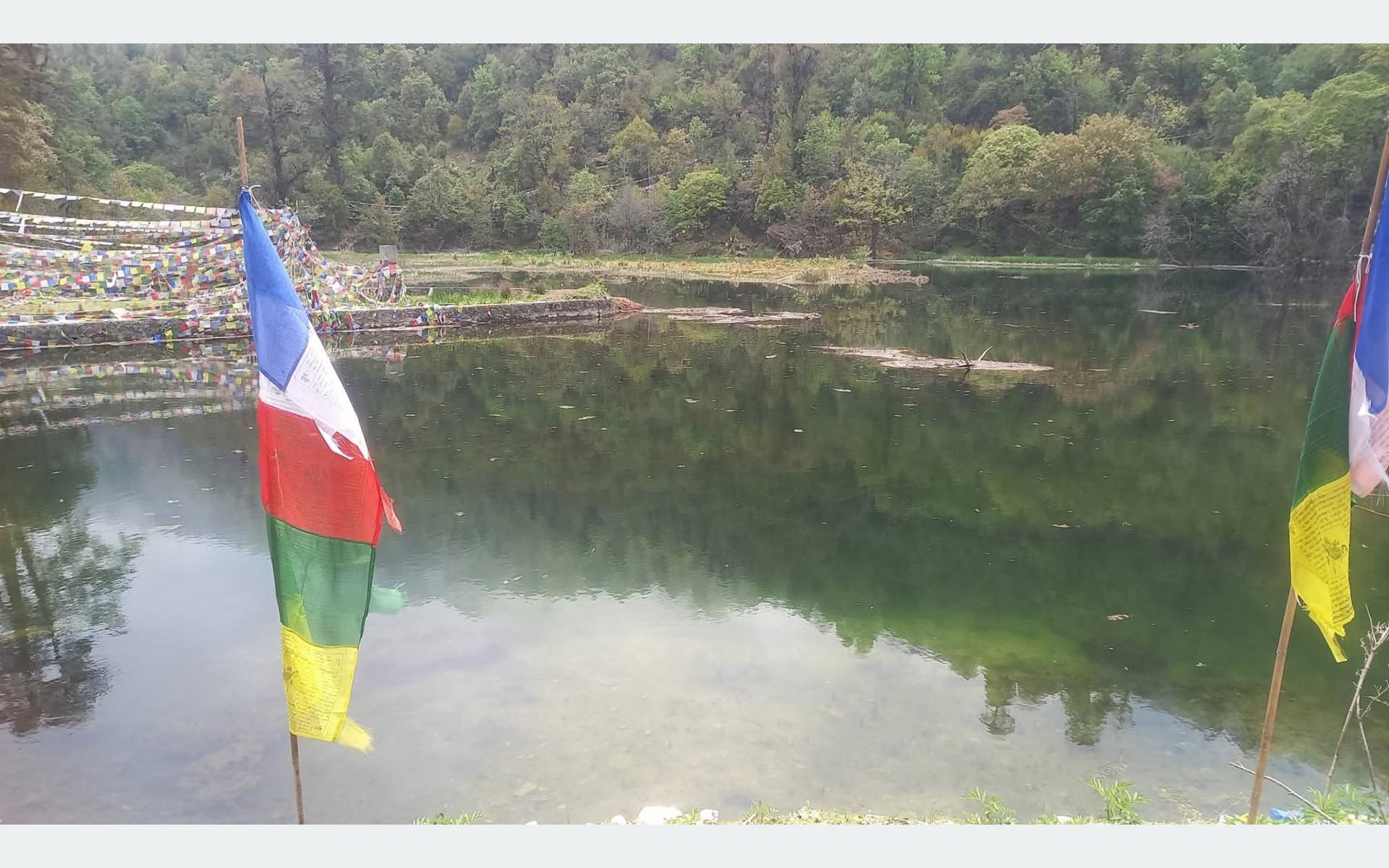
RASUWA: Parbatikunda, situated at an altitude of 2,550 metres above sea level in Rasuwa district, is a remarkable destination where religious faith, Tamang culture and natural beauty converge.
Despite its significance to both Hindu and Buddhist communities and its breathtaking Himalayan landscape, the site remains relatively unexplored due to inadequate publicity and infrastructure.
Located in Gatlang, Ward No. 3 of Amachodingmo Rural Municipality, Parbatikunda holds considerable religious, cultural and tourism significance. In the local Tamang language, Parbati is referred to as ‘Ama’ and the lake as ‘Chhodingmo’. The name Amachodingmo was therefore adopted to preserve and honour the area’s indigenous identity.
The rural municipality was initially named Parbatikunda after the lake situated north of Gatlang, a settlement historically known as the ‘village of black roofs’. However, following a recommendation from the first elected village council, its name was changed to Amachodingmo to reflect the local language and cultural identity.
According to rural municipality Vice-Chairperson Chandika Tamang, Parbatikunda is not only a natural treasure but also an important religious and historical heritage shared by Hindus and Buddhists.
“There is immense potential to develop this place into an internationally recognised religious tourism destination. However, it remains neglected due to inadequate physical infrastructure and a lack of national-level promotion. Although the rural municipality has been making efforts to conserve and promote the area, comprehensive development requires dedicated budgets and strategic plans from the federal and provincial governments,” she said.
Parbatikunda is associated with religious narratives in both Hinduism and Buddhism. Hindu mythology links the lake to the origin of Gosainkunda.
According to Hindu belief, Lord Shiva created Gosainkunda in the form of Neelkantha to relieve the effects of poison consumed during the churning of the ocean. Local legends hold that Goddess Parvati came to this area in search of Shiva and resided there. Consequently, the lake is regarded as a sacred pilgrimage site, and devotees believe that bathing in its waters brings spiritual purification and salvation.
Indian pilgrims returning from the Mansarovar pilgrimage also visit Parbatikunda to take a holy bath. Local religious beliefs further associate the lake with Chhopema, a renowned Himalayan pilgrimage site in India.
In Buddhist tradition, Guru Padmasambhava, also known as Guru Rinpoche, is believed to have meditated in this Himalayan region for the happiness, peace and liberation of humanity. Local resident Avinash Tamang of Gatlang believes that Parbatikunda contains the purest water among the area’s several natural water bodies and is particularly significant for ritual bathing during religious practices.
Local resident Phurpusinghi Tamang said Parbatikunda is equally important for its natural beauty and rich Tamang heritage. Situated along the popular Tamang Heritage Trail, the area offers visitors an opportunity to experience traditional Tamang culture, costumes and lifestyles.
The surrounding forests, featuring guras, khasru and other indigenous trees, further enhance the area’s peaceful and picturesque environment.
Jyarsha Viewpoint, located near the lake, offers spectacular views of several Himalayan ranges, including Langtang, Ganesh, Manaslu, Machhapuchhre, Annapurna and Jugal. Visitors can also see mountains along the Nepal-China border, parts of the Kathmandu Valley and the Trishuli River from the viewpoint.
Dudhkunda, situated above Parbatikunda, is regarded as the lake’s sister according to local religious beliefs. The surrounding area also contains the remains of the historic Bongjo Ghale Palace, a temple dedicated to Parbati and a Nepal Army barracks, adding to its historical significance.
The area also serves as an important trekking route connecting destinations such as Sanjen Kharka, Sanjen Himal, Ganesh Himal and Somdang, as well as several settlements in neighbouring Dhading district.
To attract more visitors, the Parbatikunda Area Development Committee has been promoting local Tamang cultural heritage through traditional dances and performances, including cultural tableaux, Mhendomaya and Selo. These initiatives provide tourists with opportunities to experience the region’s distinctive cultural traditions.
Locals believe that systematic conservation, infrastructure development and effective promotion could establish Parbatikunda as a major religious and cultural tourism destination in Nepal. Such development could also create employment opportunities and improve the livelihoods of communities in the area.
However, the destination’s accessibility has deteriorated further following the Bhotekoshi flood on Bhadra 10, which damaged the local road network. Residents say restoring road connectivity, alongside investment in tourism infrastructure and promotion, is essential to unlocking the area’s considerable potential.




Comment