




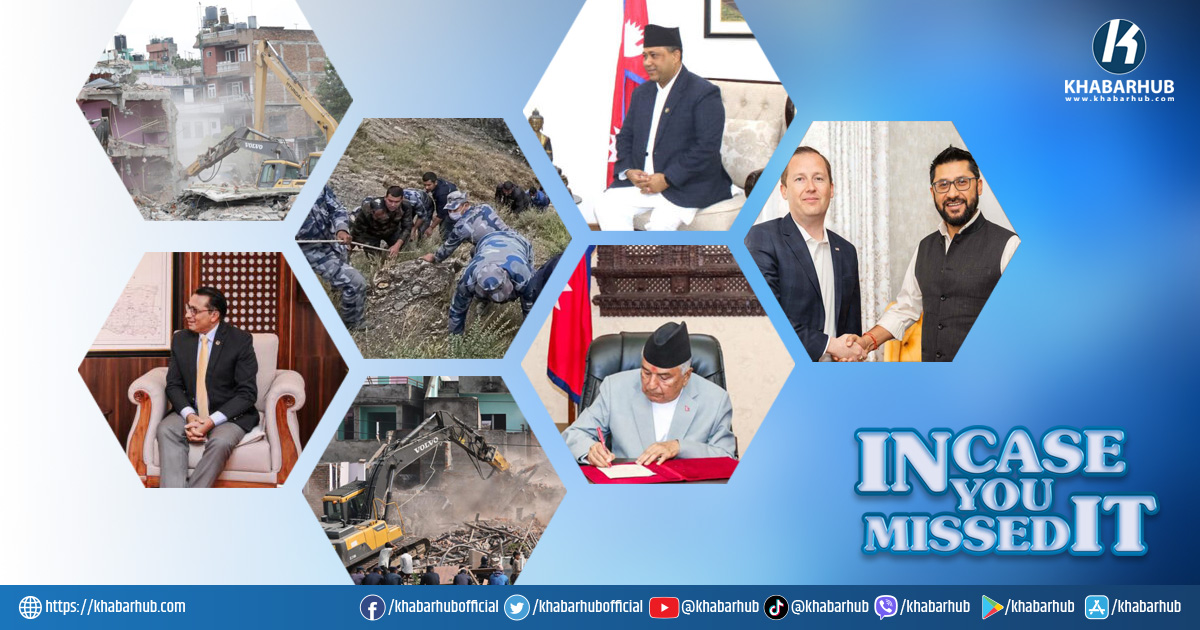
KATHMANDU: The past week in Nepal has unfolded as a defining moment in the country’s evolving governance trajectory, marked by an aggressive assertion of executive authority, sweeping administrative restructuring, and a simultaneous attempt to reset the economic and institutional direction of the state.
At the heart of these developments lies a combination of ordinance-driven policymaking, the removal of 1,594 politically appointed officials, and a broader reform agenda pursued by the government within just one month of assuming office.
While these moves collectively signal urgency and intent to break from entrenched inefficiencies, they also expose deeper tensions between speed and stability, reform and due process, and centralised decision-making and institutional balance.
Mass administrative purge signals decisive break from political patronage system
The most consequential development of the week is the decision to remove 1,594 politically appointed officials through the Special Provisions Ordinance on the Resignation of Public Officials, 2083. The scope of this removal spans key sectors including aviation, media, communication, and regulatory bodies, affecting institutions such as Nepal Airlines Corporation, Rastriya Samachar Samiti, Gorkhapatra Corporation, the Press Council, and bodies governing working journalists and film censorship.
This move represents one of the largest single instances of administrative clearing in Nepal’s recent history. The government has framed it as a necessary intervention to eliminate political interference, improve institutional neutrality, and enhance performance in public bodies long criticised for inefficiency and patronage-driven appointments.
However, the scale and simultaneity of the purge raise important concerns. Removing such a large number of officials at once risks disrupting institutional continuity, weakening operational capacity, and creating transitional uncertainty across sectors that depend on stable leadership. In particular, media and communication institutions—already sensitive to issues of independence and governance—may face short-term instability as leadership structures are reset.
Moreover, the reliance on an ordinance rather than legislative debate to implement such a sweeping reform raises fundamental questions about democratic process. While constitutionally valid, the bypassing of Parliament for structural administrative changes of this magnitude introduces concerns about executive overreach and reduced accountability.
Proliferation of ordinances reflects urgency but strains legislative norms
Beyond the administrative purge, the week has been dominated by the issuance and authentication of multiple ordinances under constitutional provisions. These include amendments related to health science academies, universities, public procurement, cooperatives, and anti-money laundering regulations, with several more reportedly under review.
This concentration of ordinance activity represents a governance style heavily reliant on executive instruments to push through reforms. The government’s justification is rooted in the need to overcome bureaucratic inertia, legal bottlenecks, and delays associated with parliamentary processes.
In sectors like public procurement and cooperatives, such urgency may be understandable given long-standing governance issues, including corruption risks, weak oversight, and financial irregularities. Similarly, reforms in universities and health institutions have historically been stalled due to political contestation.
However, the cumulative effect of multiple ordinances within a short time frame raises concerns about the normalisation of ordinance governance. Ordinances are intended as temporary measures for urgent situations, not as substitutes for comprehensive legislative processes. Their overuse risks weakening Parliament’s role as the primary lawmaking body and reducing opportunities for debate, amendment, and stakeholder engagement.
Economic reality check: white paper exposes structural weaknesses
Amid the wave of governance reforms, the government’s economic white paper offers a sobering assessment of Nepal’s structural economic challenges. The report highlights a slowing growth trajectory, with projected GDP growth at 3.5 percent, well below regional peers.
The structural composition of the economy reveals deeper concerns. The service sector now dominates at 62 percent, while agriculture has declined to 25.2 percent and industry remains underdeveloped at just 12.8 percent. This imbalance indicates a lack of productive transformation and limited industrial capacity.
The report also underscores Nepal’s heavy reliance on foreign employment, with over 800,000 labour permits issued in a single year. This trend reflects not only limited domestic job creation but also a broader structural issue of human capital outflow.
Fiscal indicators further complicate the picture. Public debt has reached 43.8 percent of GDP, revenue collection remains below target, and capital expenditure continues to lag, limiting infrastructure development and long-term growth potential. The widening gap between savings and investment highlights dependence on external financing and weak private sector confidence.
These findings suggest that while governance reforms are accelerating, the economic challenges facing Nepal are deeply structural and require sustained, long-term policy consistency rather than rapid administrative interventions alone.
Ambitious growth roadmap faces implementation constraints
In parallel with the white paper, the government has outlined an ambitious roadmap targeting 7 percent growth and a long-term $100 billion economy. The strategy focuses on four key sectors: energy, agriculture, tourism, and information technology.
The emphasis on hydropower development and export aligns with Nepal’s natural resource advantages and regional demand dynamics. Plans to generate up to 15,000 megawatts for export and expand domestic consumption reflect a vision of an energy-driven economy.
Similarly, the push to modernise agriculture, strengthen tourism infrastructure, and expand the digital economy through IT and artificial intelligence indicates a multi-sectoral approach to transformation.
However, the gap between ambition and implementation remains a critical concern. Persistent challenges in infrastructure development, regulatory consistency, private sector participation, and institutional coordination have historically hindered large-scale reforms. Without addressing these systemic constraints, the roadmap risks remaining aspirational.
Governance reforms extend beyond ordinances into enforcement-driven actions
The government’s reform agenda has not been limited to legislative changes. Enforcement-driven initiatives, particularly the nationwide encroachment removal campaign, have emerged as a visible aspect of governance activism.
The clearing of settlements along riverbanks in Kathmandu and other regions reflects a strong stance on reclaiming public land and addressing environmental risks. While widely supported in principle, these actions have also raised humanitarian concerns, particularly regarding the displacement of vulnerable populations without adequate rehabilitation planning.
Similarly, institutional reshuffling has extended to universities and regulatory bodies. The resignation of senior officials at Tribhuvan University following ordinance announcements highlights the broader impact of administrative restructuring on academic governance.
The government’s decision to remove or recall officials in financial and regulatory institutions, along with the resignation of key figures in bodies like the Nepal Securities Board, further indicates a comprehensive attempt to reset institutional leadership across sectors.
Political dynamics: consolidation, controversy, and internal restructuring
Politically, the week reflects both consolidation and contestation. The ruling establishment continues to push forward its reform agenda, while opposition parties and stakeholders have raised concerns over specific decisions, including ordinance use, administrative removals, and enforcement measures.
Within the broader political landscape, developments such as leadership appointments in the Nepali Congress indicate ongoing efforts by major parties to reorganise and strengthen internal structures in response to the changing political environment.
At the same time, controversies surrounding ministerial conduct, arrests of political figures, and policy decisions—such as weekend holidays and media-related directives—highlight the challenges of maintaining political consensus amid rapid reform.
External engagement and shifting diplomatic signals
The visit of U.S. Special Envoy Sergio Gor adds an important international dimension to the week’s developments. Discussions focused on economic cooperation, technology partnerships, and investment opportunities, reflecting external interest in Nepal’s reform trajectory.
However, subtle shifts in diplomatic engagement practices—particularly deviations from traditional high-level meeting protocols—suggest a recalibration of Nepal’s external relations approach. While this may signal greater assertiveness, it also introduces uncertainty regarding diplomatic continuity.
Social and sectoral undercurrents: economy, energy, and public impact
Beyond high-level policy decisions, several developments highlight the broader socio-economic context. Fuel price adjustments, despite reductions in petrol and diesel, continue to reflect vulnerability to global market fluctuations. The introduction of biweekly salary payments for civil servants aims to stimulate economic activity but remains in its early stages.
The government’s identification of key challenges in the energy sector underscores both opportunity and constraint. While hydropower export potential is significant, issues such as transmission infrastructure, regulatory alignment, and production costs remain barriers.
At the societal level, events such as the nationwide Grade 12 examinations and tragic incidents like the Rolpa jeep accident serve as reminders of the broader governance responsibilities beyond reform narratives.
Conclusion: reform momentum confronts institutional and structural limits
The past week represents a critical juncture in Nepal’s governance trajectory. The government has demonstrated a clear willingness to act decisively, using ordinances and administrative measures to push through reforms that have long been stalled.
However, this momentum is accompanied by significant risks. The scale of administrative restructuring, the reliance on ordinances, and the speed of policy implementation raise questions about institutional stability, democratic process, and long-term sustainability.
At the same time, the economic realities outlined in the white paper highlight that Nepal’s core challenges are structural and deeply embedded. Addressing them will require not only decisive action but also institutional continuity, policy coherence, and sustained engagement across political and economic systems.
Ultimately, the week reflects a fundamental tension in Nepal’s current governance approach: the drive for rapid transformation versus the need for stable, inclusive, and process-driven reform. How this balance is managed will shape not only the success of current initiatives but also the future trajectory of the country’s political and economic development.






Comment