




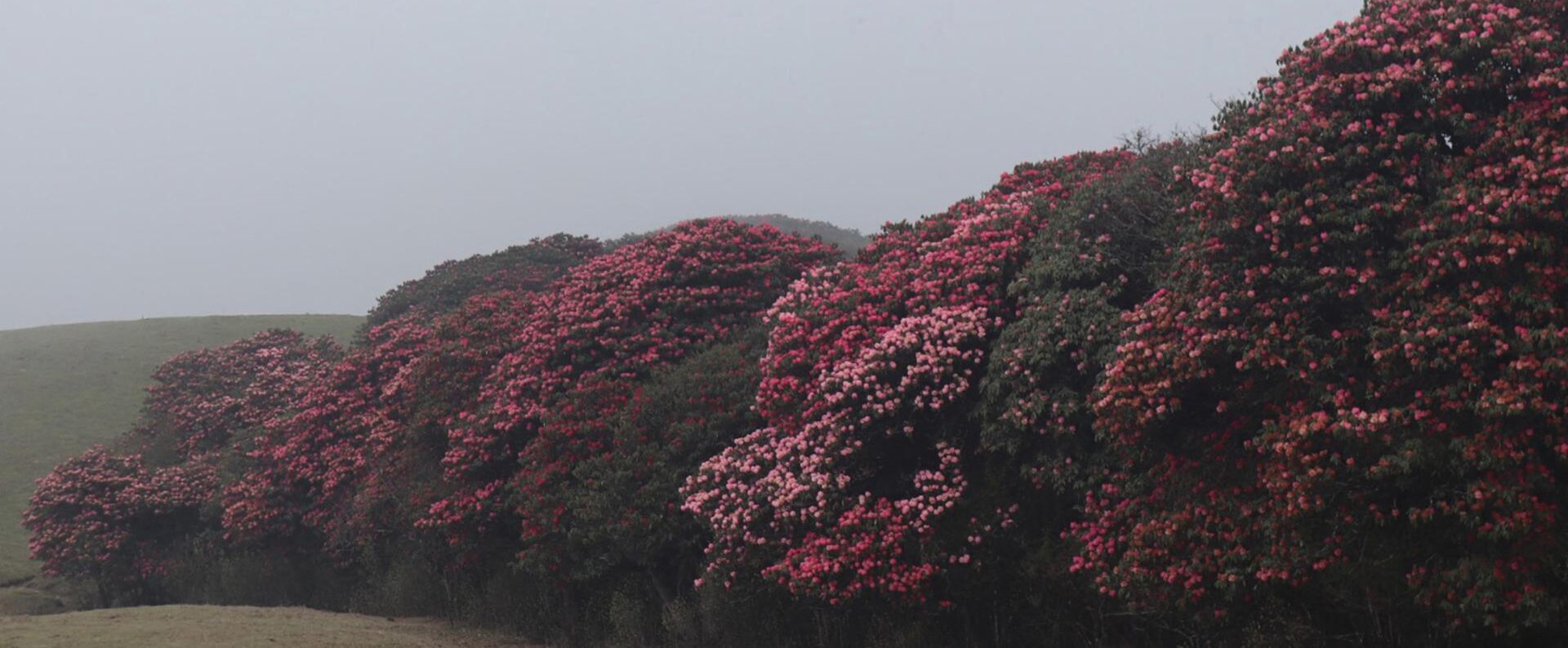
KHOTANG: Various species of rhododendron are currently in full bloom along the Mundum Trail, one of Nepal’s 100 designated tourist destinations in Khotang district, drawing increasing numbers of visitors to the region.
The vibrant sight of red, white and pink rhododendrons blooming across forests and grasslands along the trekking route has created a striking natural landscape that has captivated trekkers and nature lovers alike.
Locals say both domestic and international tourists are visiting the area to observe the blooming rhododendrons, including red varieties such as ‘chimal and chap’, particularly around the forested areas near Tawabhanjyang in Khidima, Sakela Rural Municipality-3.
A recent trekking team led by Ojan Babu Acharya of Diktel Bazaar, Diktel Rupakot Majhuwagadhi Municipality-1—popularly known as “Walker”—described the route as highly scenic and rewarding. The team included Lal Bahadur Magar (LB) of Kharmi, Sanjiv Rai of Chhyasmitar, and Sanjit Rai of Khidima.
Photographs of the blooming rhododendrons captured during the trek and shared on social media platforms such as Facebook and Instagram have gained significant attention, further boosting interest in the trail. Local nature enthusiasts have also been sharing these images, contributing to growing publicity for the Mundum Trail.
Due to the increasing online visibility, the number of foreign tourists visiting the area to observe the rhododendron bloom has been rising steadily.
Frequent trekkers describe the Mundum Trail as a unique natural gift, saying they visit at least twice a year during spring and autumn. They note that while rhododendrons typically bloom along forest edges in other regions, the Mundum Trail features extensive grasslands where the flowers flourish in abundance, creating a more expansive and scenic view.
The Mundum Trail, known for its blend of natural beauty, biodiversity, cultural heritage and adventure trekking, is currently at its most picturesque, with rhododendron blooms enhancing its appeal.
Researchers have identified at least 18 species of rhododendron in the meadows surrounding the trail, although comprehensive data is still being compiled.
LB Magar said he visits the trail whenever possible to enjoy nature and escape work fatigue. “You can experience nature closely here, even milk goats yourself and ride horses kept in the grasslands,” he said, adding that this year’s trek was particularly memorable due to the rich variety and colors of the rhododendrons.
With the onset of spring, local residents have begun taking their sheep, goats and horses to the grasslands surrounding the Mundum Trail for grazing.
The grasslands in the Maiyung, Merung and Dhodre areas are particularly suitable for sheep farming, with dozens of sheep enclosures and goat sheds already in operation, said Laxman Sampang “Sameep,” a shepherd from Kepilasgadhi Rural Municipality-1, Phedi.
Located at the junction of Khotang, Bhojpur, Solukhumbu and Sankhuwasabha districts in eastern Nepal, the Mundum Trail is closely linked to the history and culture of the Kirant community. Stretching across high Himalayan terrain, the trail passes through Temkedanda (3,165 meters), Salpa Pokhari (3,750 meters) and Silichung (4,165 meters), ending at Maiyung.
It takes around 13 days for foreign trekkers and about 10 days for Nepali trekkers to complete the route. Ramesh Rai, chairperson of the Maiyung-Temke-Salpa-Silichung Tourism Promotion Center, said that visitors traveling in spring can enjoy the natural beauty of blooming rhododendrons along the trail without feeling excessive fatigue.
Expansive grasslands, open pastures, sheepfolds and opportunities for horse riding have been major attractions for both domestic and international tourists.
The route is named the “Mundum Trail” because it passes through major Kirant settlements and reflects the Kirant way of life, traditions and culture preserved in their oral text, Mundum.
In the Hasanpokhari area of Maiyung, visitors can observe diverse wildlife including various bird species, red pandas, Himalayan thar and other wild animals. The region is also rich in biodiversity, with more than a dozen species of rhododendron along with other medicinal herbs and dense forests.
As tourist arrivals increase along the relatively remote trail, local shepherds have begun offering food and accommodation services. Traditional shepherd huts have been upgraded into basic homestay-style lodges, where visitors are served local cuisine such as goat milk, buckwheat, millet and wheat porridge, local chicken, mustard greens, potatoes, beans and other organic local produce.
(Inputs from RSS)






Comment