




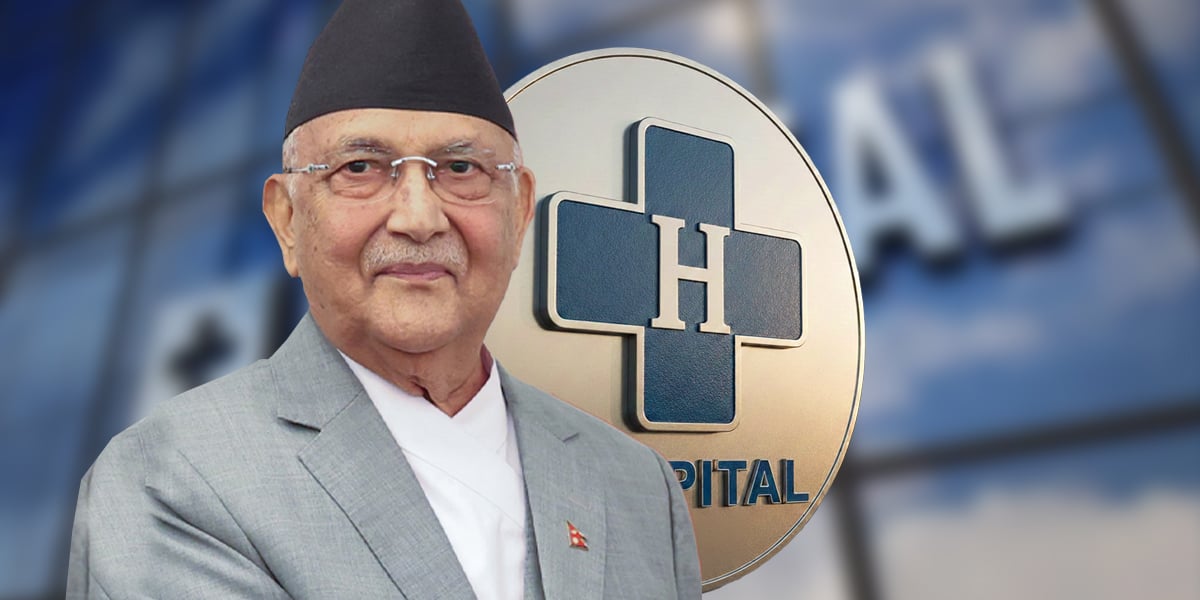
KATHMANDU: Former Prime Minister KP Sharma Oli, who has served four terms since Nepal became a republic, is once again in the electoral race with the ambition of returning to the country’s top executive post.
Oli is contesting the upcoming election scheduled for March 5 from Jhapa constituency–5. During the campaign, he has repeatedly claimed that under his leadership no essential work required for the country’s development was left undone.
Addressing election-focused programs in recent days, Oli has said that basic necessities such as roads, education and healthcare were brought within people’s reach during his tenure. At a program in Jhapa a few days ago, he also targeted his rival Balen Shah, claiming that even the road leading to Shah’s home in Mahottari was built during his own government.
However, facts related to the implementation of several ambitious projects announced under Oli’s leadership paint a different picture. Many of the plans that were widely publicized have failed to materialize on the ground. Among them, the most prominent and controversial is the pledge to build basic hospitals in all local governments lacking health facilities.
Big announcement, slow execution
During his second term as prime minister, Oli announced in December 2020 that out of 753 local levels across the country, 655 did not have basic hospitals. He declared that 5-, 10- and 15-bed hospitals would be constructed in 396 local levels and symbolically inaugurated the projects by pressing a switch at Baluwatar on a single day.
The government had set a target of completing all hospitals within two years. However, five years later, only 65 hospitals have been completed and handed over to the respective local governments.
According to data from the Ministry of Health and Population, while 65 hospitals have been completed, 239 are still under construction. Construction of the remaining hospitals has not even begun.
Dr. Chumanlal Das, chief of the Policy, Planning and Monitoring Division at the ministry, said that work is underway to prepare operational guidelines for the hospitals that have already been handed over.
He added that the ministry is carrying out internal preparations related to the budget, required human resources and other logistics needed to run the completed hospitals.
Why the delay?
The ministry attributes the delay to procedural hurdles such as tendering, contract management and budget disbursement issues in many locations. However, stakeholders offer a different explanation.
According to them, the hospitals were announced hastily without adequate study. They argue that hospitals were initiated in places where they were not urgently needed, while areas with real demand were left out altogether. From their perspective, the program was driven more by short-term popularity than long-term planning.
The ministry, however, rejects this criticism. Officials maintain that proper studies were conducted before initiating the projects.
“All hospitals that were announced and whose construction began were based on actual needs,” Dr. Das said. “For the remaining hospitals where disputes or confusion exist, discussions are ongoing regarding the construction process.”
Despite these assurances, ministry officials themselves acknowledge that at the current pace, it could take at least another five years to complete the remaining hospitals.
Rising costs, limited budget
Data from the ministry’s Planning and Monitoring Division shows that Rs 34.21 billion has already been spent on hospital construction. With this amount, 65 hospitals have been completed, while 239 remain under construction.
According to the Federation of Contractors’ Associations of Nepal, the cost of constructing a single hospital ranges from Rs 120 million to Rs 280 million, depending on the number of beds.
Based on this estimate, completing all the hospitals that were inaugurated would require at least Rs 60 billion. For that, contractors argue, the government would need to allocate around Rs 30 billion annually in the national budget.
In contrast, the government has allocated only Rs 11.24 billion in the current fiscal year 2025/26 for the construction and operation of basic hospitals.
As Oli campaigns on the claim that his leadership delivered development and basic services to the people, the slow progress of one of his government’s most ambitious healthcare pledges continues to raise questions—especially among voters weighing promises against performance.




Comment