




KATHMANDU: Ancient Greek philosopher Plato described politics as the art of creating a just state. By that standard, politics demands wisdom, integrity and deep study. Yet, as Nepal heads toward the March 5 House of Representatives election, the political arena appears increasingly dominated by noise over knowledge and popularity over competence.
In recent years, politics in Nepal has been treated as an overly ordinary—and often performative—space. From mainstream media to social platforms, attention has gravitated toward viral personalities and loud populists, while experienced professionals, policy experts and capable administrators remain largely ignored.
In a democracy, citizens choose their leaders. However, repeated election results suggest that public choices are not always guided by informed judgment. In previous elections, several leaders widely regarded as capable of strengthening Parliament were defeated, while controversial or media-friendly figures advanced.
Experts in the shadows
This election, too, several qualified and intellectually strong candidates are in the race—individuals capable of upholding parliamentary dignity and contributing meaningfully to policy debates. Many may lack traditional political experience, but their professional backgrounds position them to make a substantive impact.
Despite this, they remain in the shadows of social media virality and sensational media coverage.
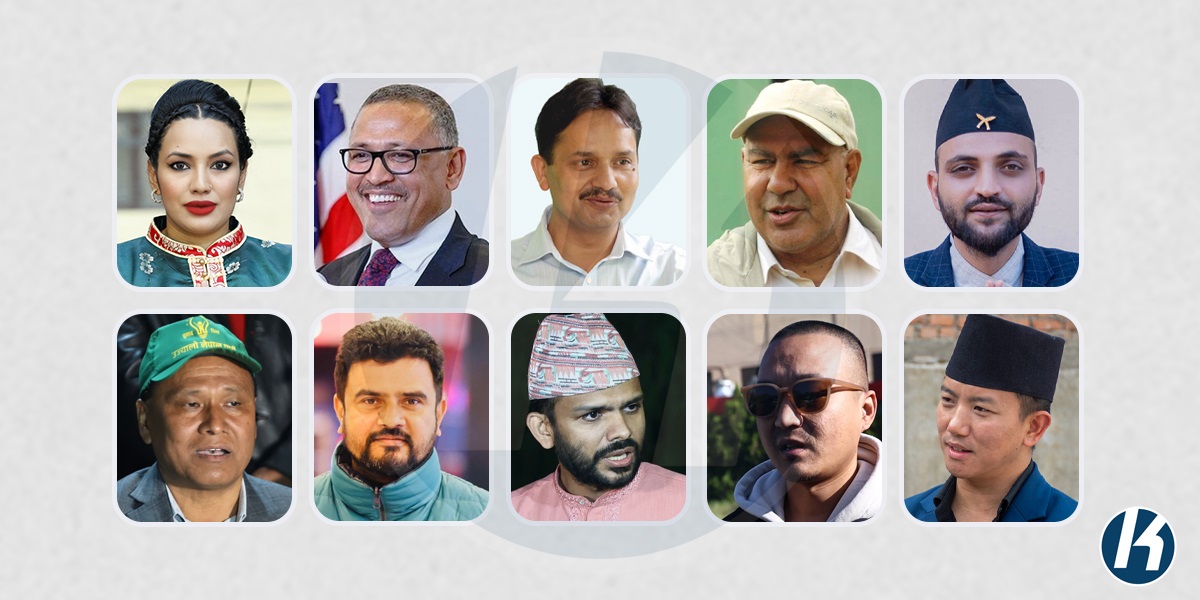
Among them is Dr Hari Roka, an economic-political analyst contesting from Khotang under the NCP banner. A long-time intellectual and development thinker, Roka has spent recent years engaged in grassroots agriculture rather than headline politics.
Similarly, Dr Govind Raj Pokhrel, a former vice-chair of the National Planning Commission and ex-chief of the National Reconstruction Authority, is contesting as a Nepali Congress candidate. His experience in post-earthquake reconstruction and national planning remains under-discussed.
Kulman Ghising, former managing director of the Nepal Electricity Authority, is contesting from Kathmandu-3. Widely credited with ending load-shedding and strengthening domestic power projects, Ghising represents technocratic leadership rarely seen in electoral politics.
Another notable candidate is Dr Arjun Kumar Karki, former ambassador to the United States and a long-time advocate for least developed countries at international forums. Contesting from Sankhuwasabha under the UML banner, Karki brings decades of diplomatic and development experience.
From the younger generation, Suhang Nembang, elected earlier in a by-election from Ilam-2, represents a calm, policy-oriented Gen-Z leadership style, contrasting sharply with the aggressive populism dominating public discourse.
Several others—including economists, doctors, engineers and policy thinkers across different constituencies—remain capable yet underrepresented in national debate.
Viral figures dominate discourse
In contrast, social media-driven candidates have received disproportionate coverage. Activists-turned-politicians, viral commentators and loud campaigners dominate timelines and headlines alike.
Figures such as Ashika Tamang, Rajiv Khatri, Sudan Gurung, Nicholous Bhusal, and Sagar Dhakal have built recognition largely through controversy, aggressive rhetoric or social media presence. While some represent genuine civic frustration, critics argue that many lack policy clarity, historical awareness or governance experience.
In several cases, factual errors, inflammatory language and unrealistic promises have sparked repeated controversies. Yet, these figures continue to command attention—often at the expense of more substantive candidates.
Media’s role under scrutiny
Observers note that media outlets themselves bear responsibility for amplifying populism. In chasing clicks and engagement, many platforms prioritize sensational content, sidelining quieter but more capable voices.
As a result, voters are exposed to personality-driven narratives rather than policy-driven choices, raising concerns about the quality of representation in the next Parliament.
With less than a month to go before polling day, the election presents not only a choice of candidates—but a test of whether Nepali democracy will reward competence and credibility, or continue to drift toward spectacle and populism.


Comment