




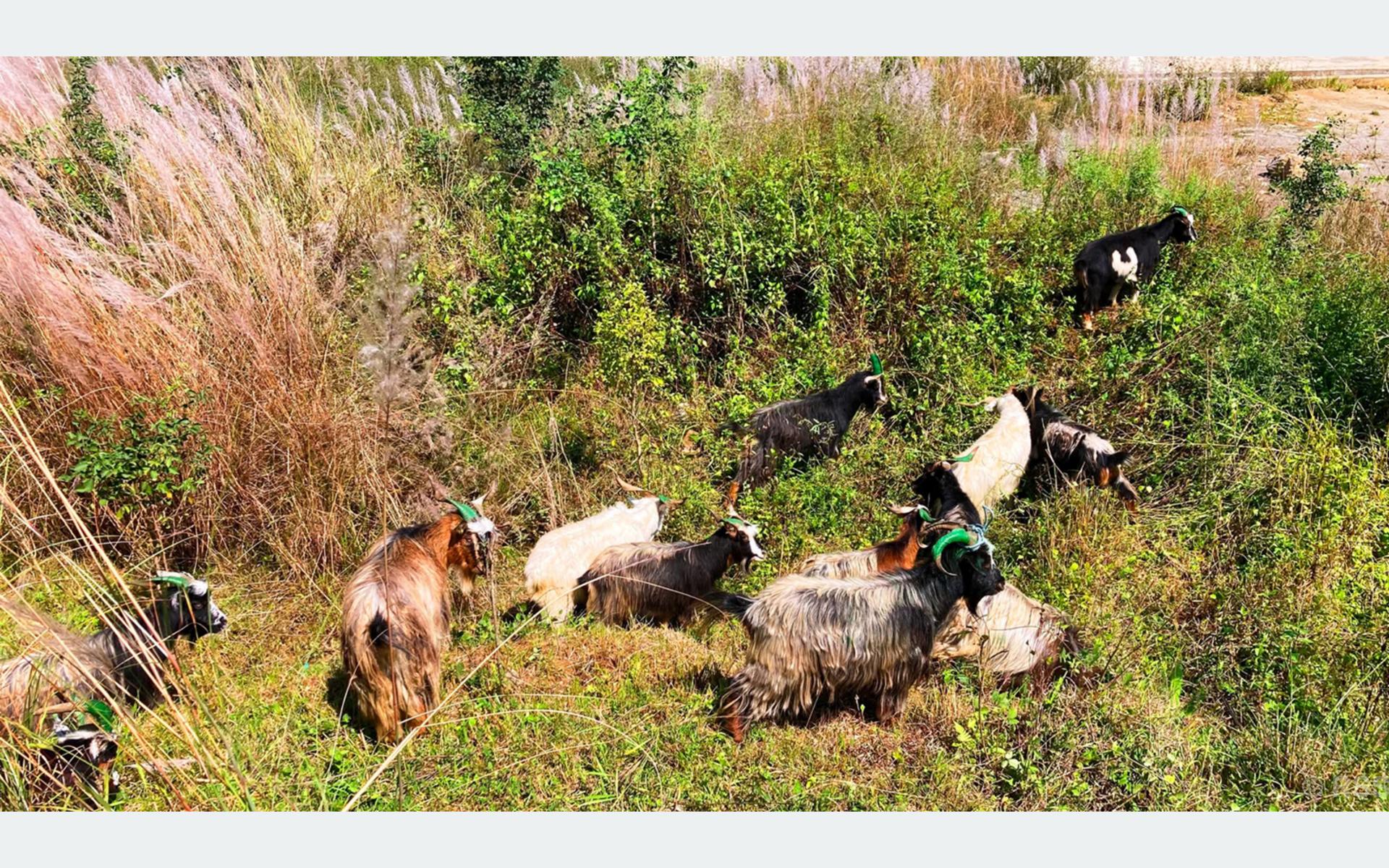
BAGLUNG: With a stick in hand, a worn-out hat on his head, and sweat-soaked clothes, Lok Bahadur Rokaya trudged wearily along the Mid-Hill Highway near Badigad, Baglung, on Monday evening.
Fatigue and disappointment were etched on his face. A native of Kaike Rural Municipality-4 in Dolpa, Rokaya had walked for days, bringing 300 chyangras (mountain goats) from the highlands of Dolpa to sell ahead of Dashain.
Now, 11 days into his journey, he had sold 200 goats by the time he reached Badigad. With only 100 left, he was desperate to sell them—at any price—before returning home. “I plan to sell them all by Tuesday and head back,” he said. But with sluggish sales, his hopes were fading.
Rokaya is not new to this trade. He’s been selling mountain goats during Dashain for the past 15 years, though this is his first time in Baglung. In previous years, he would head to Dang via Rukum, but this year he decided to try a new market.
“This year, I managed to sell 50 more goats than last year,” Rokaya said. “The ones that did sell fetched decent prices. But now, even if I have to sell the rest cheaply, I’ll return home. I’m running out of time.”
Chyangra meat is highly sought-after in urban markets during Dashain, and traders like Rokaya make long and difficult journeys to deliver it. “People in the cities really enjoy chyangra meat during the festival. We’re happy to provide it,” he said.
“When the goats are sold, we can buy shoes and clothes for our children. What else can we do? Life isn’t easy in Dolpa, and there’s no real market for chyangras in the village.”
Traveling with Rokaya was Tilam Bahadur Khatri, also from Dolpa. The two men partnered and brought 150 chyangras each. Khatri explained that income from Dashain goat sales helps cover family expenses and their children’s education.
The journey from Dolpa to Baglung, while still arduous, has become more accessible with the expansion of the Mid-Hill Highway. “This is my first time coming here. The road helped, but it was still tough,” Khatri said.
This year, chyangras have been selling for Rs 30,000 to Rs 45,000 per goat, though Khatri said they’ve been selling theirs at Rs 40,000—around Rs 4,000 less than last year.
“Raising chyangras is hard, and transporting them is just as difficult,” he explained. “Last Dashain, prices reached up to Rs 50,000, but this year, it’s much lower. Still, when demand is higher in city markets, we bring them here. If we have to sell what’s left at a loss, we’ll do it—we can’t take them back.”
During Dashain, traders from Myagdi, Baglung, Pokhara, and Kathmandu often travel to remote sheds in Mustang, Dolpa, Mugu, and Humla to buy changras. They transport them to larger markets and sell them at higher prices.
Baglung serves as a key hub in this seasonal trade, with hundreds of traders passing through before heading to major cities like Pokhara and Kathmandu.






Comment