




POKHARA: Public transport services across Gandaki Province came to a standstill today after the provincial government issued a new regulation officially legalizing ride-sharing and self-drive vehicle services.
The regulation, published in the official gazette following Cabinet approval on May 13, aims to formalize and regulate the growing trend of app-based transportation. However, it has sparked a strong backlash from traditional transport operators.
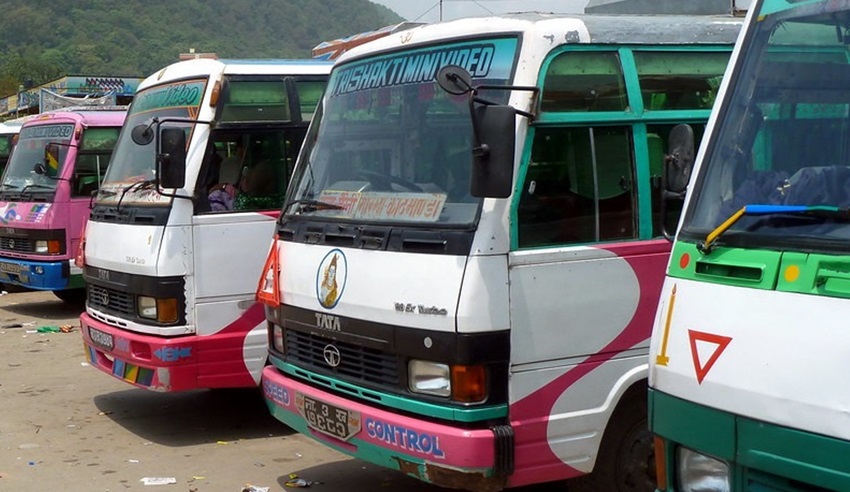
In protest, public transport operators—led by the Nepal National Federation of Transport Entrepreneurs (NNFTE)—have suspended operations of taxis, buses, and freight services throughout the province. Streets in major areas, including the tourist hub Pokhara, remained eerily quiet as over 16,000 public vehicles stayed parked in garages and homes.
NNFTE Gandaki President Kedar Paudel accused the government of weakening the structured public transport system, warning that the new policy could dismantle decades of coordinated service.
Taxi union leader Shobhakant Paudel added that they are opposing the government’s move to allow private vehicles to operate similarly to public ones. He warned that if the decision is not reversed, the protest could expand across the country starting from the 19th of this month.
The protestors argue that the provincial regulation bypasses federal law, particularly the 2049 Transport Management Act, which barred private vehicles from providing passenger services. However, a Supreme Court verdict on June 27, 2024 overturned previous restrictions, paving the way for the government to introduce this new framework.
According to the new rules, both private and public two-wheelers and four-wheelers must obtain legal permission and undergo mandatory registration and renewal to operate ride-sharing or self-drive services through digital platforms.






Comment