




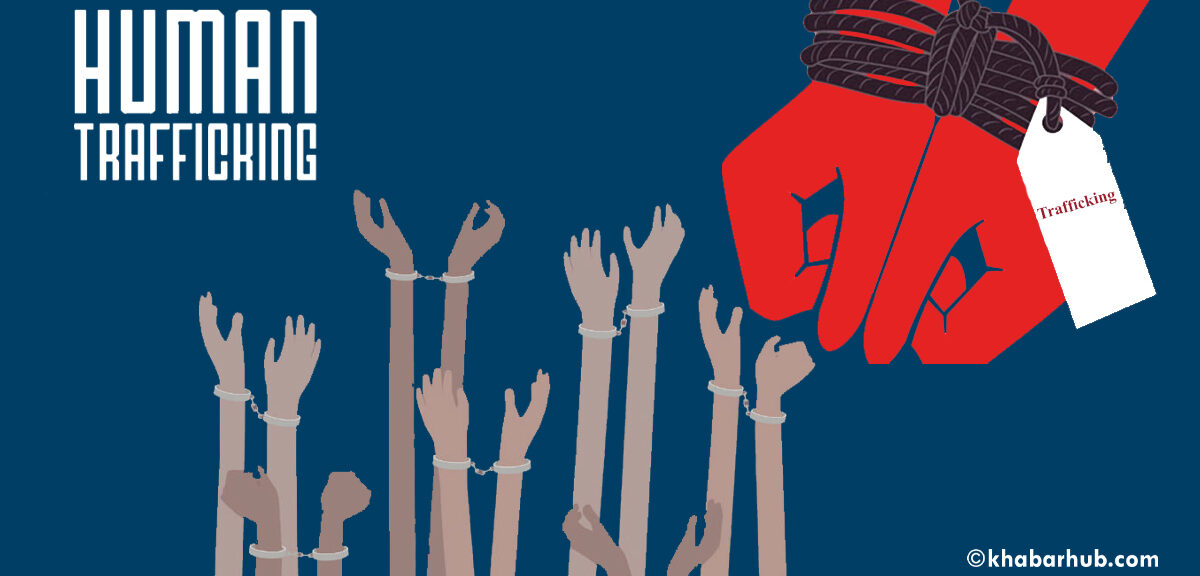
KANCHANPUR: The open border with India, increasing misuse of technology and the involvement of relatives and acquaintances have made the region increasingly vulnerable to human trafficking and smuggling.
The growing use of alternative and illegal routes, beyond the main border checkpoints, has further complicated efforts to control trafficking.
The nature of human trafficking has been changing over time, with recent trends showing an increase in cases linked to foreign employment scams, fake marriages, tourism and online or “cyber trafficking,” said Maheshwori Bhatta, coordinator of Maiti Nepal.
Alongside poverty, unemployment, lack of skills and the misuse of social media, the involvement of relatives and acquaintances has emerged as a major challenge in combating trafficking. According to Bhatta, open borders, limited technology-based surveillance, difficulties in evidence collection and delays in legal proceedings are key obstacles in controlling the crime.
“The silence of victims and their families, along with fear of filing complaints, has boosted the confidence of traffickers,” he said. “Recently, traffickers have adopted new methods, using private vehicles such as motorcycles and local taxis to cross the border through alternative routes.”
He added that trafficked individuals are being exploited for sexual purposes, child labour, forced criminal activities and even organ transplantation, with international criminal networks also involved.
Over the past year, 209 women and children at risk of trafficking were rescued or prevented from crossing the border at Gaddachauki and surrounding areas along the western border. According to Maiti Nepal’s annual progress report, 90 of those rescued were children and 119 were women.
Of the total, 89 were rescued at the Gaddachauki border, 64 from the Mahendranagar Bus Park and nearby areas, 31 from the Mahakali four-lane bridge area and 29 from the Jholunge bridge area.
Among those rescued, 182 were from Sudurpaschim (Far West) Province. District-wise, 100 were from Kanchanpur, 32 from Kailali, 14 from Baitadi, 10 from Bajhang and eight from Doti.
In the past three years, 49 women and children have been safely rescued from various cities in India, including 25 in 2023, 14 in 2024 and 10 in 2025. In the past year alone, eight girls and two women were rescued from cities such as Bihar, Chandigarh, Mumbai, Delhi and Hyderabad.
During the same period, Maiti Nepal registered 189 search and rescue applications, of which 81 individuals were traced and reunited with their families. Of these applications, 163 involved citizens from Sudurpaschim Province.
To control trafficking, 12,858 vehicles were checked in border areas, and 44,581 people were counseled on safe migration and anti-trafficking measures. Additionally, 227 individuals received psychosocial counseling, 217 were reunited with their families and 33 were sent home after counseling at the border.
He stressed that as trafficking risks increase due to open borders and evolving technology, border-level surveillance, community awareness and multi-sectoral cooperation must be strengthened to effectively combat the crime.





Comment