




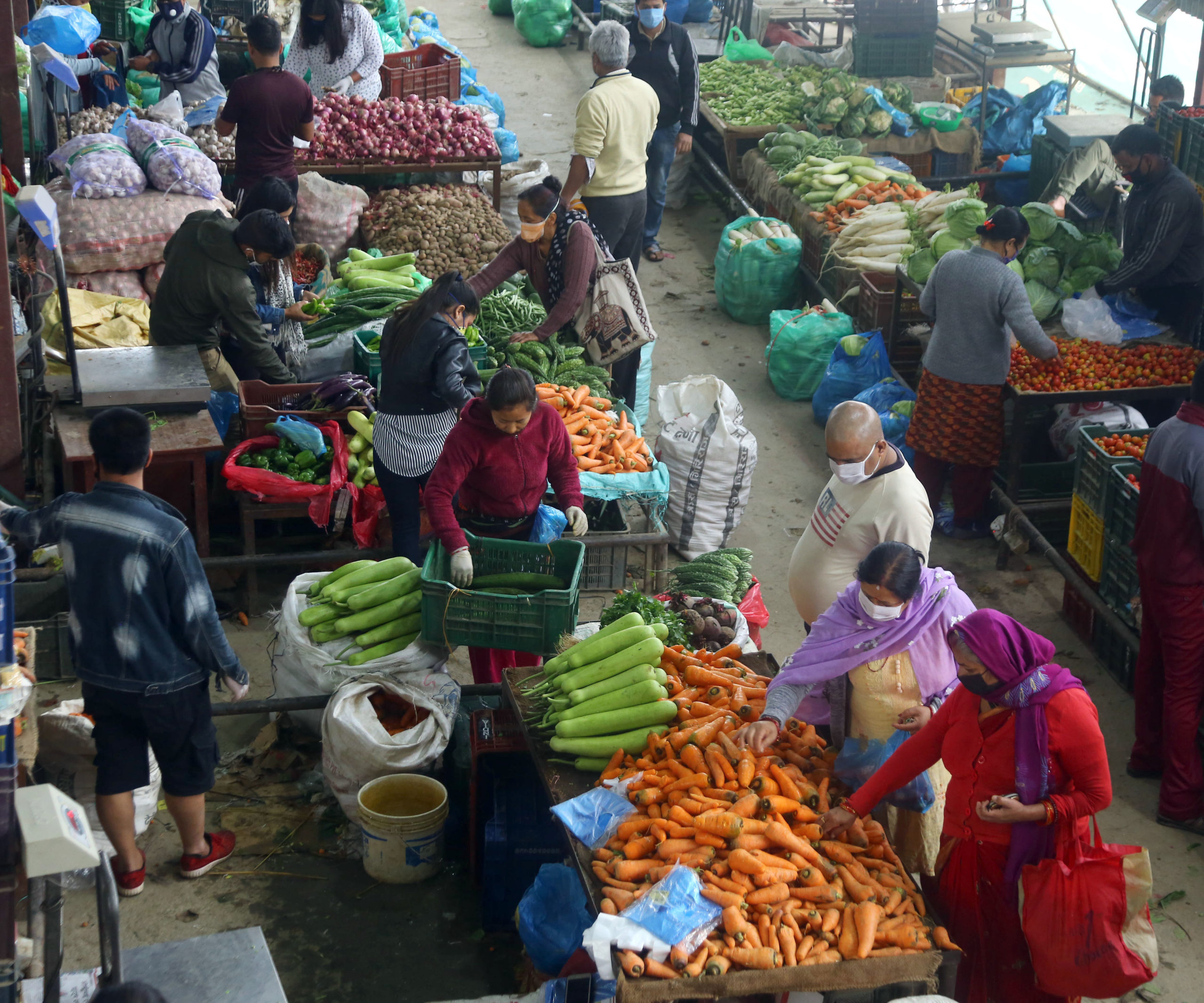
NEPALGUNJ: The level of pesticide residues in vegetables produced by farmers in Banke district has been increasing, according to the Central Agricultural Laboratory in Nepalgunj.
Gaurav Chaudhary, an assistant technician at the Pesticide Residue Rapid Analysis Unit under the laboratory, said that tests conducted during the fiscal year 2081/82 BS found excessive pesticide levels in ten types of vegetables.
All the tainted samples were locally produced in Banke. Of the ten, nine were leafy greens such as mustard, amaranthus, and spinach, while one was a sample of beans. Tests conducted in the months of Chaitra, Baisakh, Jestha, and Asar all showed contamination levels high enough to be categorized as “red label,” meaning unfit for consumption, Chaudhary informed.
The laboratory tested a total of 1,870 samples from different districts — 962 from Banke, 413 imported from India, 273 from Salyan, 79 from Chitwan, 76 from Dang, 53 from Bardiya, 12 from Surkhet, 11 from Rolpa, two from Dailekh, and one each from Jumla and Rupandehi.
According to Chaudhary, vegetables and fruits with less than 35 percent restricted pesticide content are marked green (safe for consumption), those with 35 to 45 percent are labeled yellow (conditionally consumable after retesting), and those with more than 45 percent are marked red (unsafe for consumption).





Comment