




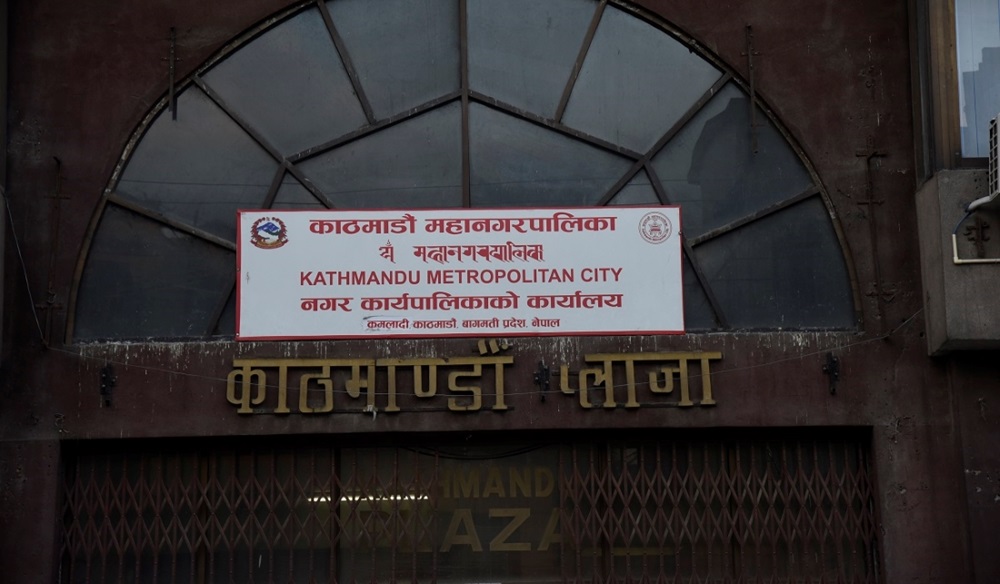
KATHMANDU: In a bid to improve road safety and reduce congestion, the Kathmandu Metropolitan City (KMC) has begun installing 2,500 traffic cones and 1,250 retractable bars across key road sections in the capital.
The initiative, launched in coordination with the Metropolitan Traffic Police Division and other stakeholders, aims to channelize traffic movement and address growing concerns over road discipline, KMC officials said.
According to Anukul Nidhi, assistant expert at the KMC Urban Planning Commission, the city had originally planned to procure the materials in the last fiscal year 2080/81. However, procedural delays pushed the procurement to the current fiscal year 2081/82.
The newly introduced traffic cones stand 900 to 1,000 millimeters tall, making them larger and more visible than previous ones, and are designed to discourage drivers from removing or displacing them. Each cone weighs between three to five kilograms and is built without a hollow base, Nidhi explained. “These cones are clearly visible even at night, and their size and weight are expected to instill more discipline among drivers, particularly motorcyclists who previously tended to move cones aside,” he added.
Each traffic management set consists of two cones connected by a two-meter-long telescopic retractable bar. A total of 1,250 such sets have been installed, bringing the number of cones deployed to 2,500.
The KMC said the new channelization measures are designed to tackle challenges unique to South Asian driving behavior, where drivers often fill open gaps on the road “like liquid.” The equipment has already been deployed along major sections, including Singha Durbar–Bhadra Kali, Singha Durbar–Maitighar, and Padmodaya intersection.
Officials highlighted the area from Bhadra Kali to Singha Durbar as a key choke point where opposing traffic flows often cause bottlenecks. By placing cones in sequence, the city expects to reduce pressure from oncoming vehicles while allowing smoother left turns for those moving from Maitighar towards Bhadra Kali.
The KMC said successful traffic management depends on cooperation among road users, municipal authorities, and traffic police, alongside data-driven approaches, modern technology, and practical ground-level strategies.




Comment