




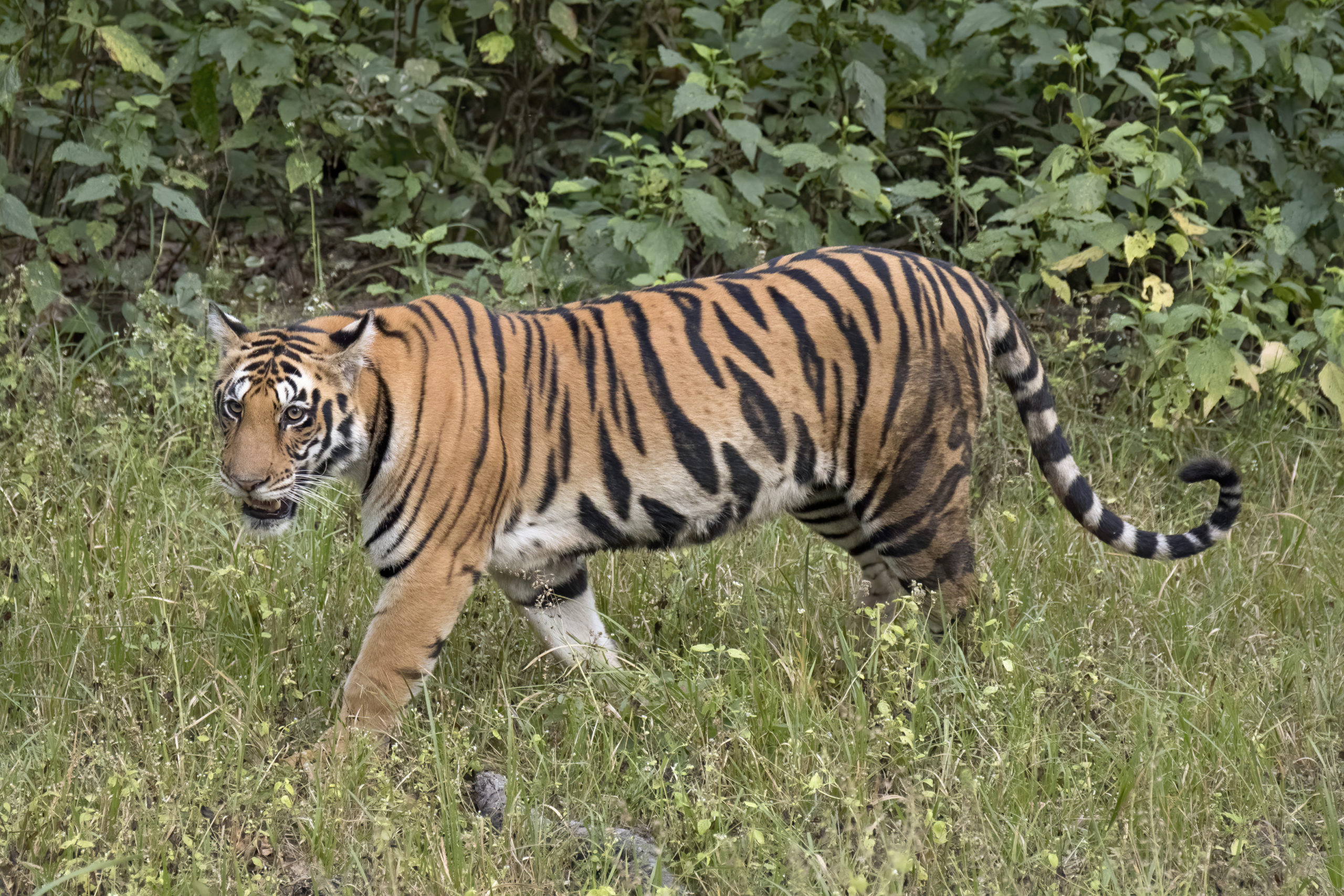
KATHMANDU: After last year’s census was postponed due to lack of donor support, Nepal is set to carry out the much-anticipated rhino and tiger population surveys this fiscal year. The Department of National Parks and Wildlife Conservation (DNPWC) has allocated a portion of its budget to implement the program.
According to Director General Dr. Ramchandra Kandel, tiger censuses are conducted every four years, and this year’s survey is scheduled to begin in November. The census is expected to take about three months to complete. Similarly, the one-horned rhino count, scheduled for March 2025, typically takes about a month.
The rhino census will be conducted in Chitwan, Parsa, Shuklaphanta, and Koshi Tappu National Parks, while tigers will be counted in Parsa, Chitwan, Banke, Bardiya, and Shuklaphanta National Parks.
For this year, the department has allocated Rs 1.8 million for the tiger census, which is expected to cost over Rs 15 million. The rhino census has also been allocated Rs 1.8 million, though total costs are expected to exceed Rs 20 million, with additional funding sought from donors.
During the last tiger census in 2022, Nepal recorded 335 tigers, including 128 in Chitwan, 125 in Bardiya, 25 in Banke, 41 in Parsa, and 36 in Shuklaphanta. Chitwan National Park’s Chief Conservation Officer Dr. Ganesh Pant explained that automated camera traps are placed in areas with high tiger activity. Individual tigers are identified through the unique stripe patterns on their bodies.
Rhino counting is carried out in real time by researchers riding elephants to directly observe and record animals. Nepal previously conducted tiger censuses in 2009, 2013, and 2018, recording 121, 198, and 235 tigers, respectively.
The last rhino census in 2021 found 752 rhinos across Nepal’s national parks and protected areas. Numbers have grown significantly since the 1960s when rhino populations dropped to around 100. Historical estimates indicate Nepal had approximately 800 rhinos in the 1950s. In 2021, Chitwan National Park alone had 694 rhinos, Bardiya increased from 29 to 38, and Shuklaphanta rose from 8 to 18.
Long-term population trends show steady growth, with rhino numbers recorded at 800 in 1950, 400 in 1955, 300 in 1960, 100 in 1965, 108 in 1970, 147 in 1975, 310 in 1980 and 1985, 358 in 1990, 466 in 1995, 612 in 2000, 409 in 2005, 435 in 2010, 645 in 2015, and 752 in 2021.






Comment