




KATHMANDU: The Revolutionary Communist Party, led by Mohan Baidya, has launched a scathing attack on the government led by UML Chair KP Sharma Oli, accusing it of undermining national interests through privatization, corruption, and flawed foreign policies.
The party, formed after splitting from the Maoist movement, alleged that the Oli administration is driving the country toward regression and failure.
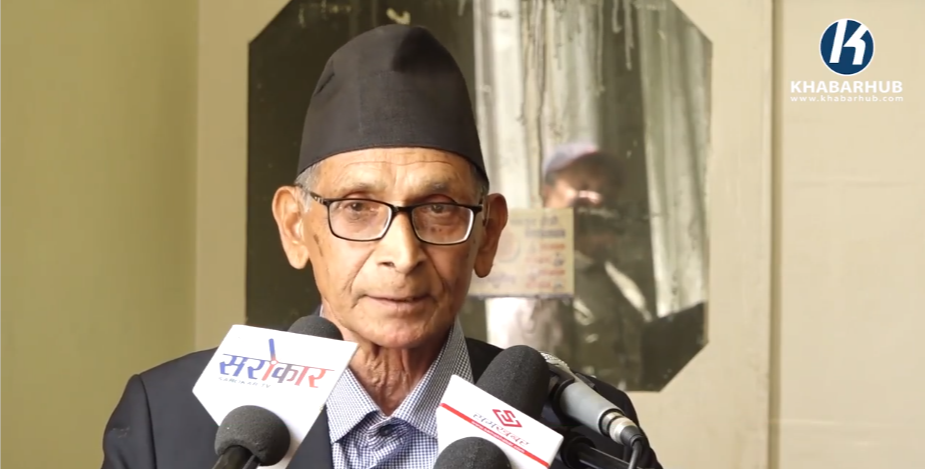
The accusations were presented in a statement issued by the party’s acting general secretary CP Gajurel (Gaurav), following a two-day politburo meeting held in the absence of party chief Mohan Baidya, who is currently ill.
The meeting described the current administration as “status-quoist and corrupt” and accused it of pushing Nepal into deeper socio-political and economic crises.
Gajurel claimed that the Oli government’s recent decisions to privatize state-owned enterprises, including Hetauda and Udayapur Cement Factories, Bhrikuti Paper Industry, Butwal Yarn Factory, Gorakhkali Rubber Industry, Biratnagar Jute Mill, Hetauda Textile Industry, Nepal Metal Industry, and Nepal Drugs Limited, were anti-national and exploitative.
He argued that such steps were aimed at benefiting private interests at the cost of public welfare.
The statement also denounced the government’s handling of recent teacher protests, accusing it of betraying educators by failing to address their demands.
The party further criticized the dismissal of Nepal Electricity Authority Managing Director Kulman Ghising, suggesting that it was part of a broader strategy to weaken the authority and pave the way for privatization.
According to the Revolutionary Communist Party, the Oli-led administration has broken records in corruption and misgovernance. Gajurel stated that unchecked inflation, bribery, irregularities, and overall administrative decay are pushing Nepal toward becoming a failed state.
On the international front, the party accused the government of abandoning Nepal’s long-standing policy of non-alignment and the Panchsheel principles.
The statement highlighted the government’s open support for Israel in the Israel–Palestine conflict, Ukraine in the Russia–Ukraine war, and India in its recent tensions with Pakistan as diplomatic missteps that have antagonized friendly nations and jeopardized Nepal’s neutral stance.
Gajurel said the current political scenario in Nepal is shaped by a clash of three distinct forces: progressive revolutionary forces seeking structural transformation, status-quoist parliamentary parties, and regressive monarchist and Hindu nationalist groups.
He claimed that the privatization agenda pursued by the Oli government was simply a continuation of similar policies from the Prachanda-led government, exposing the consensus among mainstream political parties in promoting neoliberal agendas.
The party’s statement warned that reactionary forces, emboldened by encouragement from Indian Hindu groups, are becoming increasingly active, while the failures of the status-quoist parties are creating fertile ground for regression.
As a solution, Gajurel emphasized the need to establish a people’s republic based on revolutionary ideals as an alternative to the current system, which he described as deeply flawed and anti-people.





Comment