




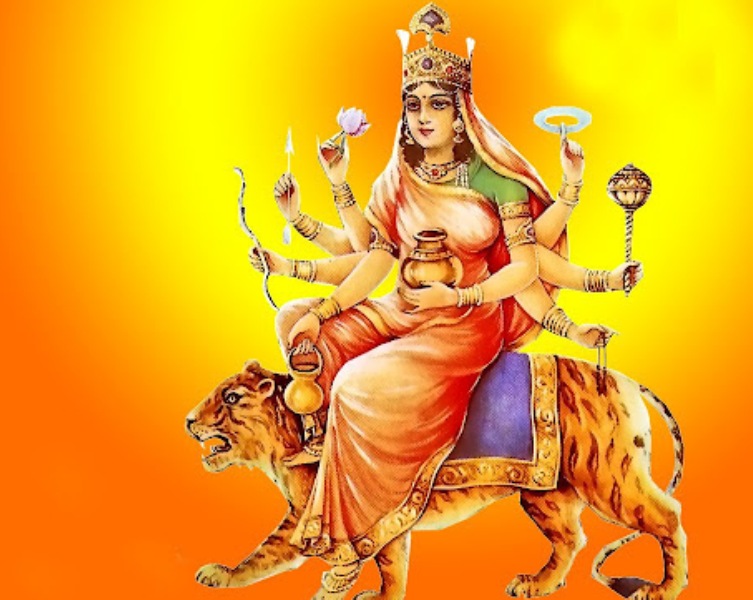
KATHMANDU: On Ashwin Shukla Chaturthi, the fourth day of Navaratri, devotees are worshipping Kushmanda Devi—the fourth manifestation among the Navadurgas—in Dashain Ghars and puja rooms across the country.
Each year on this day, Kushmanda Devi is venerated following traditional rituals as outlined in classical scriptures. The name “Kushmanda” is believed to derive from the term Kushma, which refers to the three types of suffering—spiritual, metaphysical, and cosmic (adhyatmik, adhibhautik, and adhidaivik).
As per sacred texts, Kushmanda Devi is so named because she dispels these three torments for those who seek refuge in her. Ancient Puranic scriptures describe her as holding water-filled pitchers and blood-filled vessels, symbolizing her power over creation and destruction.
A verse from the Durga Saptashati (Chandi) says: the universe, afflicted by three types of heat, resides in her cosmic womb. Hence, she is known as Kushmanda.
Throughout Navratri, devotees recite scriptures such as the Durga Saptashati (Chandi) and Shrimad Devi Bhagavata, along with other hymns dedicated to the Goddess. It is widely believed in Sanatan Dharma that worshipping the Goddess during these nine days brings strength, prosperity, and wisdom.
The Navadurga—nine forms of Goddess Durga—are worshipped in sequence: Shailputri (Day 1), Brahmacharini (Day 2), Chandraghanta (Day 3), Kushmanda (Day 4), Skandamata (Day 5), Katyayani (Day 6), Kalaratri (Day 7), Mahagauri (Day 8), and Siddhidatri (Day 9). These nine forms together symbolize different aspects of divine feminine energy.
During this period, temples across Nepal witness a surge of devotees. In the Kathmandu Valley, major temples such as Guheshwori, Jayabageshwori, Maitidevi, Kalikasthan, Naxal Bhagawati, Bhadrakali, Shobhabhagawati, Raktakali, Shwetakali, Bijeshwari, Kankeshwori, Kalankimai, Chamunda Devi, Sundarimai, Bajrayogini, and Indrayani see long lines from early morning.
The 15-day Bada Dashain festival—from Ghatasthapana to Kojagrat Purnima—celebrates the triumph of divine power and marks one of the most spiritually significant periods in Nepal’s religious calendar.





Comment