




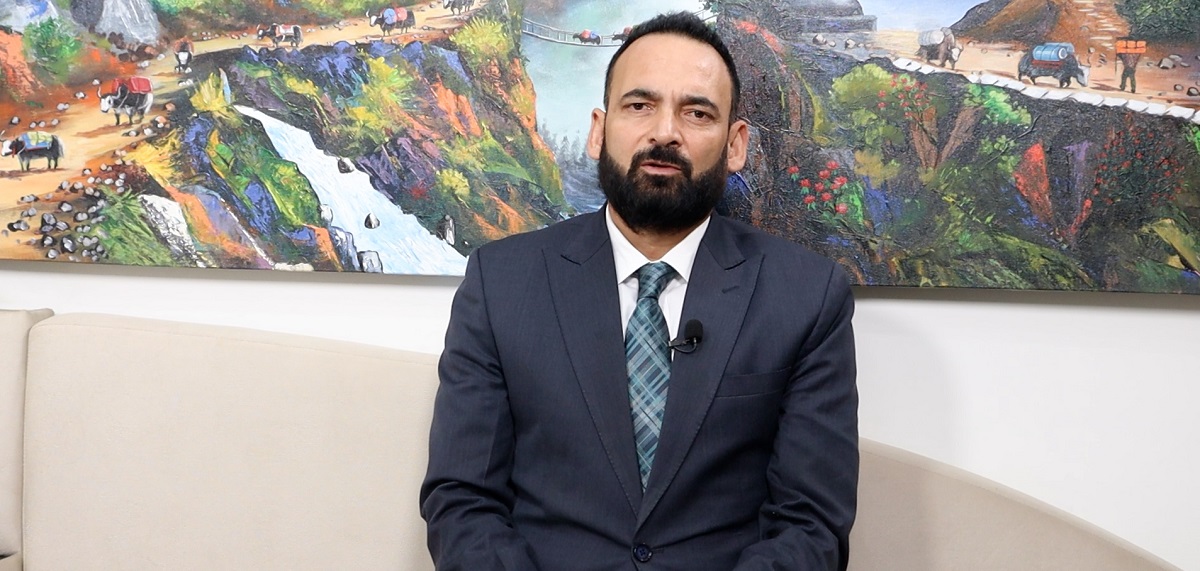
Engineer Pradeep Adhikari, Director General of the Civil Aviation Authority of Nepal (CAAN), is approaching the end of his tenure in the coming months. Under his leadership, Nepal has seen major infrastructure projects move forward, including the completion of international airports in Pokhara and Bhairahawa, as well as the ongoing runway expansion at Tribhuvan International Airport (TIA) in Kathmandu.
His tenure, however, has not been without controversy. A parliamentary subcommittee led by Rajendra Lingden accused CAAN of widespread corruption in the construction of Pokhara International Airport, even naming Adhikari in its report, something he strongly rejects, challenging MPs to present evidence.
He has also courted debate over his opposition to splitting CAAN into two separate entities, arguing that the authority should remain intact. More recently, his crackdown on the misuse of TIA’s VIP lounge has put him in the spotlight again.
Speaking to Khabarhub, Adhikari responds to allegations, defends CAAN’s achievements, and lays out his vision for Nepal’s aviation future. EXCERPTS:
Recently, the issue of misuse of the VIP lounge at Tribhuvan International Airport came out through you. How serious is the problem?
The problem is not only at TIA, but also at the other two international airports and even domestic ones. By law, only those designated in the government gazette are allowed to use the VIP lounge. This is written clearly and posted inside the lounge itself. But in practice, others have also been allowed access.
I admit that our social culture has distorted how the VIP lounge is used. At Kathmandu airport, the issue is particularly sensitive. When VIPs use the lounge, they are exempted from certain protocols, security checks and immigration procedures, for example. Such privileges should only be for those legally entitled, not for people who pressure the administration or misuse influence.
The bigger concern is: if illegal or suspicious activities take place under the cover of the VIP lounge, who bears responsibility? That’s why we’ve enforced stricter rules. From now on, only those officially listed in the gazette will be allowed.
CAAN has been undertaking expansion works at TIA, including runway improvements. How much has been completed, and what’s the current status?
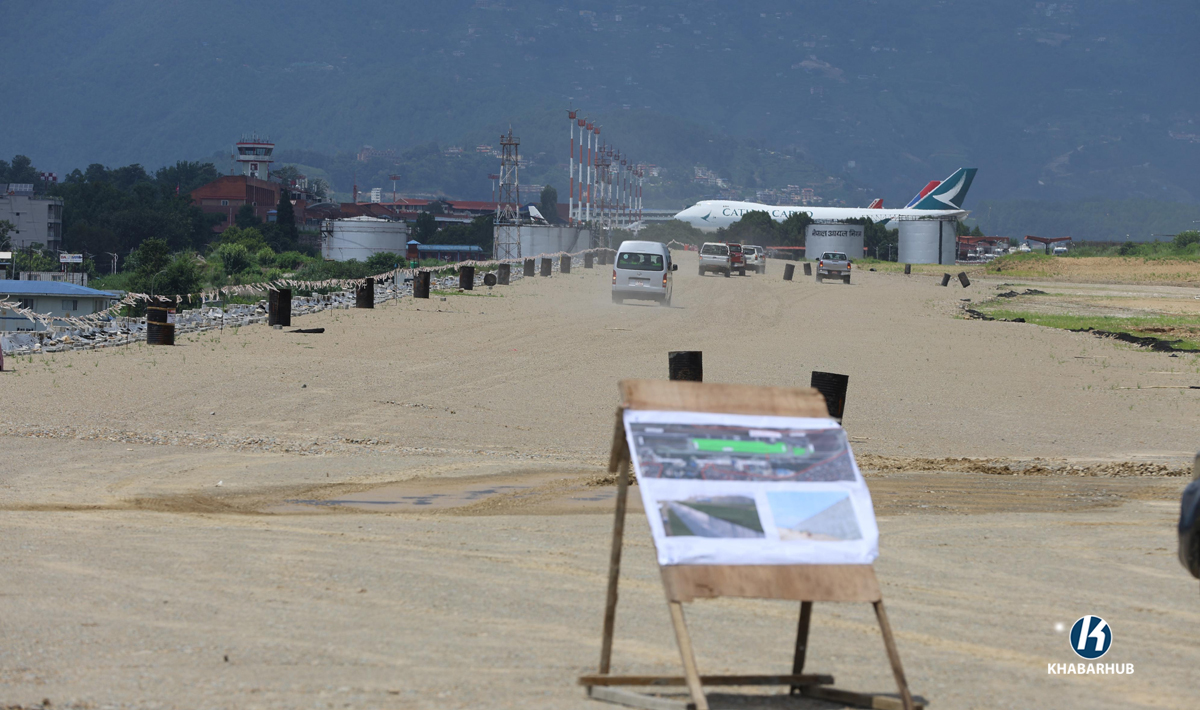
There are three main projects underway at TIA: construction of a parallel taxiway, development of hangar aprons, and building an international aircraft parking bay.
The parallel taxiway, running alongside the runway, was completed during a 10-hour airport closure. It meets the required standards. The hangar apron is progressing well, and the new international parking apron, which will accommodate 18 narrow-body aircraft, is nearly finished. Within six months, all three should be complete.
Elsewhere, major works are ongoing too: new terminals in Biratnagar, Bharatpur, and Nepalgunj; night-landing lights in Rajbiraj; ATR-72 aircraft now flying from Surkhet and Tumlingtar, which were nearly defunct.
CAAN’s data shows around 20 airports in Nepal are not currently operating. Why has this happened?
We need to understand these airports in context. Many were built before road networks existed, serving as lifelines for remote regions. For example, Palungtar airport, now just 2.5 hours by road from Kathmandu, was once essential.
By the 15th development plan, Nepal aimed to blacktop 29 airports. We actually completed 40. Today, grass airstrips would be embarrassing for a country like ours.
True, not all are commercially viable, but strategically they’re vital. Think of Jajarkot during the earthquake, without Chaurjahari airport, state relief couldn’t have reached so quickly. The problem is not infrastructure, but the lack of enough aircraft. We built airports, but didn’t expand fleets.
From a business perspective, aren’t many of these airports unviable?
All these airports were built with state funds. CAAN is not a profit-making company, it has national and international obligations.
Should Humla residents not have a blacktopped runway? It’s wrong to think “as long as I can fly from my city, remote people don’t need it.” Tomorrow, if Nepal Airlines adds 10 aircraft, all these airports will come alive again. This isn’t impossible, NA once had 12 Twin Otters.
Does CAAN have plans to expand or build new airports in the current fiscal year?
I’ve been DG for 3.5 years, and during my term no new airport construction has started. Nor have we poured money into airports that don’t operate. The current fiscal year has no policy or budget for new airports. Some small allocations exist from government, but they are insufficient and impractical to implement. Unlike in the past, we’ve avoided reckless spending.
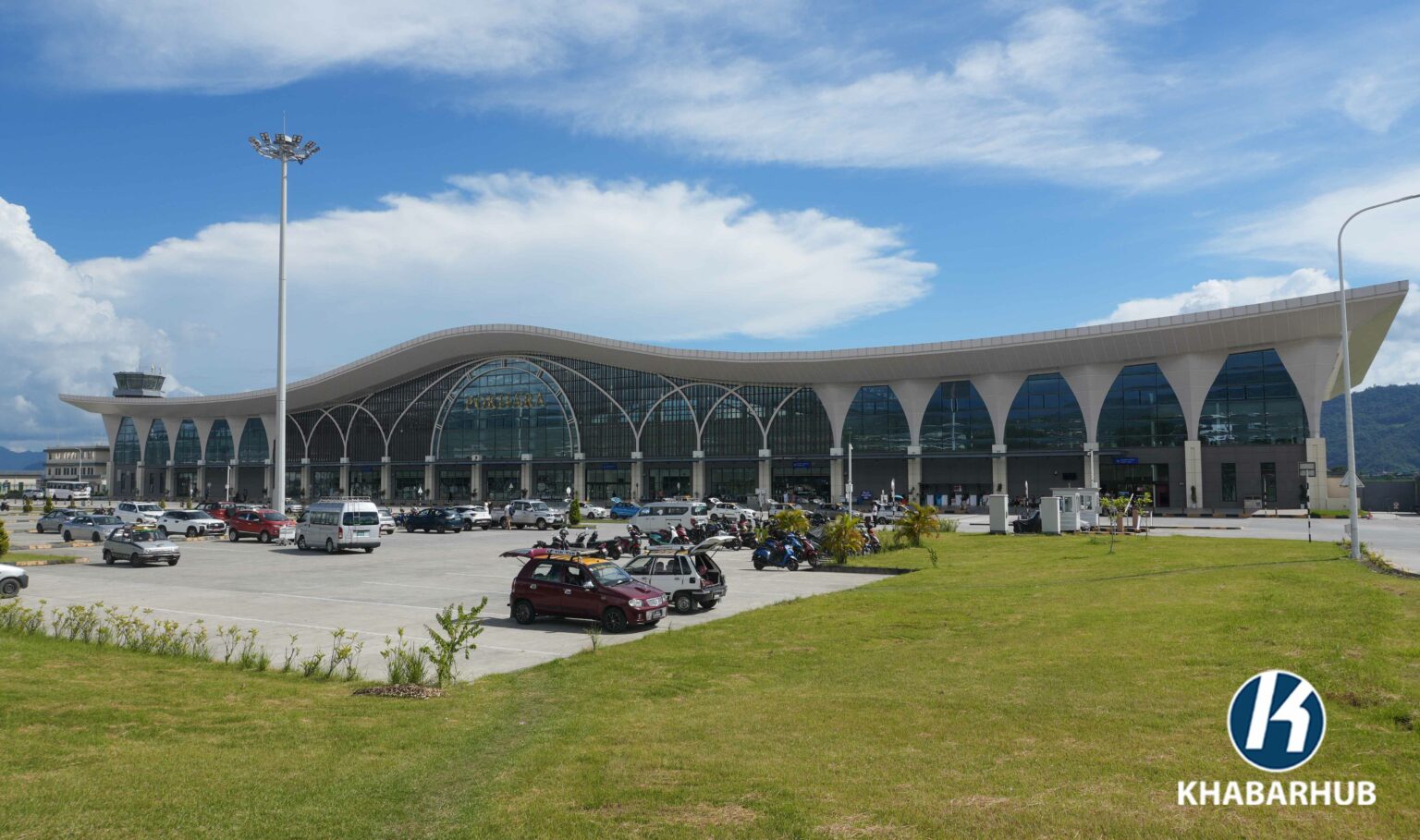
Pokhara International Airport has yet to be formally handed over. When will that happen?
Almost all work is complete. Normally, after construction, there is a defect liability period of one year. It’s been three years of operation now without any major issues. So there’s no obstacle, handover will happen soon.
Why has the handover been delayed?
Only minor works remain, gardening, painting, cosmetic tasks. Delays also arose because of criticisms from various quarters, so we took time to address and refine issues. Frankly, handover should have happened earlier.
Critics say Pokhara and Bhairahawa airports are underutilized. Why haven’t they operated at full capacity?
Technically, both airports are fine. Pokhara was designed for narrow-body aircraft (155–165 passengers), and test flights have confirmed it works. Bhairahawa can handle both narrow- and wide-body aircraft.
The real issue is global. Aviation worldwide is struggling, economies are weak, and demand is low. Kathmandu airport’s capacity is 9.2 million passengers; it would have saturated by 2022 if not for COVID. To prepare, we built Pokhara (1.5m capacity) and Bhairahawa (3m). Together, they can handle 4.5m passengers.
But we lack aircraft. Nepal’s flag carrier has just four international planes. If we had even 10–15 more, both airports would already be in use. Airports alone don’t create business—airlines need demand.
Prime Minister KP Sharma Oli is visiting India. Will the issue of air routes for Bhairahawa be raised?
Let me clarify: there is no route problem at Bhairahawa. International carriers are already flying there. The problem is not routes, it’s business, economy, and lack of aircraft.
However, during the visit, Nepal will raise broader issues like near-border operations and additional routes, such as opening Mahendranagar for entry instead of only Simara, which would save 15–20 minutes.
A parliamentary subcommittee led by Rajendra Lingden accused CAAN of corruption in Pokhara airport. Where does that issue stand?
The report listed 8–9 issues but provided no evidence. Why wasn’t I called to testify live before the committee? Why spread the report to the press beforehand without proof?
I challenge them: show the evidence. For example, they claim Rs 15 billion was embezzled from a Rs 22 billion project. Really? Who pocketed 15 billion? Did the Chinese government distribute it? In a country where corruption is punishable by death, would China allow this? Such baseless claims have damaged reputations.
If the project cost was inflated, do a valuation. Send civil, CNS, and electromechanical engineers to assess. In fact, Pulchowk Engineering Campus already verified the cost as over Rs 22 billion. This was also cross-checked by both governments before loan agreements.
Unless they can show a single rupee transferred from CAAN’s account to contractors illegally, this is not a case. I say: prove it, or withdraw the allegations.
Nepal remains on the EU aviation safety blacklist. What’s the status?
We are in ongoing dialogue. For over a year, Nepal has had no major accidents, while even top-rated countries by ICAO have seen crashes. Aviation safety is continuous learning, and we’re improving oversight.
But let me stress: this is not purely technical. ICAO audits show Nepal scoring above both global and Asia-Pacific averages. Yet the EU still blacklists us. If tomorrow the African Union or Arab Union creates their own lists, should we blindly accept them? This undermines Nepal’s sovereignty.
Your tenure is ending soon. How do you evaluate your time as DG?
When I started in January 2022, Nepal had one international airport. Now we have three. Forty airports have been blacktopped. Night flights are possible at multiple locations. Kathmandu’s parking bottleneck has been eased by shifting planes to the Tarai.
Under my term, Nepal passed ICAO audits above regional averages. Major works at TIA have been completed on time and to quality standards. We’ve introduced live weather cameras in risky mountain routes like Pokhara–Jomsom and Kathmandu–Lukla, improving safety significantly.
So yes, there have been controversies, but the results are visible. Within a year, Kathmandu airport will be transformed. That, I believe, is my legacy.






Comment