




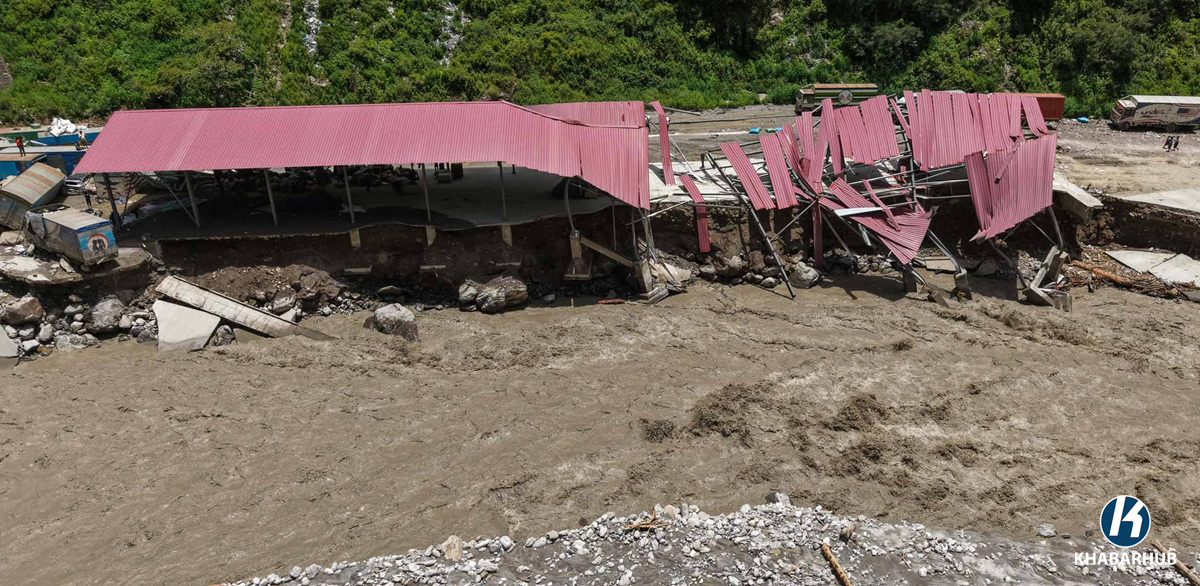
KATHMANDU: From mid-April (Baisakh 1) to July 21 (Shrawan 5), a total of 2,326 disaster incidents have occurred across Nepal, claiming the lives of 102 people and injuring 512 more, according to the National Disaster Risk Reduction and Management Authority (NDRRMA).
Spokesperson and Undersecretary Suresh Sunar informed that 20 individuals are still missing, and over 4,300 families have been directly affected by various calamities, including monsoon-related disasters.
Floods have been particularly devastating, with 151 incidents recorded, resulting in 13 deaths and 20 missing persons. Most of the flood-related damage occurred in Rasuwa, officials confirmed.
Landslides, another major hazard during the monsoon season, were responsible for 9 deaths across 207 incidents. Heavy rainfall led to 103 reported incidents, killing 2 people.
Lightning strikes claimed 28 lives across 229 separate incidents — making it one of the deadliest natural causes during this period. Snakebites were responsible for 5 deaths in 63 incidents, while fires — the most frequent hazard with 976 cases — caused 14 fatalities.
Other reported causes of death included windstorms (273 incidents, 8 deaths), wild animal attacks (121 incidents, 12 deaths), and altitude sickness (36 cases, 11 deaths). Incidents of wildfires (158), earthquakes (4), capsized boats (2), and hailstorms (2) were also recorded, though these did not result in fatalities.
In terms of property damage, floods had the greatest impact, affecting 1,254 households. Landslides affected 241 households, heavy rainfall impacted 547, and lightning strikes damaged 264 families. Fires destroyed or damaged homes of 1,089 families, while snakebites affected 70 households.
Windstorms were reported to have affected 531 families, wild animal attacks impacted 186, and altitude sickness affected 32 households. A few families were also affected by hailstorms and boat capsizes.
Authorities continue to monitor the situation closely as the monsoon season progresses, with rescue and relief efforts ongoing in the most affected areas.



Comment