




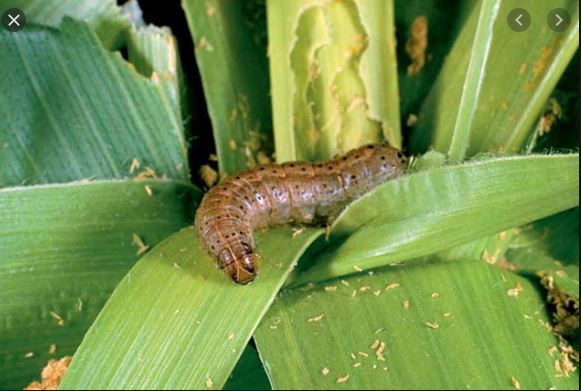
BAITADI: Farmers in Baitadi are increasingly concerned as an outbreak of American armyworm has begun damaging corn, the district’s main food crop.
According to Haridatta Joshi, head of the Agricultural Knowledge Center, the infestation has been reported in Dogadakedar and Shivnath rural municipalities.
“We’ve received several complaints about pest attacks on corn crops,” Joshi said, adding that the center has been distributing the pesticide Emamectin Benzoate. However, the center is now facing a shortage of this pesticide due to rising demand.
Dipendra Karki of Dogadakedar-7 said the pest has already damaged many cornfields. “The armyworm has destroyed the corn crop, and production is likely to decline,” he said, noting that the infestation has worsened due to the prolonged drought.
Suresh Bhatta, head of the agriculture branch of Dogadakedar Rural Municipality, explained that the armyworms remain hidden inside the corn plants during the day and feed on stalks, stems, leaves, and ears at night, causing rapid destruction.
“We’ve advised farmers in affected areas to apply pesticides,” he said. The pest has hit the key corn-growing zones directly.
The armyworm problem has become an annual occurrence over the past five years. Corn is currently cultivated on around 13,000 hectares in Baitadi district.






Comment