




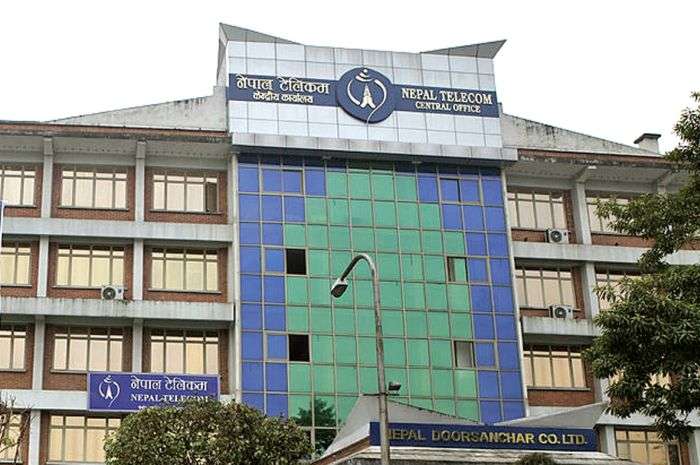
KATHMANDU: State-owned Nepal Telecom (NT) has reported a sharp drop of 48.67 percent in its net profit for the third quarter of the current fiscal year, according to the company’s newly published financial report.
The telecom giant posted a net profit of Rs 2.84 billion for the quarter, a decrease from Rs 5.54 billion recorded during the same period last fiscal year — a loss of over Rs 2.69 billion.
The company’s cash reserves and current investments have also declined to around Rs 34 billion by the end of the third quarter, signaling concerns about its financial health and liquidity.
One of the primary reasons cited for the decline is the increasing use of Over-the-Top (OTT) platforms such as Messenger, Viber, WhatsApp, and email services. These platforms have drastically reduced Nepal Telecom’s revenue from traditional voice and SMS services.
In addition, Nepal Telecom said it was compelled to make a one-time payment of Rs 20 billion for the renewal of its GSM license.
The company also blamed growing competition from internet service providers (ISPs) offering Wi-Fi-based mobile connectivity, which has contributed to a notable drop in mobile data usage and further squeezed profits.
The surge in OTT usage has also affected international call traffic, leading to a 22.37 percent or Rs 535.6 million drop in interconnection revenue compared to the same quarter last year.
Beyond operational challenges, regulatory costs remain a significant burden. According to NT spokesperson Nabin Kumar Mishra, telecom operators are required to pay a cumulative tax burden of 21.2 percent, including 13 percent VAT, 10 percent service fee, and 2 percent ownership tax.
Additional deductions for spectrum fees, royalties, and contributions to the Rural Telecommunication Development Fund further cut into profits, leaving only about 5% as net earnings after paying institutional tax.
The financial strain is not limited to Nepal Telecom. Industry data shows that Ncell, the country’s only other major telecom operator, has also experienced a consistent decline in revenue in recent years.
The combined revenue of NT and Ncell peaked at Rs 98.71 billion in FY 2017/18 but dropped by nearly 26 percent to Rs 73.14 billion by FY 2022/23, according to the Nepal Telecommunications Authority (NTA).
Former NTA chair Bhesh Raj Kandel noted that telecom services, though essential, are taxed like luxury goods in Nepal. He emphasized the need to reassess policy, especially the corporate tax rate of 30% imposed on telecom companies compared to 25 percent for most other sectors.
IT expert Manohar Bhattarai echoed this sentiment, stating that the shift in technology demands a restructuring of telecom-related taxes and policy reforms.
“The sources of telecom revenue have fundamentally changed, and policies need to evolve accordingly,” he said.
He added that while he does not advocate banning OTT platforms, the government must consider how to manage their impact on traditional telecom services. “If not addressed, the sustainability of multi-billion-rupee telecom investments will be at risk,” Bhattarai warned.
Nepal is currently testing 5G services in select areas. However, declining revenue could delay or jeopardize the nationwide rollout. Nepal Telecom has expressed concerns over insufficient funds to scale up 5G infrastructure.
Ncell CEO Jabbor Kayumov recently highlighted these financial pressures, stating that telecom companies are being pushed toward crisis.
“A large portion of our revenue goes to taxes, about 20 percent to new equipment, and the rest barely covers operational expenses,” he said.
According to Kayumov, launching full-fledged 5G services could require a combined investment of over Rs 60 billion from both major telecom operators — an amount that may be out of reach if the current revenue trends persist.






Comment