




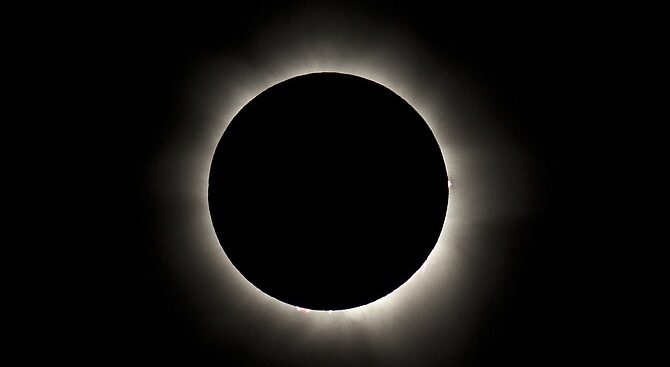
KATHMANDU: The last solar eclipse of the year will take place today (Sunday, September 21), offering a spectacular celestial display for observers in the Southern Hemisphere.
During this partial eclipse, the Moon will obscure part of the Sun, creating a striking visual experience for people in Australia, New Zealand, Antarctica, and nearby Pacific Islands.
However, today’s solar eclipse will not be visible from Nepal as it will occur late at night in Nepal Standard Time (NST), specifically from 10:44 PM on September 21 to 3:08 AM on September 22, when the Sun will be below the horizon.
Because solar eclipses can only be seen when the Sun is above the horizon, Nepal will not be able to observe this event.
Where it will be visible
The best views will be in eastern Australia, New Zealand, Antarctica, and large parts of the Pacific Ocean. In some areas of Antarctica, up to 85% of the Sun will be covered. Conversely, the eclipse will not be visible across Asia, Africa, Europe, or the Americas.
Why it’s a partial eclipse
Solar eclipses occur when the Moon moves between Earth and the Sun, casting a shadow on parts of the Earth. This one is a partial solar eclipse, meaning the alignment isn’t perfect—only a section of the Sun will be obscured by the penumbra, the Moon’s outer shadow—making it look as though a portion of the Sun is missing.
Astronomical importance
Each solar eclipse highlights the precise movements of the Earth, Moon, and Sun, which astronomers have been tracking for centuries. For skywatchers in the Southern Hemisphere, this event offers a fascinating glimpse of cosmic alignment. India, however, won’t see another solar eclipse until 2027.






Comment