




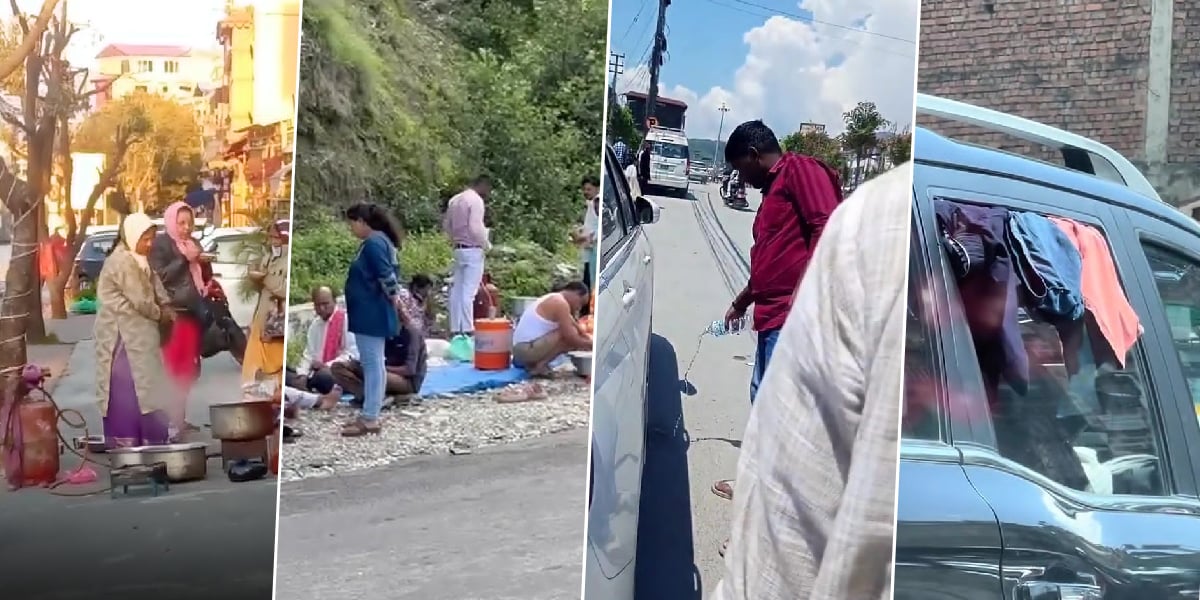
KATHMANDU: From drying clothes on car windows and cooking on public streets to incidents of public urination and littering, several videos involving Indian tourists in Nepal have recently gone viral on social media.
While the actions involve only a small number of individuals, they have triggered widespread discussion about civic sense, responsible tourism, and the importance of respecting public spaces. The incidents have also prompted many social media users, including Indians themselves, to question how travelers represent their countries when abroad.
The relationship between Nepal and India extends far beyond politics, diplomacy, and economics. The two countries share deep historical, religious, cultural, and linguistic ties. Every year, millions of Indian pilgrims and tourists visit Nepal, particularly religious sites such as Pashupatinath and Muktinath. Many also travel to enjoy Nepal’s mountains, natural beauty, and cooler climate.
From an economic perspective, the growing number of Indian tourists is highly beneficial for Nepal’s tourism industry. However, certain incidents involving some visitors have sparked discussions about civic responsibility and public behavior in tourist destinations.
When people travel abroad, their actions often shape perceptions of their home country. In recent years, some Indian tourists visiting Nepal have drawn criticism for behaviors such as littering, spitting in public places, urinating in open areas, and engaging in activities viewed as inappropriate in public spaces.
Maintaining cleanliness is a shared responsibility between governments and citizens. While authorities can provide infrastructure and sanitation services, visitors and local residents alike must play their part in keeping public spaces clean and welcoming. Several recent incidents have reignited conversations about civic awareness among tourists.
Underwear hung from a car window
A video that circulated on social media some time ago showed an Indian tourist drying underwear on the window of a private vehicle while traveling in Nepal. The footage quickly went viral, with many social media users criticizing the act as inappropriate and lacking basic civic etiquette.
Cooking food on public streets
Many Indian tourists visit Nepal’s hill stations and mountain destinations to escape the intense summer heat in India. During the warmer months, there is a significant influx of visitors to destinations such as Muktinath and Pokhara.
As one of Nepal’s most popular tourist cities, Pokhara has long been the focus of efforts by both federal and local authorities to maintain cleanliness, safety, and aesthetic appeal. However, videos shared on social media have shown some tourists cooking food on roadsides and public streets in the city.
Critics argue that such activities can undermine the image of a well-managed tourist destination. Pokhara attracts visitors from around the world, and maintaining public order and cleanliness is considered essential to preserving its reputation as one of Nepal’s leading tourism hubs.
While isolated incidents should not be used to judge an entire nationality, they have sparked broader discussions about responsible tourism and the importance of respecting local norms and public spaces while traveling abroad.
Public urination sparks criticism
A video that circulated widely on social media showed two Indian tourists urinating in an open public area despite the presence of people nearby. In the video, a Nepali woman recording the incident confronts them, asking whether the location was an appropriate place to urinate.
The tourists, apparently unable to understand Nepali, repeatedly responded by asking her to speak in Hindi. When the woman continued questioning their actions, they apologized and attempted to leave the scene. The video drew criticism online, with many social media users arguing that visitors should respect local norms and public spaces while traveling abroad.
Cooking and dining near a pilgrimage site
Daunne, located along the Siddhartha Highway between Butwal and Bardaghat, is a popular stop for travelers and pilgrims visiting the Daunne Devi Temple. The area is also known for its scenic surroundings and roadside eateries serving both vegetarian and non-vegetarian meals.
Recently, another video featuring Indian tourists went viral on social media. The footage showed a group preparing and cooking food near the entrance to the temple area. Individuals were seen sitting by the roadside, rolling dough, cutting vegetables, and cooking meals.
While some viewed the activity as harmless, others argued that preparing food in public areas near religious sites could affect the cleanliness and appearance of important pilgrimage destinations.
Spitting “gutka’ on a public road
In another incident that attracted attention online, a group of Indian tourists traveling in a private vehicle were seen spitting “gutka” (chewing tobacco preparation) onto a public road in Nepal. A Nepali youth confronted them and questioned why they were discarding waste on the street.
Initially, the tourists appeared surprised by the criticism. However, after being challenged, they reportedly attempted to clean the area using bottled water. The video quickly spread across social media platforms, drawing criticism from both Nepali and Indian users.
Many Indian social media users also condemned the behavior, arguing that such actions damage the image of Indian travelers abroad and reflect poorly on the country as a whole.
One user, identified as Divya, commented: “When you travel abroad, why engage in behavior that reflects poorly on your country?”
Another user, Kabir Khan, questioned why some people continue habits such as spitting in public despite the negative impression it creates internationally. He noted that cleanliness depends not only on government initiatives but also on individual attitudes and behavior.
Similarly, Ashish Ranjan wrote that travelers represent their countries wherever they go and should avoid actions that could tarnish their nation’s image. He emphasized that civic responsibility and respect for public spaces are essential qualities for both domestic and international visitors.
Responsible tourism is a shared responsibility
While these incidents have generated widespread discussion online, observers note that the actions of a few individuals should not be used to judge an entire group of tourists.
Nevertheless, the episodes have highlighted the importance of civic awareness, responsible tourism, and respect for local communities. As Nepal continues to welcome millions of visitors each year, maintaining cleanliness and public decorum remains a shared responsibility for both residents and travelers alike.





Comment