




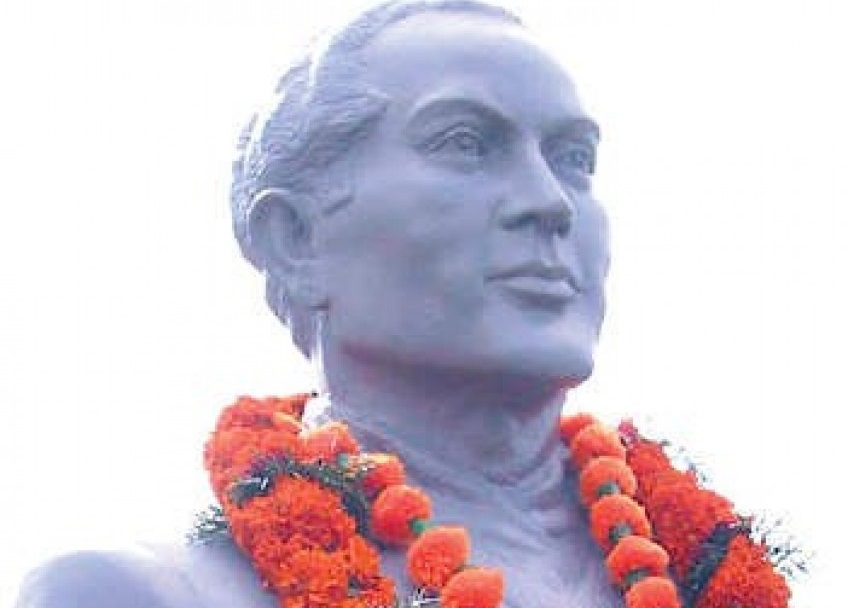
KATHMANDU: The 117th birth anniversary of Laxmi Prasad Devkota, a towering figure in Nepali literature, is being celebrated today through various programs held both in Nepal and abroad.
Devkota, born on Kartik Krishna Aunsi (Laxmi Puja) in 1909 in Dillibazar, Kathmandu, began writing poetry at the age of 10. Over his lifetime, he authored more than 100 works including epics, lyrical poems, essays, stories, dramas, novels, songs, literary criticisms, and short poems—establishing Nepal’s literary presence on the international stage.
His seminal work “Muna Madan”, which revolutionized Nepali literature by introducing the modern epic form, remains the best-selling publication in the Nepali language to date.
Known for championing a liberal-progressive literary movement, Devkota’s writings reflect themes of humanism, love for nature, and revolutionary ideals. His works present a unique fusion of Eastern and Western philosophies.
It is said that Indian scholar Rahul Sankrityayan once compared Devkota to the combined literary essence of India’s great poets Sumitranandan Pant, Jaishankar Prasad, and Suryakant Tripathi Nirala. Likewise, Natya Samrat Balakrishna Sama remarked that Devkota was “born thrice”—through his masterpieces Muna Madan, the epic ‘Shakuntal’, and the poem ‘Pagal’.
Devkota also played a significant role in promoting Nepali literature globally by translating Nepali works into foreign languages and representing Nepal at international literary conferences.
During his tenure as Minister of Education and Autonomous Governance, Devkota made Nepali language education compulsory across Nepal—an important milestone in linguistic unity. He was also instrumental in the establishment of the Nepal Pragya-Pratisthan (Nepal Academy), a legacy that continues to influence Nepali literature and culture.
Known for his extraordinary speed and spontaneity in writing, Devkota completed the epic ‘Shakuntal’ in three months, ‘Sulochana’ in ten days, and the lyrical poem ‘Kunjini’ in a single day. Despite enduring political turbulence, personal hardship, financial struggles, and family separation, he continued to produce works of remarkable depth and literary merit.
Devkota himself translated his famous poem Pagal into English and adapted numerous classical Greek sagas into Nepali.




Comment