




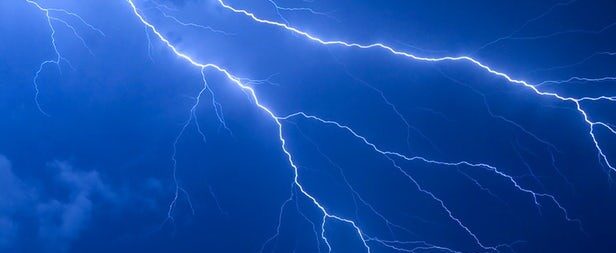
KATHMANDU: Lightning strikes have claimed the lives of 237 people and injured 908 others across Nepal over the past four years, according to the National Disaster Risk Reduction and Management Authority (NDRRMA).
The risk of lightning extends from Jhapa in Koshi Province to Kanchanpur in the Sudurpaschim, and from Humla in Karnali to Dhanusha in Madhesh Province.
Roshni Kumari Shrestha, Joint Secretary at the NDRRMA, stated that the districts most vulnerable to lightning are Jhapa, Udayapur, and Makawanpur.
Between Shrawan 1, 2078 BS and Jestha 5, 2082 BS, Nepal recorded 1,118 lightning incidents, affecting 1,607 families. Shrestha added that Nepal ranks fifth globally in terms of lightning-related disaster risk.
“Houses and tall structures are particularly vulnerable to lightning. People working in agriculture during the rainy season are often the most affected,” she said.
While lightning strikes are more frequent in Koshi Province, the greatest human and material losses have occurred in Lumbini Province.
In the past four years, Koshi Province reported 295 lightning incidents, resulting in 51 deaths and 84 injuries. Additionally, 366 homes were affected, 420 livestock killed, and property damage estimated at Rs 16.45 million.
Lumbini Province witnessed 180 lightning incidents, leading to 54 deaths and injuries to 165 people. The damage to property is valued at approximately Rs 349 million, with 98 livestock lost and 276 families affected.
According to NDRRMA data, fatalities in other provinces over the same period include 35 in the Far West, 27 in Madhesh, 25 in Bagmati, 24 in Gandaki, and 21 in Karnali.
Karnali also recorded the highest number of injuries (207), followed by the Far West (158), Gandaki (84), Bagmati (82), and Madhesh (28).
Madan Sigdel, Associate Professor at the Central Department of Hydrology and Meteorology at Tribhuvan University, stated that lightning is the second leading cause of disaster-related deaths and property damage in Nepal.
He noted that such incidents are most common during the pre-monsoon and monsoon periods, typically from late Chaitra to Asar.
During this time, the atmosphere becomes unstable, increasing the likelihood of lightning formation. Nepal’s diverse geography — spanning the Himalayas, hills, and Terai — contributes to the high frequency of lightning strikes.
While lightning cannot be prevented, Associate Professor Sigdel emphasized that damage can be reduced by up to 80 percent through public awareness.
He noted that lightning strikes tend to occur more frequently in the afternoon during the monsoon season, when people are outdoors working in fields, cutting grass, or grazing cattle.
He advised that such activities should be done in the morning and that people should avoid open areas during thunderstorms to reduce casualties.
Although the Department of Hydrology and Meteorology has installed radar systems in Udayapur, Palpa, and Surkhet to provide advance warnings, all three are currently non-functional.
According to climate expert Sigdel, once repaired, these radars could provide lightning alerts 30 minutes to an hour in advance by monitoring cloud formation and analyzing potential strike zones.
(RSS)



Comment