





KATHMANDU: Economic Digest offers a concise yet comprehensive overview of significant business happenings in Nepal, presented in easily digestible summaries.
Nepal’s economy began the fiscal year 2082/83 on a positive note, with the NEPSE index soaring by over 75 points and broad-based gains across all market sectors. Government revenue in 2024/25 grew by over 11% compared to the previous year but still fell short of revised targets, highlighting persistent challenges in meeting fiscal objectives.
New budget and monetary policies have come into effect, with lowered interest rates aimed at stimulating investment. Meanwhile, public spending patterns showed concerning trends: health insurance remains grossly underfunded despite growing obligations, and foreign travel expenses soared to a record NPR 200 billion in just 11 months, mostly for education.
Domestic production shortfalls continued to drive imports of basic goods like millet, while poor governance delayed critical infrastructure projects such as the Kanchanpur–Kamala road. Regulatory updates included stricter rules for precious metal purchases and a long-overdue revision of casino regulations, both aimed at better compliance and revenue control.
At the same time, institutional shifts—like the merger of IME Pay and Khalti and changes in Provident Fund rates—point to evolving dynamics in Nepal’s digital and financial sectors. Overall, while key macroeconomic indicators show signs of resilience, gaps in policy execution and structural bottlenecks remain areas of concern.
NEPSE surges 75.84 points
On Thursday, marking the start of fiscal year 2082/83, Nepal’s stock market jumped by 75.84 points (2.71%), lifting the NEPSE index to 2,870. Share prices climbed for 239 companies, while only nine saw a decline. Trading activity also increased notably, with volume reaching Rs 16.59 billion compared to Rs 14.03 billion the previous day. All sector indices rose; the “Others” group led the gains with a 5.09% surge, followed by Investment (3.17%), Life Insurance (3.14%), Hydropower (3.04%), Manufacturing & Processing (2.94%), and Finance (2.80%).
Govt collects NPR 1.178 trillion in 2024/25 revenue
In fiscal year 2024/25, government revenue reached NPR 1.178 trillion—an increase of NPR 120 billion (11.33%) over the previous year’s NPR 1.058 trillion. The revenue target was initially set at NPR 1.419 trillion and later revised to NPR 1.286 trillion in mid-year adjustments.
Gold and silver prices see modest rise
On Thursday, gold rose by NPR 300, reaching NPR 192,300 per tola, while silver increased by NPR 5 per tola. The highest-ever gold price was NPR 197,900 per tola, recorded on April 21.
New monetary policy takes effect
Effective Thursday is the new monetary policy for fiscal 2025/26, introduced by Nepal Rastra Bank Governor Dr. Biswo Nath Poudel. This includes key rate adjustments, such as reducing the bank rate from 6.5% to 6%.
Implementation of 2025/26 budget starts today
As fiscal year 2025/26 begins, the government has rolled out the policies and programs outlined in the annual budget. Presented by Deputy Prime Minister and Finance Minister Bishnu Prasad Paudel on May 29, 2025—and approved by both houses of Parliament—the budget is now in effect.
Extension granted for banks’ quarterly report deadline
Banks have been given more time to publish their financial results, with the deadline extended to 15 days after each quarter’s end. For the fourth quarter, reports are now due by July 30, compared to previous deadlines of 7 days (regular quarters) and 21 days (final quarter).
Health insurance funding falls short despite NPR 25 billion annual cost
Hospitals nationwide spend around NPR 25 billion annually under the health insurance scheme, yet the government allocates only NPR 7 billion to the Health Insurance Board. Although the upcoming year’s allocation has been increased to NPR 10 billion, it remains insufficient to cover hospital claims.
Nepalis spend NPR 200 billion on foreign travel in 11 months
Between July 2024 and mid-June 2025, Nepalis spent a record NPR 200 billion on foreign travel for education, employment, and tourism. Education-related expenses were the highest, totaling NPR 124.79 billion, according to Nepal Rastra Bank.
Nepal imports nearly NPR 750 million of millet annually
Due to low domestic production, Nepal imports nearly NPR 750 million worth of millet annually. In the first 11 months of fiscal 2024/25 alone, imports reached 14.35 million kilograms worth NPR 718.78 million, down slightly from the previous year’s 15.29 million kilograms worth NPR 754.42 million. Imports come primarily from India and China.
Twenty-three local governments miss budget deadline
By the end of fiscal 2024/25, 23 local governments (11 municipalities and 12 rural municipalities) failed to pass their budgets as required. Ten of these municipalities are in Madhesh Province and one in Koshi Province. Legal deadlines fell at the end of Asar (mid-July), but various challenges caused delays.
Sugarcane farmers miss out on subsidies after early sales
Farmers who sold sugarcane to mills before March last year will not receive the expected NPR 70 per quintal subsidy. The subsidy scheme for 2024/25 had been planned, but no funds were allocated in the fiscal 2025/26 budget.
Gold price rose by NPR 44,500 per tola in last fiscal year
During fiscal year 2024/25, gold prices increased by NPR 44,500 per tola. On July 17, 2024—the first day of the fiscal year—gold hit a record NPR 147,800 per tola. By July 16, 2025, it was trading at NPR 146,900 per tola.
Tighter rules implemented for precious metal purchases
The Inland Revenue Department now requires buyer identity verification for all gold, silver, and other precious metal transactions. The move aims to curb money laundering and prevent financing of terrorism.
Employees Provident Fund revises interest rates
The Employees Provident Fund has set an annual interest rate of 5% for both provident and pension funds. Loan interest rates were also revised: 6.25% for special loans, 7.25% for housing, education, and repair loans, and 7.5% for land and general-purpose loans.
Casino operating costs and taxes increased
The government has raised taxes and operational costs for casinos after 12 years by replacing the 2013 Casino Regulation with the new “Casino Regulation 2025,” which took effect on July 14.
Sirsiya dry port customs merged into Birgunj customs
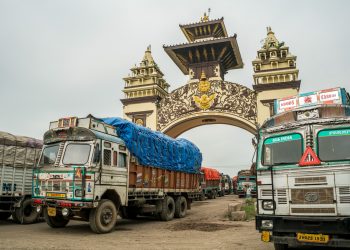
The Sirsiya Dry Port Customs Office has been officially merged with the Birgunj Customs Office, with integrated operations beginning immediately. It had previously functioned as a separate entity under Birgunj’s jurisdiction.
Road department recorded highest capital spending in FY 2017/18
In fiscal year 2017/18, the Department of Roads spent NPR 81.89 billion—91.72% of its NPR 89.28 billion budget—marking its highest capital expenditure in the past decade.
Kanchanpur–Kamala road project delayed by nearly five years
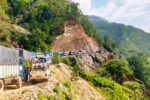
Construction of the western section of the Kanchanpur–Kamala Road—originally due in three years—remains incomplete after four years and nine months. Only 65% of the work from Kusaha (Saptari) to the Kamala River (Siraha) has been completed.
Thirty companies awarded CIP status for economic contribution
The government recognized 30 businesses and institutions as Commercially Important Persons (CIP) for their role in exports and economic development. The awards were presented by Minister Damodar Bhandari.
IME Pay and Khalti merge into ‘Khalti by IME’
From July 17, IME Pay and Khalti digital wallets have merged under a new unified brand—“Khalti by IME.” The new company, IME Khalti Limited, has over 12.7 million users and a paid-up capital of over NPR 540 million.


Comment