




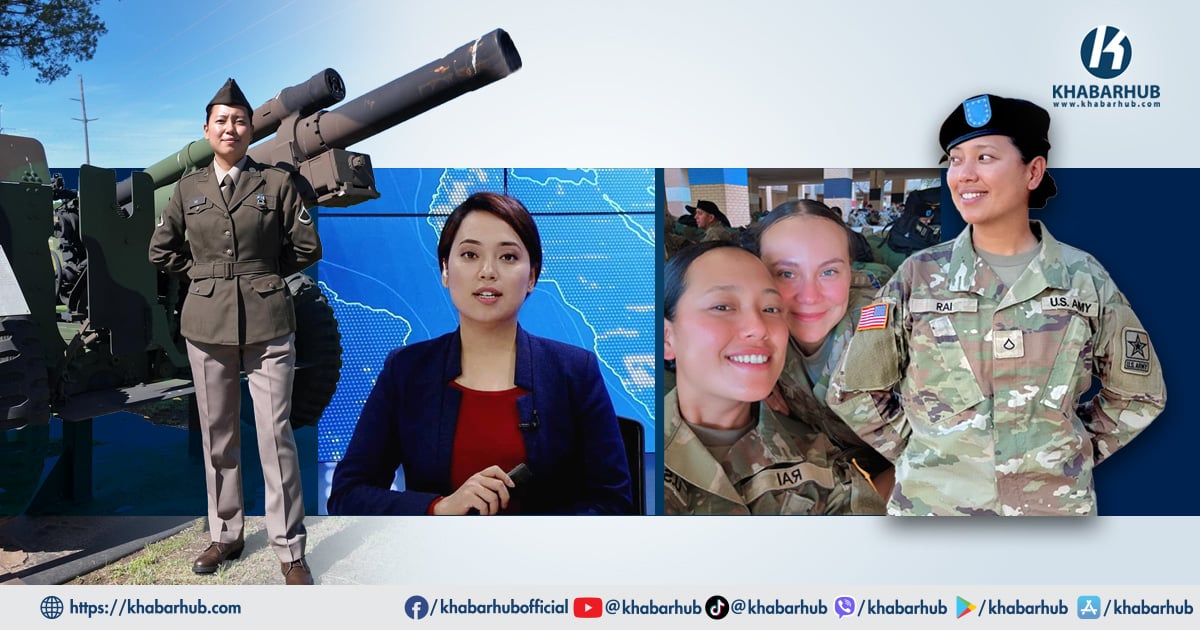
KATHMANDU: Jharna Rai is a familiar name in Nepali media. Once seen regularly in newsrooms and on television screens—reporting, producing, and anchoring—Jharna surprised many when she suddenly appeared in military uniform alongside American soldiers.
Social media buzzed with congratulations and curiosity. How did she transition from wielding a microphone to shouldering a rifle? Was it a personal choice or a necessity? Here’s Jharna’s journey, in her own words.
I studied at Samata Shiksha Niketan from Grade 1 through SLC. The school followed the Oxford curriculum and was a blessing for students from financially struggling families like mine. Samata provided a quality education entirely free of cost—books, tuition, everything.
The teachers were excellent, and foreign volunteers frequently came to teach. I received an ‘A’ grade education. Later, I completed my Bachelor’s in Journalism from Golden Gate International College.
In my first year of journalism studies, we had to do an internship. Our professors, many of whom worked in the media themselves, informed us about an opening at Himalaya TV.
Everyone in the class applied—but I was one of only two selected after a two-month internship and a screen test. The other was Shree Pandey, who later became a well-known celebrity anchor and brand ambassador.
That’s how my television journey began. After working in news for two years, I became more drawn to the production side. TV news isn’t just about reading headlines—there’s a whole world of editing and packaging behind it.
I became especially interested in film journalism and behind-the-scenes work. I wanted to understand how programs are created and how they could be improved.
“Many Nepalis choose to join the U.S. Army. Some do so by choice; others out of necessity. The benefits are attractive—better facilities, lifelong support, and more security than many civilian jobs offer.”
Even after finishing my bulletin, I’d stay back to learn production. News assignments often ran late into the evening, and production spaces were less crowded at night—perfect for learning. The senior staff were helpful and taught me willingly. I would create dummy projects, profiles, and practice on my own.
Eventually, people began noticing my work in production. Since the news and production studios were shared, I got a chance to assist there too.
I worked on shows like Roadies, directed by Aman Pratap Adhikari, and later on The Voice of Nepal.
While working with respected figures like Narayan Puri and Laxman Poudel, I presented some content I had developed for social media. Impressed, they offered me a production assistant role. That’s how I joined The Voice. Altogether, I spent nearly eight years in the media industry.
Moving to America
I came to the U.S. after receiving a Diversity Visa (DV). My brother was already living here. In Nepal, everything was going well for me. I had a respected job, growing recognition, and a developed personality. The media field had given me an identity.
But life abroad offers a different perspective—and I thought my younger sister should also experience that. Within a year, I believed she would understand what it really means to start over in a new world.
From DV lottery to military boots
They say there’s a world of difference between working with your family in Nepal and struggling alone abroad—and I experienced that firsthand. My brother was the one who filled out the Diversity Visa (DV) form for me. I wasn’t enthusiastic about it at all. When he asked for a photo, I went to a photo studio and sent him one—just to make him happy.
The results came the following year. At 2 a.m., my brother called me excitedly to tell me I had won the DV. I didn’t feel particularly happy or sad—it felt neutral. After all, the DV is a matter of luck. But it was now clear that I would one day end up in America. I arrived in the U.S. in February 2024.
A military calling
My family background played a big role in my career shift. I had always told myself that if I had to leave media and start a new career, it would be in the police or military. I had even shared this plan with my close friends Bindu Sharma and Shree Pandey.
My grandfather served in the Indian Army, though he has since passed away. My father, on the other hand, was never interested in military life. Growing up, friends used to say I’d become a doctor or a pilot—but I always dreamed of becoming a police officer. That environment at home must have influenced me.
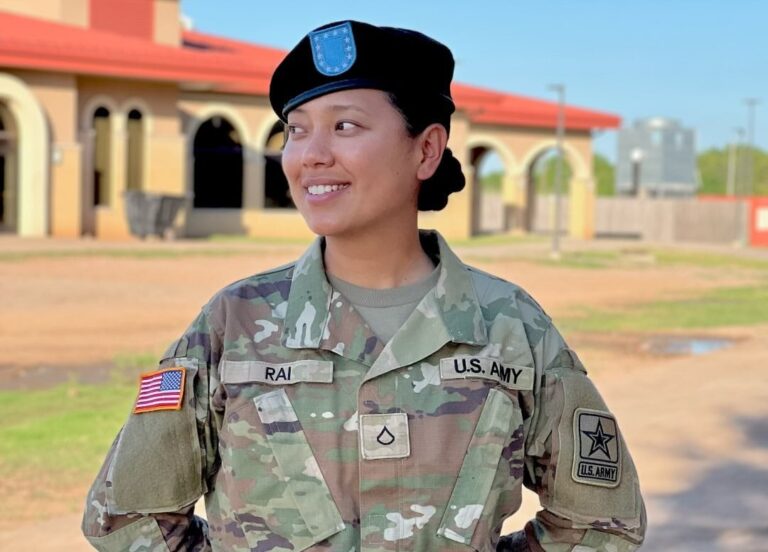
Although I loved media and journalism, I couldn’t follow every passion at once. In America, those with green cards are eligible to join the military. So when I came here, I already had the mindset of starting a new career. I received my green card within the same year and enrolled in the U.S. Army.
I had already achieved what I wanted in media. I had worked with joy and passion, gaining satisfaction from the experience. But I also had another dream—and it was time to pursue that. My decision to join the army aligned with a plan I had envisioned long ago. It also fulfilled my brother’s wish.
Behind the uniform
Many people think it’s easy to join the U.S. Army compared to other countries—but that’s a misconception. It may look simple from the outside, but the reality is far more demanding. The training is intense. Once inside, you realize how difficult it truly is—especially when you’re cut off from the outside world.
During training, you live in complete isolation. There’s no contact with family or friends, except for a brief phone call—10 minutes to an hour—once a week. You’re tested physically and mentally every day.
I was in the middle of training, and it was extremely tough. There were moments I genuinely felt like giving up. There are very few Nepalis in the program. Even if you come across one, you’re not allowed to talk. You live and train with people from all over the world.
In those moments, mental strength becomes your only survival tool. Your peers may be taller, stronger, and faster—and you fear falling behind. But after a month of intense training, you start to change. Your body transforms. You realize you’re capable of more than you thought. You become someone new, without even noticing the transition.
The age limit to join was recently increased from 40 to 42. But entry still requires strict physical, mental, and educational qualifications. Unlike in Nepal, height isn’t a major criterion. Here, even someone 4.5 feet tall can become a soldier if they meet the other requirements.
My role in the U.S. Army
I didn’t know there were so many branches and departments within the army. In the U.S. Army, there are over a hundred different roles—from medical and dental to mechanics and aviation. I work in unit supply. This department manages the weapons, vehicles, equipment, and facilities needed by the entire brigade.
You can choose your preferred job, but placement depends on your score in the written exam. A good score opens up better opportunities.
My current role doesn’t involve front-line combat. But if duty calls, we’re all trained to step in. Initially, there was talk that I could continue my media work within the army. But to work in army media, you must be an American citizen, not just a green card holder.
The long haul
Many Nepalis choose to join the U.S. Army. Some do so by choice; others out of necessity. The benefits are attractive—better facilities, lifelong support, and more security than many civilian jobs offer.
Military service is based on contracts—usually ranging from 3 to 6 years. How long you serve is up to you. There’s one month of paid leave per year, two days off each week, and all national U.S. holidays are observed. Additional time off can also be requested when needed.
Balancing duty and family
Duty hours in the military depend on the nature of the work. At present, I work from 9 to 5. On days when the tasks are completed early, I’m allowed to leave as early as 2 p.m. Some roles, however, require 24-hour shifts depending on urgency and assignment.
To receive a military pension, one must serve for at least 20 years. That’s a serious commitment, and it’s important to be informed before joining. Coming into the U.S. Army based solely on hearsay can lead to disappointment. You have to evaluate whether you’re truly suited for the training, the structure, and the lifestyle that comes with military service.
I’m also married now, and my husband lives with me in the U.S. Since I also want to dedicate time to my family, I specifically chose a role that allows for a more manageable work schedule. My husband works in a different field, so balancing our time together matters to both of us.
Finding community abroad
During training, I met a fellow Nepali, and now there are about 15 of us in the battalion. The Americans recognize Nepalis—either as Gurkhas or as people from the land of Mount Everest. They have a good impression of the Nepali Army and often associate Nepalis with bravery and resilience.
We’re also known for being warm and communal. Americans, in contrast, tend to be more individualistic—they prioritize themselves first. But Nepalis are raised to put others first and themselves second. That’s why, I believe, Nepalis are well-liked and respected in military circles here.
Strength through struggle
In training, we are required to handle weapons weighing five to seven kilograms. At first, my hands ached from carrying them—but after weeks of training, those same weapons started to feel lighter.
You must pass a firearms qualification test that includes shooting targets from up to 300 meters away. You learn to shoot while lying down, to run with your weapon, and to respond to simulated attacks—sometimes knocking down a target in just four seconds. This process continues until you pass.
Unlike many others, I was never afraid to handle a weapon. In fact, I had always been fascinated by them. The first time I held a gun, I felt genuine joy. It was like the satisfaction mountaineers feel when they finally reach a summit. That moment gave me a rush of pride and excitement.
Of course, not everyone reacts that way. During training, many people’s hands tremble. The pressure creates anxiety, and the physical and mental toll is significant.
A long-term commitment
To receive a military pension, one must serve for at least 20 years. That’s a serious commitment, and it’s important to be informed before joining. Coming into the U.S. Army based solely on hearsay can lead to disappointment. You have to evaluate whether you’re truly suited for the training, the structure, and the lifestyle that comes with military service.






Comment