




KATHMANDU: The ear is a sensitive part of the body, and if not cared for properly, it can develop problems such as earache, eardrum rupture, and bone damage. Doctors note that earaches are generally more common in children than in adults.
The ear is divided into three parts: outer, middle, and inner. When there is an infection or injury inside the ear, fluid or pus may flow out. Infection in the middle ear causes pus buildup, which can cause pain when discharged, especially if the outer ear is injured. Earache can also occur during colds or coughs.
Causes of earache
Ear, nose, and throat specialist Dr. Arun Sapkota explains that many mothers feed their young children while lying down, which can cause milk to enter the upper throat behind the nose and lead to ear infections.
Additionally, children with weaker immunity often suffer from frequent colds and coughs, increasing their risk of ear infections.
A small tube connects the back of the nose, the upper throat, and the ear. Normally, fluid drains through this tube, allowing air to balance pressure in the ear. Infection can enter through this tube, causing earaches.
Most children experience earaches between ages 5 and 8, but the problem usually decreases as immunity strengthens. Adults who suffer from earaches likely had weakened ears as children.
Dr. Sapkota identifies three types of ear infections in children: acute otitis media, acute suppurative otitis media, and otitis media with effusion.
Acute otitis media causes redness of the eardrum and pain during a cold or cough. Acute suppurative otitis media involves pus discharge.
Otitis media with effusion is often symptomless but causes fluid buildup that leads to gradual hearing loss, which may affect school performance and attention. Untreated, it can become chronic.
Diagnosing ear infections
Swollen eardrums often cause children to wake up crying at night. If a child has a cold, the infection may be otitis media. Dr. Sapkota warns against putting oils, basil juice, or other substances in the ear, as these can cause further damage.
Painkillers such as Cetamol or Flexon can be given for relief at home, but the child should see an ENT specialist promptly. If symptoms persist beyond 4-5 days, a medical check-up is necessary.
Prevention tips
To prevent ear infections:
Do not put oil or any liquid inside the ears.
Avoid giving children very cold foods.
Take care to prevent water from entering the ears during bathing.
Practice good ear hygiene.
Avoid feeding babies milk while lying down, as milk entering the throat can cause infections.
Dr. Sapkota advises regular ENT check-ups every six months rather than trying to clean ears with cotton buds. Earwax is natural and protective, trapping dust and preventing insect entry. Using cotton buds may push dirt deeper, causing harm.
Final advice
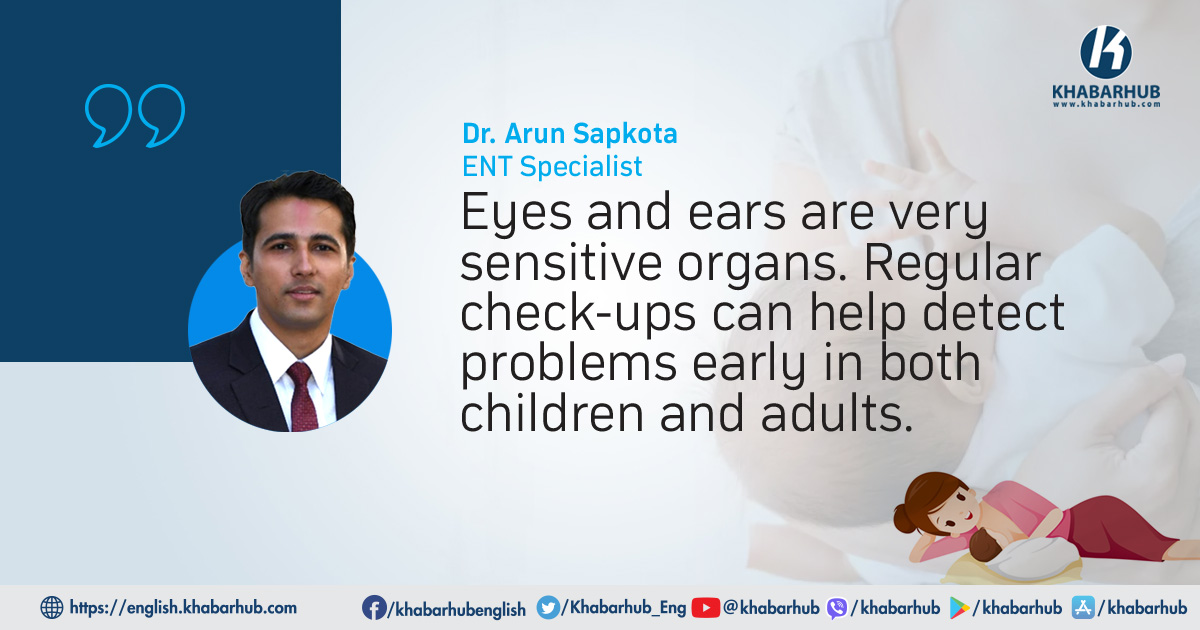
“Eyes and ears are very sensitive organs,” says Dr. Sapkota. “Regular check-ups can help detect problems early in both children and adults.”






Comment