




KATHMANDU: The KP Sharma Oli-led government, backed by a two-thirds majority, collapsed following a two-day Gen-Z-led movement demanding an end to corruption and unrest.
In the wake of the government’s fall, an interim administration has been established with the responsibility to organize elections scheduled for March, 2026.
The fall of the Oli-led government, which was formed by the two largest parties in the House of Representatives—the Nepali Congress and the CPN-UML—has shifted the country in a new direction.
Amid the political crisis that erupted after Oli resigned on the second day of the Gen-Z protests and fled to Shivapuri by Nepali Army helicopter, President Ram Chandra Poudel appointed former Chief Justice Sushila Karki as Prime Minister on Friday.
After Karki’s appointment, the House of Representatives was dissolved before completing its five-year term, effective from 11 pm that Friday. The election date to select new members of the House has been set for March 5, 2026.
In the midst of the political turmoil, President Ram Chandra Paudel appointed former Chief Justice Karki as the interim Prime Minister and announced the election date. Karki recommended the dissolution of the House of Representatives to the President immediately after taking the oath of office.
There is a long-standing tradition in the Congress of avoiding conventions within its fraternal organizations, appointing loyalists as presidents, and forming temporary working committees. These sister organizations have been without proper leadership for too long, he added.
Following the appointment and dissolution, the Nepali Congress held a virtual meeting of its Central Working Committee, expressing strong objections to President Paudel’s recent decision. The meeting resolved to oppose the dissolution of the House.
The Nepali Congress has yet to make a formal decision regarding the upcoming elections organized by the interim government, which it considers unconstitutional. The party is preparing to discuss the elections at its Central Working Committee meeting. However, most leaders within the Nepali Congress believe preparations for the elections should move forward.
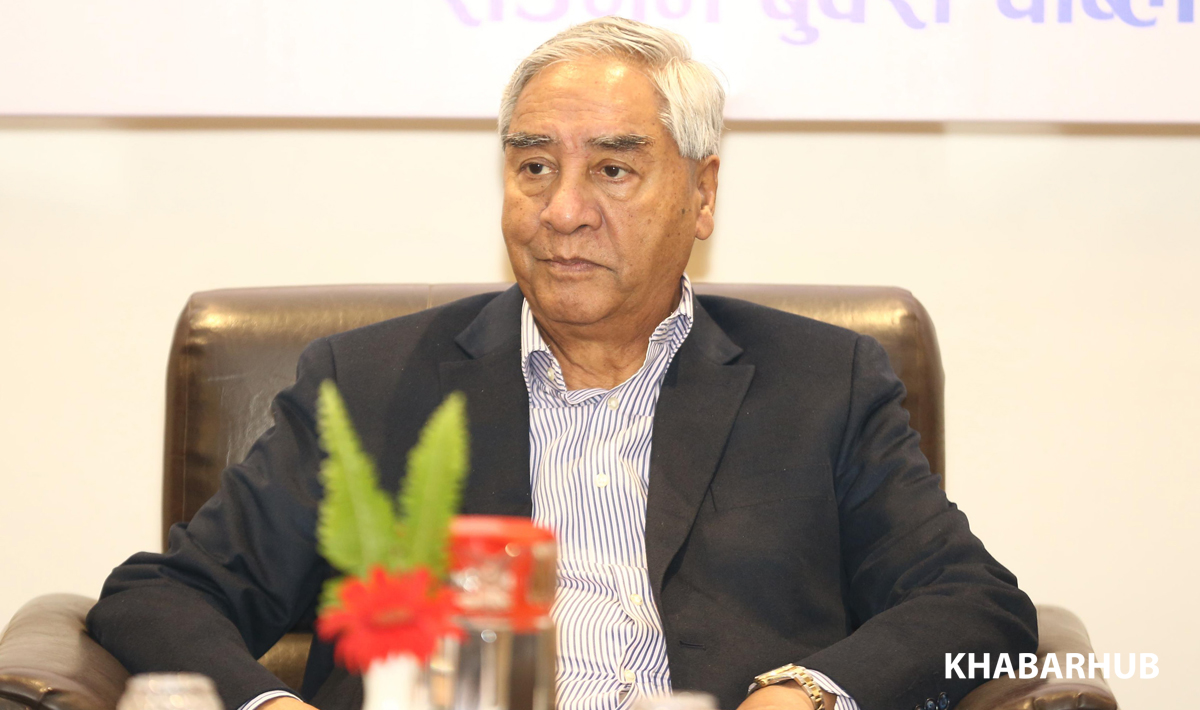
Nepali Congress President Sher Bahadur Deuba, who was injured during a violent attack inside his residence in Budhanilkantha on September 9 amid the Gen-Z protests, is currently undergoing treatment. The hospital where he is receiving care has not been disclosed.
Demands for a leadership change are rising within the Nepali Congress even as President Deuba remains hospitalized. Notably, General Secretaries Gagan Kumar Thapa and Bishwaprakash Sharma have openly called for the leadership to step aside in light of the changed political environment.
However, some leaders aligned with President Deuba have expressed dissatisfaction with Thapa and Sharma’s public calls for resignation while Deuba is still in treatment.
Saroj Thapa (Rose Rana), Minister of Urban Development and Drinking Water for Lumbini Province from the Nepali Congress, issued a statement objecting to the calls.
Other leaders from the establishment have yet to publicly comment on the issue of leadership transition during Deuba’s medical leave.
Insiders suggest that even some establishment leaders at the office-bearer level are unhappy with the stance taken by General Secretaries Thapa and Sharma.
Political analysts, however, recommend that President Deuba step aside in recognition of recent political developments.
Political analyst Geja Sharma Wagle said, “Taking moral responsibility for past failures, the President should resign in accordance with public sentiment and voluntarily retire from politics.”
Another analyst, Dr. Uddhav Pyakurel, expressed agreement with Wagle’s view regarding Deuba’s leadership transition.
In an interview with Khabarhub, he said, “The Nepali Congress should not delay any longer, especially since it has been actively engaging with the people. I believe the time has come for one general secretary to join the parliamentary party and the other to lead the party.”
Similarly, political analyst Prof. Dr. Govindaman Singh Karki emphasized that President Sher Bahadur Deuba must remain vigilant to protect the Nepali Congress from further damage.
He warned that if Deuba continues with an attitude of “I will handle it, whatever happens,” while distributing tickets and managing his close circle, the losses the party suffered recently will only deepen. “Congress President Deuba must be cautious,” Karki said.
Political analyst Geja Sharma Wagle outlined a clear roadmap for the party’s future. He argued that the President should take moral responsibility for the party’s past failures and resign, voluntarily retiring from politics.
According to Wagle, the Vice President should then be appointed as acting President, in accordance with party statutes, and a special general convention should be held within two months. The new leadership must have a popular, visionary, and clean image that commands trust from the public, especially the younger generation.
Wagle also noted that after the Gen-Z people’s rebellion and introspection, General Secretary Gagan Thapa’s public statements suggest he has resolved to acknowledge the party’s past mistakes and is willing to intervene decisively despite the risks involved.
This determination has earned him growing trust and confidence among both Congress members and the wider public, making him the best candidate to lead the party’s restructuring and transformation. Wagle further stressed the urgent need for the party to fundamentally reform its bulky and inefficient structure, which currently lacks principles and vision.
He called for a citizen-oriented, action-driven, responsive, and agile system, moving away from the ‘cadre-based’ model common to communist parties to a genuinely ‘mass-based’ party with a simple, active single membership system.
He concluded that visionary leadership with generational transition and a fresh vision is the only viable path for the Congress, warning that without such change, the party’s future and legitimacy are at serious risk.
Likewise, political analyst Dr. Uddhav Pyakurel echoed these concerns, pointing out that calls for President Deuba to resign and take a break are not limited to within the party but reflect a broader national demand.
He recalled General Secretary Bishwaprakash Sharma’s recent urging for Deuba’s ‘retirement’ during a central committee meeting and referenced the Gen-G protests, which prominently featured images of three key leaders. Pyakurel criticized the entrenched leadership dynamics in Nepal’s major parties, highlighting how power is often monopolized by a few families, especially those of KP Sharma Oli and Sher Bahadur Deuba.
According to him, the Congress party seems oblivious to this reality, often having to retroactively support decisions made by the President, reflecting a similar pattern seen in UML and Maoist parties.
He further explained that while political parties are organizations composed of members who control leadership changes and statutes, parties also function as ‘public goods’ in a democracy.
Their actions affect the entire political system, so all citizens have the right to critique their leadership and activities, regardless of their voting preferences. Pyakurel noted that the public has already voiced strong opinions about the current state of the party.
Reflecting on the second day of the Gen-G movement, Pyakurel pointed out that some elements exploited the protests to create chaos. While Congress called for Deuba’s release, the President responded that the issue was not simply a matter of Deuba taking a break but tied to the Prime Minister’s tenure.
Pyakurel concluded by observing that in New Baneshwor, the leadership of Deuba, Oli, and Prachanda has become deeply entrenched, resulting in increased nepotism. This entrenched power structure is what motivated the Gen-G movement to call for a decisive break from the established order.
Meanwhile, analyst and Prof. Dr. Govindaman Singh Karki stated that the leadership of the Nepali Congress has been marked by a sense of ego, with little genuine discussion or debate about public sentiment or the need to strengthen internal democracy within the party. “We have witnessed the formation of two or three factions pursuing their own agendas, while minority voices are often ignored by the majority.”
The party must also focus on holding conventions for its sister organizations and ensuring internal democracy. No one should believe the party can be run by forcibly suppressing dissenting voices.
According to him, internal democracy is the party’s greatest need, yet for the first time, the Nepali Congress is suffering from a significant lack of it. Minority groups within the party are not being heard, which undermines the party’s unity and effectiveness.
There is a long-standing tradition in the Congress of avoiding conventions within its fraternal organizations, appointing loyalists as presidents, and forming temporary working committees. These sister organizations have been without proper leadership for too long, he added.
Currently, the party’s own president faces severe criticism, and the public holds a negative view of the leadership, accusing it of corruption. The leadership must address these accusations transparently and honestly. If the allegations are unfounded, they should be disproven clearly; if they are true, the leadership must accept responsibility and consequences, according to him.
The Gen-Z movement, which has caused significant loss of life and political upheaval, demands accountability. Following the fall of the two-thirds majority government in which Congress participated, an interim government was formed outside the usual constitutional framework, leading to the appointment of a Prime Minister and ministers from outside Parliament, and eventually, the dissolution of Parliament itself.
With elections scheduled, Congress leaders must be prepared for investigations and should not evade responsibility. If wrongdoing is found, they should willingly face the consequences.
If Deuba continues to distribute tickets and manage the party through close allies without addressing these issues, the damage already done will deepen. The party’s reputation, already tarnished, could suffer even more. Congress President Sher Bahadur Deuba must be aware of this reality and act accordingly, he said.
The party must also focus on holding conventions for its sister organizations and ensuring internal democracy. No one should believe the party can be run by forcibly suppressing dissenting voices.
NC President Sher Bahadur Deuba’s term is nearing its end, and it is critical for the incoming leadership to recognize the need for change. Many central leaders have held positions since 1990 (2046 BS) and should make way for a new generation—leaders committed to impartial, fearless service.
The party convention is now more important than ever, yet leadership seems reluctant to hold it promptly. The convention must not be delayed any further. Deuba should be ready to hand over the reins without hesitation.
Some suggest that Deuba is reluctant to step down, especially with elections approaching on March 5, 2026 and the same leadership expected to distribute tickets again. This situation fuels dissatisfaction within the party.
Above all, the party must rid itself of corruption and unaccountable leadership while focusing on the upcoming elections. The Nepali Congress must prioritize these issues seriously.
He stated that the Gen-Z actions—breaking into leaders’ homes, arson, and assaults—were wrong and caused considerable damage. While the UML and Maoists share blame for the current turmoil, the Congress cannot claim to be blameless. It must acknowledge its role.
“Did we expect that federalism, secularism, and the constitution alone would solve all problems? Why did such a large group feel compelled to organize outside party structures? Why did the situation spiral out of control within hours? These questions demand honest explanation and analysis,” he stated.
According to him, it is no longer enough to focus only on party organization. People are mobilizing because they feel unheard. The central leadership must recognize that this rebellion is directed against them. At this point, the Congress President should step back and act as a guardian, reflecting openly on what went wrong.
If Deuba continues to distribute tickets and manage the party through close allies without addressing these issues, the damage already done will deepen. The party’s reputation, already tarnished, could suffer even more. Congress President Sher Bahadur Deuba must be aware of this reality and act accordingly, he said.




Comment