




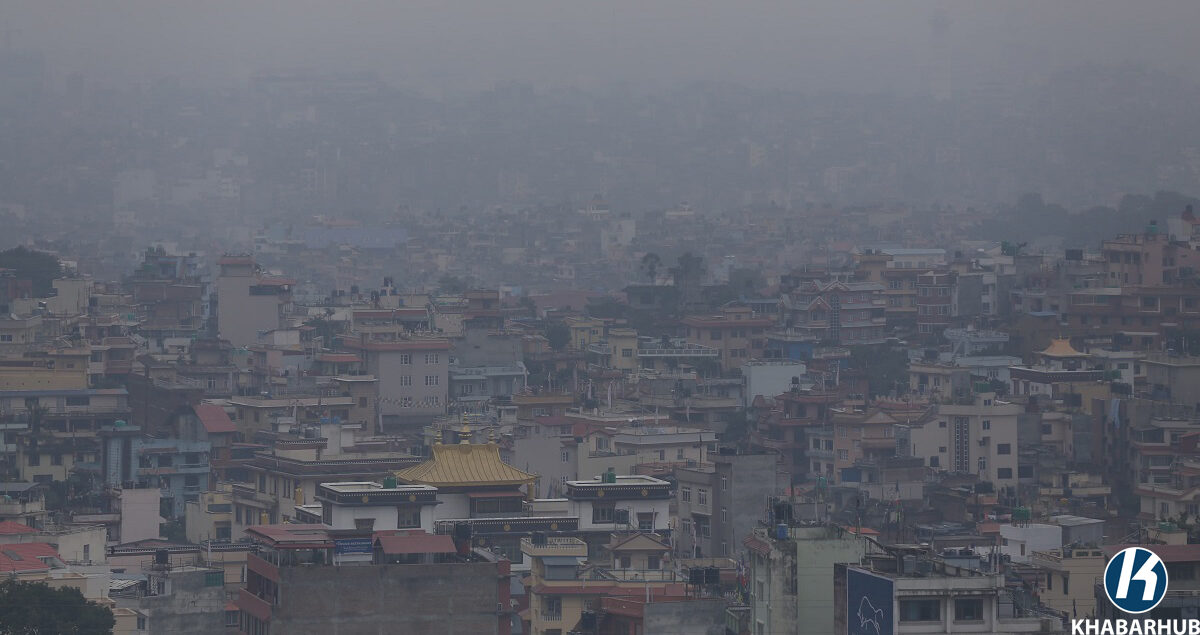
KATHMANDU: Air pollution has become the leading health risk in Nepal, responsible for the highest number of deaths and disabilities in the country, according to a new report released by the World Bank.
The report, titled “Towards Clean Air in Nepal: Benefits, Pollution Sources, and Solutions“, finds that air pollution causes approximately 26,000 premature deaths each year and reduces the average life expectancy of Nepalis by 3.4 years.
The report identifies Kathmandu Valley and the Terai region as Nepal’s main air pollution hotspots, where air quality has shown no significant improvement over the past decade. In addition to its severe impact on public health, poor air quality affects labor productivity, tourism, and the aviation sector. The economic cost of air pollution is estimated to exceed six percent of Nepal’s Gross Domestic Product (GDP) annually.
Minister for Forests and Environment Ain Bahadur Shahi Thakuri stressed that clean air and economic development are not incompatible goals.
“The cost of inaction on pollution is far greater than the cost of taking bold steps today,” he said, reaffirming the government’s commitment to cleaning Nepal’s air by implementing stricter industrial emission standards and promoting electric transportation.
The report states that air pollution in Nepal is a multi-sectoral and multi-regional challenge that requires coordinated actions across different areas.
Among the major contributors are emissions from vehicles and industries, household air pollution from traditional cookstoves, forest fires, and transboundary pollution from neighboring countries. Nepal’s geography, particularly the bowl-shaped Kathmandu Valley surrounded by mountains, exacerbates the problem by trapping pollutants.
To address these challenges, the report calls for continued electrification of vehicle fleets including cars, motorcycles, buses, and trucks, along with improvements in vehicle inspection and maintenance systems and efforts to reduce road dust.
It also recommends supporting industries—particularly small and medium enterprises—in adopting cleaner technologies and fuels, such as electric and pellet boilers and more efficient brick and cement production methods.
On the household level, transitioning to cleaner cooking methods—ideally using electric stoves—is key to reducing indoor and outdoor air pollution, since biomass-based stoves remain a major source of emissions.
The report also highlights the need to prevent forest fires by reducing fuel loads and improving public awareness and response systems. Finally, it underlines the importance of working collaboratively with neighboring countries, as pollutants often travel across borders within the Indo-Gangetic Plain and Himalayan Foothills airshed.
The World Bank’s assessment underscores the urgent need for bold, coordinated policies and investments to tackle Nepal’s air pollution crisis, which continues to threaten the country’s health, economy, and environment.






Comment