




KATHMANDU: Two decades ago, watching television with the entire family was a cherished routine. Radios traveled from households to buffalo sheds and local fairs, serving as one of the few sources of entertainment and information.
However, times have changed. With the rapid advancement of technology, the number and reach of entertainment platforms have multiplied dramatically.
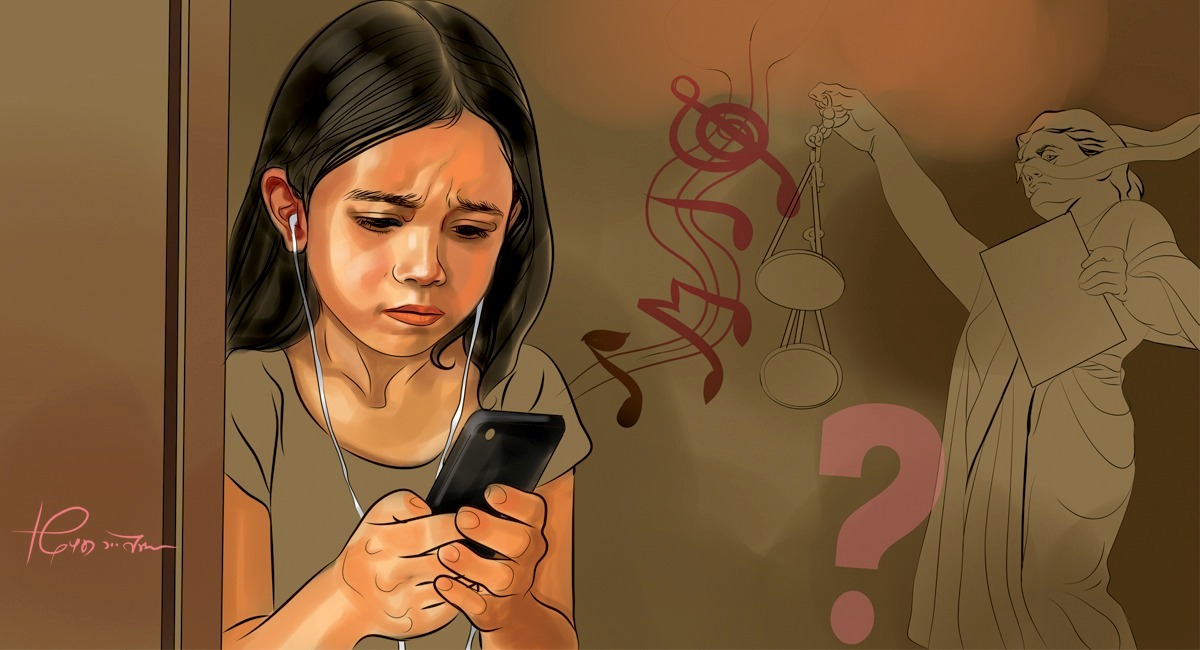
Today, mobile phones are in everyone’s hands. Whatever one wishes to watch is instantly accessible. But in the name of art, vulgarity has crept in. Much of today’s content cannot be enjoyed with family. Instead, audiences are forced to put on earphones and watch in secret. What once was communal is now covert.
Adults can still distinguish between good and bad. But it has become increasingly difficult to shield minors and adolescents—those in the most vulnerable stages of mental, emotional, and moral development—from this deluge of distorted content.
What is the entertainment industry offering to the young minds who are in the formative stages of reading, learning, and shaping their values? Will the content handed down to them help nurture capable, responsible citizens who contribute meaningfully to society and the nation?
He explained that since major platforms—such as YouTube and other social media—are operated from outside the country, action requires official requests. “These platforms are not under our direct control, so we must rely on coordination with other countries,” he added.
A nation’s sustainable development depends on meaningful investment in children. As the world prioritizes child-focused investments, developing countries like ours should be even more mindful. Yet, instead of guiding them toward growth and learning, are we offering them cheap, harmful entertainment?
Who is accountable for this? Why has art turned into something we can no longer enjoy with our families? What kind of message is it sending?
Every stakeholder must take responsibility for protecting children. Art is often said to convey what books and lessons cannot. That’s why the entertainment industry must be conscious of its influence and impact.
With the Teej festival around the corner, there’s a buzz about seasonal music releases. Festivals like Dashain, Tihar, and Teej usually bring a wave of celebratory songs. However, in recent years, songs that are vulgar, suggestive, and inappropriate have been flooding the market.
These songs inevitably reach children. Unfortunately, even some parents themselves are consuming these cheap productions, making it harder to protect their children. In this digital age, shielding minors from inappropriate content is no longer the sole responsibility of parents.
This issue demands serious public discourse. If parents, government agencies, civil society, and artists do not work collectively, it will remain unresolved. In the past, songs used to reflect emotions—joy, sorrow, love. Now, many carry double meanings and inappropriate innuendo under the guise of entertainment.
Recently, the National Folk Sancharkarmi Nepal (Rasriya Lok Sanharkarmi Nepal) banned two Teej songs: “Gai Kalo, Gai Ko Dudh Seto” and “Salla Damarma”. In a press release, the organization stated that the songs distorted traditional values and should not be broadcast through any medium—radio, TV, newspapers, YouTube, or social media.
In response, a group of artists, including members of the ‘Lok Dohori Pratisthan’, approached the Ministry of Home Affairs. Home Minister Ramesh Lekhak has assured action against songs containing vulgar or offensive lyrics.
Real issue is lack of legislation: Badri Pangeni
Folk singer and former President of the Dohori Pratisthan, Badri Pangeni, believes the core problem lies in the absence of proper laws to regulate deviant content.
Speaking to Khabarhub, he said, “Neither the Ministry nor any institution alone can solve this. There was a time when complaints weren’t even accepted. Now, the Home Ministry has created a dedicated desk at the Cyber Bureau to address such cases.”
“Earlier, there was nowhere to register complaints. At least now we have a mechanism in place. That’s a step forward,” he added. “In the realm of literary and artistic creation, there’s a fine line regarding what constitutes obscenity. Some deny its existence in art altogether. But creativity does have limits. We cannot turn a blind eye to distortion in the name of expression.”
“Punishing someone through arrest or fines won’t fix the issue,” Pangeni stressed. “Change will only come when creators themselves become aware of their responsibilities. Artists must create with social consciousness. Otherwise, the same creations will continue to mislead society. It’s our collective duty to stop this trend.”
While some argue that music and artistic expression should not be censored, there are growing voices—especially among artists and concerned citizens—calling for stricter oversight and accountability.
After all, when the line between art and obscenity is blurred, it’s not just tradition that is compromised—it’s the moral foundation of the next generation.
“Not all forms of creation are acceptable”: Cyber Bureau
Spokesperson of the Cyber Bureau, Deepak Bohara, stated that content of any kind that undermines social values is unacceptable. He emphasized that anyone attempting to spread social corruption under the guise of entertainment falls within the purview of legal action.
The law also explicitly forbids actions such as teasing, harassing, or insulting women through electronic platforms. Those found guilty may face a fine of up to one lakh rupees, imprisonment of up to five years, or both.
“We have taken down several contents upon receiving complaints and have brought the accused to justice,” Bohara said. “However, in some cases, we are unable to delete them due to jurisdictional limitations.”
He explained that since major platforms—such as YouTube and other social media—are operated from outside the country, action requires official requests. “These platforms are not under our direct control, so we must rely on coordination with other countries,” he added.
Bohara also pointed out a systemic gap in regulatory oversight. “The Film Development Board only monitors films. There are no specific mechanisms in place to screen or regulate songs and music. That’s one reason such content makes its way into the market unchecked.”
According to him, complaints related to songs and music have started to increase. “It’s not yet clear which body holds the ultimate authority to address these issues. The Ministry of Home Affairs has taken some steps, but the Government of Nepal and the Ministry of Communications must appoint a dedicated body to handle this. Creators must understand that the law is not optional—they must operate within its boundaries,” he asserted.
He also revealed that the Cyber Bureau receives around 18,000 complaints annually. “In an ideal scenario, we would act proactively. But given current constraints in manpower and technology, we are limited to responding only to complaints. Priority must be given to protecting victims,” Bohara noted.
What does the law say?
According to Sub-section (1) of Section 47 of the Electronic Transactions Act, 2063, it is illegal to publish or display content that violates public morality or decency.
Any content that incites hatred or animosity, or disrupts harmonious relations between communities and castes, is prohibited from being published electronically, whether through computers or the internet.
The law also explicitly forbids actions such as teasing, harassing, or insulting women through electronic platforms. Those found guilty may face a fine of up to one lakh rupees, imprisonment of up to five years, or both.





Comment