




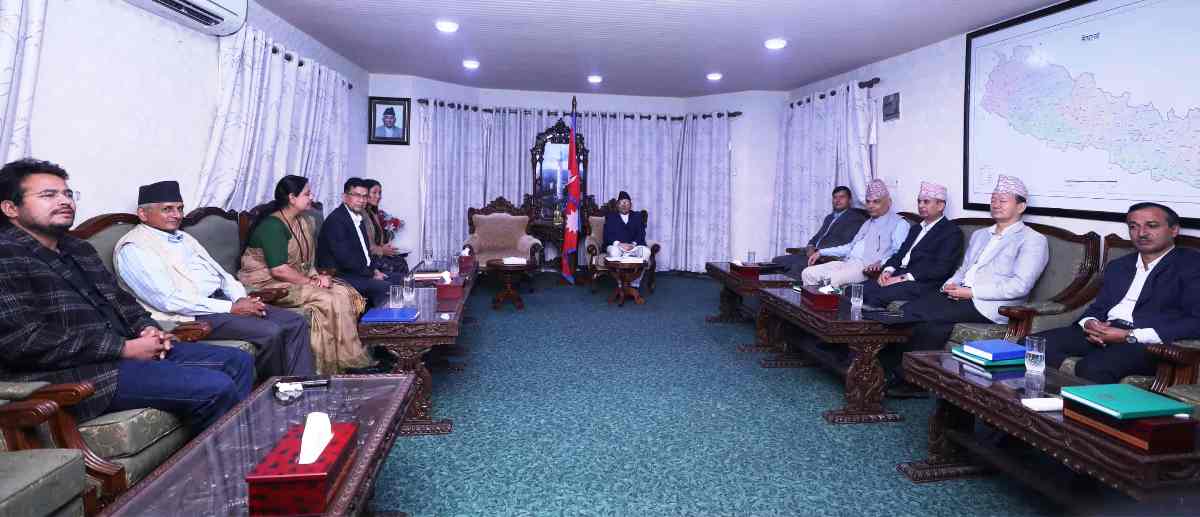
KATHMANDU: Leaders of major political parties on Wednesday reached a rare consensus that the recent dissolution of the House of Representatives was unconstitutional, undemocratic and politically motivated, during a meeting called by Speaker Devraj Ghimire.
Nepal Communist Party (UML) leader Mahesh Bartual said all parties present at the discussion shared the view that the move to dissolve Parliament on September 12 was a conspiratorial act against parliamentary democracy.
“The meeting focused on the latest political developments, especially after the dissolution of Parliament,” Bartual told reporters after the meeting. “All parties agreed that the dissolution was extremely undemocratic and unconstitutional. Parliament should have been allowed to continue to resolve existing political disputes, but it was ended due to a conspiracy.”
Bartual said the dissolution had undermined constitutional order and that restoring Parliament had become a national necessity. “All parties that believe in the constitution and parliamentary values must now stand together,” he added.
The Speaker had invited leaders from 10 major political parties, including the Nepali Congress, CPN-UML, CPN (Maoist Centre), Rastriya Prajatantra Party, and CPN (Unified Socialist), to seek their views on the unfolding political situation.
Ghimire’s initiative comes amid increasing legal and political pressure following the dissolution of the House and the formation of an interim government. The Supreme Court has already received 10 separate writ petitions challenging both the dissolution and the appointment of Sushila Karki as prime minister by President Ram Chandra Paudel on September 12.
According to Parliament Secretariat officials, the Speaker plans to hold further consultations with constitutional and legal experts on Thursday.
Prime Minister Karki, who was not a member of Parliament when appointed, had recommended the House dissolution immediately after assuming office, triggering widespread criticism from opposition parties, constitutional lawyers and civil society groups alike.






Comment