




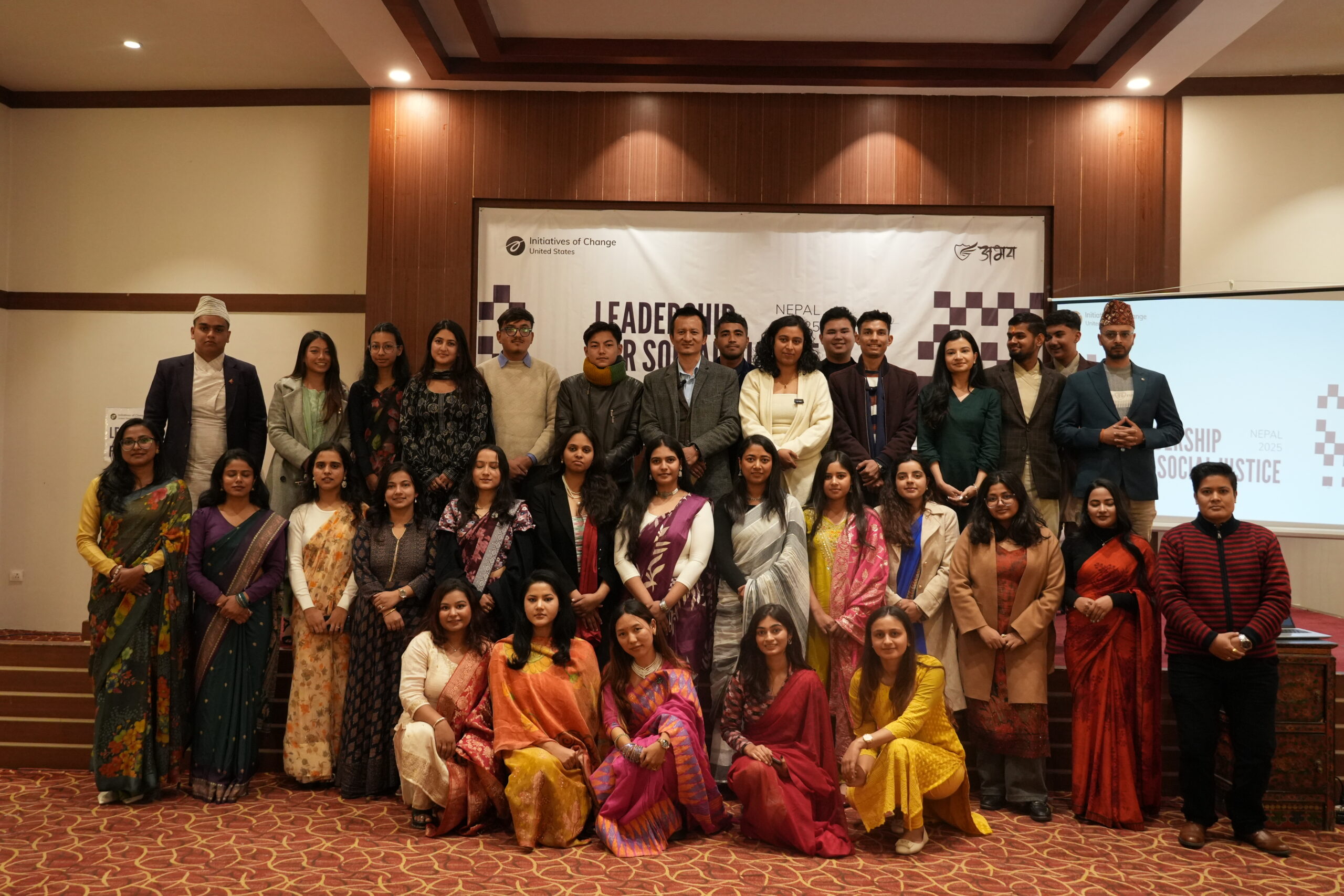
KATHMANDU: The Nepal Edition of the Leadership for Social Justice Program (LSJP), led by Initiatives of Change USA (IofC USA), concluded today, after five weeks of learning, reflection, and collective work in Lalitpur.
The program brought together 27 young leaders from across Nepal working in civic engagement, social justice, education, and grassroots organizing. Initiatives of Change USA is part of a global movement that links personal change with social transformation, supporting individuals and communities committed to ethical leadership, dialogue, and responsibility in public life.
LSJP is rooted in a simple belief: social change does not last without personal accountability. Through a hybrid format of two online sessions and eight in-person workshops, the program offered young leaders rare time and space to reflect on values, power, ethics, and responsibility, especially for those who work without consistent access to mentorship or reflective leadership spaces.
The program focused on lived experience rather than theory. Participants developed narratives to communicate their work with clarity and care, explored conflict and dialogue as part of everyday leadership, and examined ethical dilemmas drawn from their own realities. Each participant designed a community-based initiative shaped by the questions and commitments they will carry back to their communities.
A key moment of the program was the graduation panel discussion held on December 14, titled “Change Makers – Gen Z in Action: Stories, strategies, and ethics for the next generation of political leaders.” The panel explored how young people in Nepal are engaging politics through grassroots movements, digital platforms, and storytelling, while navigating structural limits and ethical pressure.
During the discussion, Ojaswee Bhattarai, Chairperson of the Progressive Democratic Party, spoke about the gap between youth visibility and real decision-making power, calling for deeper reforms within political parties and institutions.
Shree Gurung, academic and independent political leader, reflected on long-term political engagement, drawing from his work during Nepal’s constitutional period and his 2022 federal election run, and emphasized patience, principle, and economic self-reliance.
Rijan Ranamagar, founder of GenZ Rebels, shared insights from people-led movements that have compelled state response, highlighting the tension between urgency and ethics in grassroots activism.
Participants also reflected on their experience. Ritika Rana, a lawyer and participant, shared that the program helped her name choices she had been carrying quietly in her work.
“LSJP gave me language for decisions I was already making,” she said. “It made me think more carefully about who I am becoming through this work.”
By the end of the program, participants showed stronger confidence in their leadership practice, deeper ethical awareness, and improved skills in dialogue, collaboration, and conflict navigation. The final community initiatives reflected diverse priorities, including civic education, gender justice, peacebuilding, and youth participation.
The graduation panel was moderated by Vinode Deuba, known for his steady engagement in governance and civic life and his focus on collective responsibility.
The program was facilitated by practitioners and leaders from across policy, academia, media, and organizational leadership, including Devika Thapa (World Bank), Meena Sharma (Dignified Workplace), Preeti Thapa (The Asia Foundation), Dr. Pitambar Bhandari (Tribhuvan University), Serena Rix (Media and Policy Advisor), Manushi Yami Bhattarai (Professor of Political Science), Anjani Gandi (Bento Coach), and Kamal Kandel (Initiatives of Change Nepal).
The Nepal Edition was implemented in close collaboration with Project Abhaya, a youth-led initiative working across Nepal to expand civic literacy, political education, and leadership pathways for young women and marginalized youth.
Through workshops, mentorship, and community engagement, Project Abhaya has supported thousands of young people in understanding governance, rights, and participation.
Reflecting on the program, Ishika Panta, Program Lead, said, “Many young people in Nepal are already carrying leadership without recognition or power. This program was about helping them name that responsibility and carry it with integrity.”
With the conclusion of the Nepal Edition, LSJP sets the groundwork for future country-level programs led by IofC alumni and partners. The 27 graduates now join the global LSJP alumni network, continuing their engagement through mentorship, reflection, and collaboration across regions.





Comment