




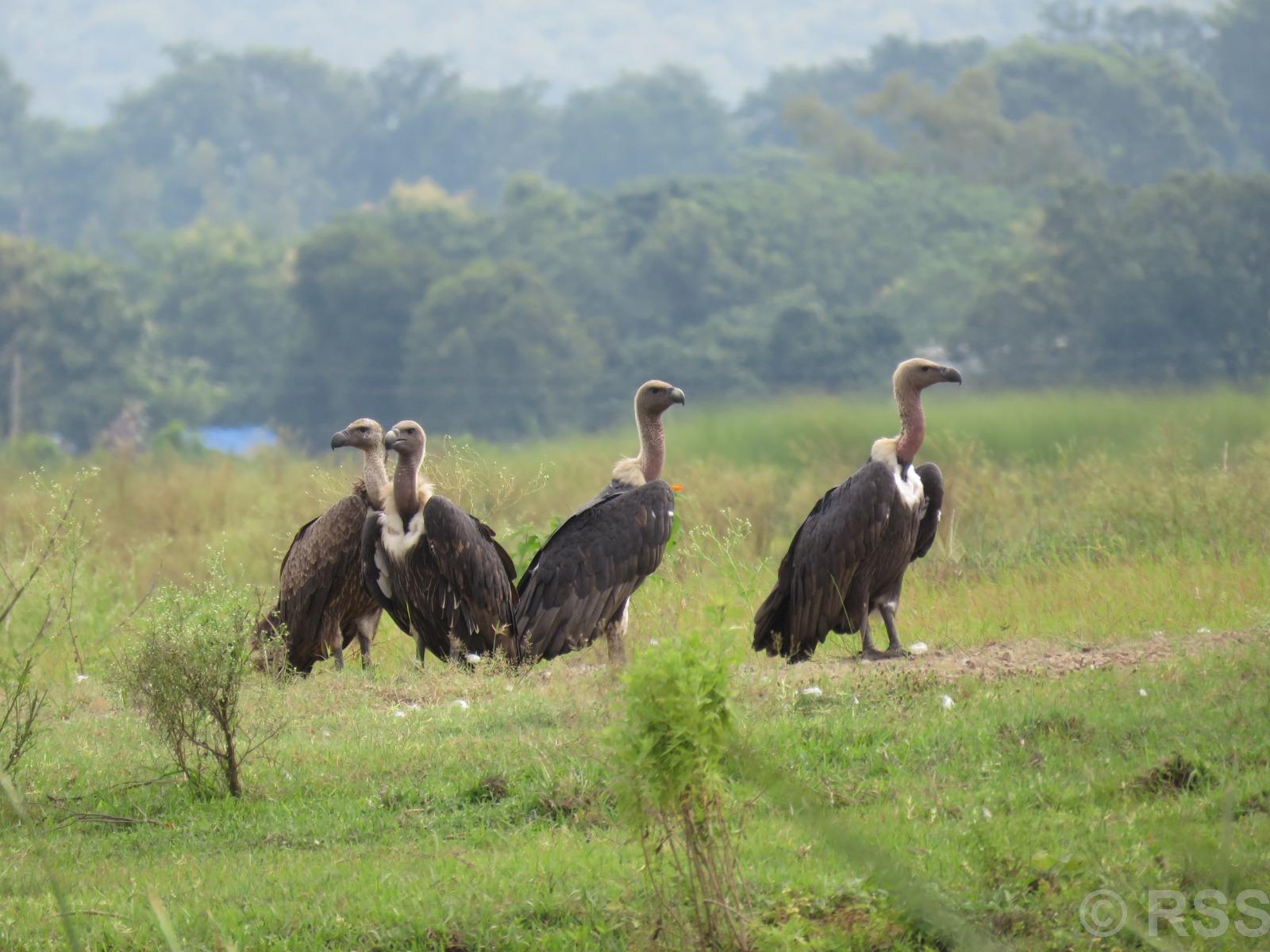
KANCHANPUR: Conservationists have expressed optimism as the vulture population in Nepal’s Sudurpaschim Province shows a steady increase.
This upward trend is seen as a positive indicator for ecological balance, environmental sanitation, and the health of the natural food chain.
According to the Bird Conservation Association of Nepal, 155 active vulture nests were recorded this year, up from 143 last year. The annual vulture nest monitoring survey revealed that Kanchanpur alone accounted for 126 nests—the highest in the region—followed by 12 in Baitadi, 10 in Dadeldhura, and seven in Kailali.
While nest numbers rose in Kanchanpur and Dadeldhura, slight declines were observed in Kailali and Baitadi. Nine species of vultures have been identified in the Far West, including critically endangered species such as the White-rumped Vulture, Slender-billed Vulture, and Red-headed Vulture.
Endangered species like the Egyptian Vulture and near-threatened species like the Himalayan Griffon, Griffon Vulture, and Cinereous Vulture are also present. Kanchanpur alone hosts eight species, making it a significant vulture habitat.
The national vulture census, held on September 5, 6, and 7, aimed to build a comprehensive vulture database and support long-term conservation efforts.
Ornithologist Hirulal Dagaura from Bird Conservation Association of Nepal said the census involved 48 volunteers across districts including Kailali, Kanchanpur, Dadeldhura, Baitadi, Bajura, and Darchula. GPS locations of nesting and roosting sites were recorded, along with sightings of other birds and mammals.
This year’s census counted a total of 573 vultures in the Far West. The tally included 442 White-rumped Vultures, 94 Himalayan Griffons, 14 Red-headed Vultures, nine Egyptian Vultures, and five Slender-billed Vultures.
Some migratory species, such as the Long-billed and Egyptian Vultures, were not fully accounted for, as they typically arrive in winter.
Vultures, often referred to as “nature’s scavengers,” play a vital role in the ecosystem by feeding on animal carcasses. This helps prevent the spread of diseases such as cholera, typhoid, rabies, anthrax, and tuberculosis. Their presence is essential for maintaining cleanliness and limiting environmental pollution.
Despite the encouraging rise in numbers, experts caution that vultures remain vulnerable. Bird conservationist Suban Chaudhary pointed out ongoing threats such as the use of harmful veterinary drugs—particularly diclofenac—along with nest destruction, habitat encroachment, and general environmental degradation.
“The use of diclofenac has significantly increased vulture mortality,” Chaudhary noted. “We need to promote safer alternatives, raise awareness among livestock owners, and involve local communities in vulture conservation efforts. We are actively engaging in public education and outreach programs.”
Conservationists agree that while the increase in vulture numbers is promising, long-term strategies are essential. These include nest protection, pesticide regulation, habitat preservation, and sustained community awareness to ensure the continued survival of these critically important birds.






Comment