




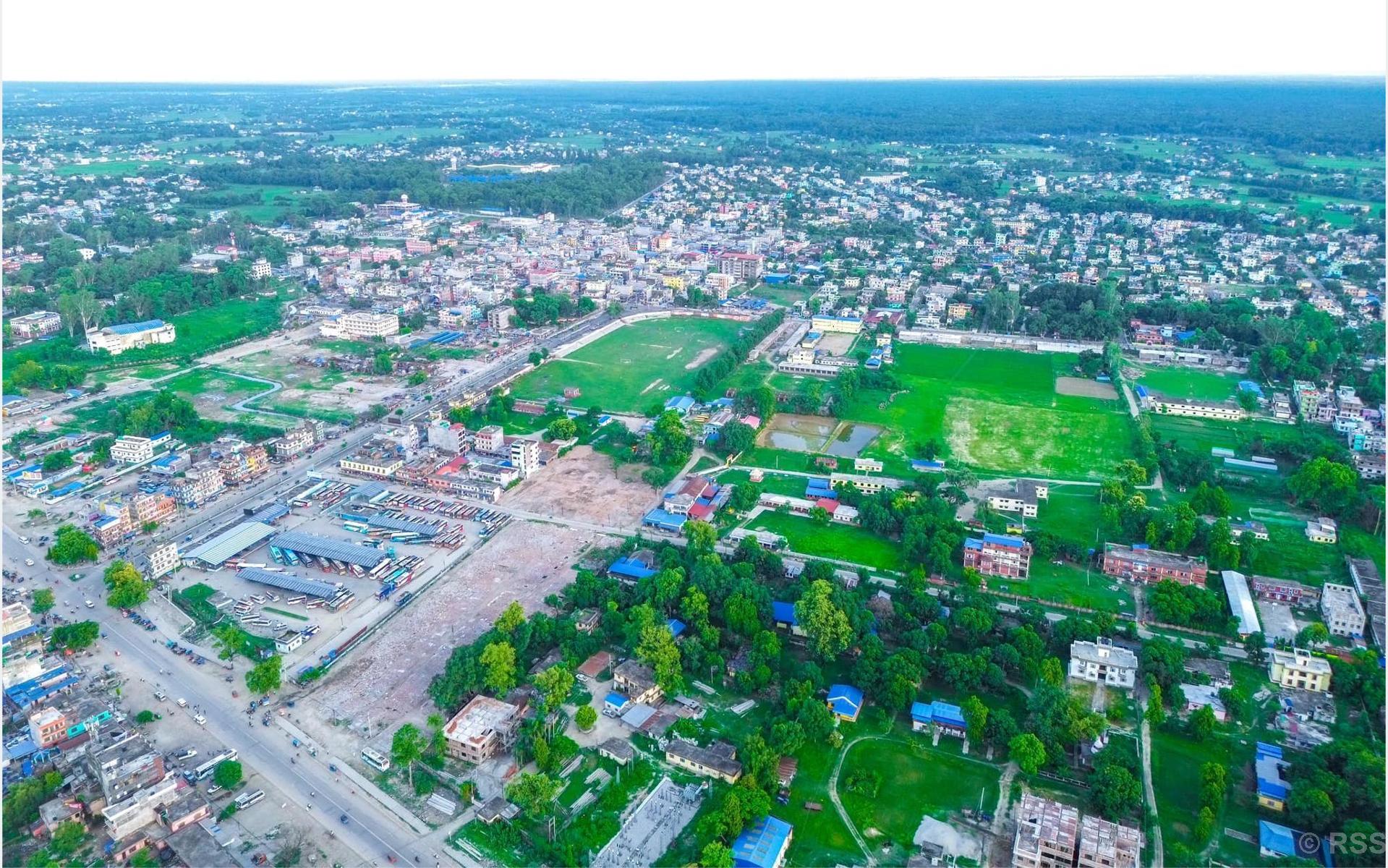
BHIMDATTA: Villages in the hilly districts of Sudurpaschim Province are gradually emptying as residents migrate to the plains, contributing to a growing population imbalance and increasing pressure on resources in the Terai.
According to the 2021 National Census (2078 BS), the province has a population of 2,694,783, of which 1,421,997 are women and 1,272,786 are men.
This gender gap is largely due to the outmigration of men seeking employment in India and third countries, resulting in a higher proportion of women compared to men in the province. Women make up 52.77% of the population, while men account for 47.23%.
Among the nine districts in Sudurpaschim, five—Achham, Baitadi, Doti, Bajhang, and Dadeldhura—are experiencing a continuous population decline.
Meanwhile, the population growth rate in Darchula remains flat at zero, and Bajura has shown only minimal growth (0.25%). In contrast, Kailali and Kanchanpur have the highest growth rates at 1.48% and 1.25%, respectively.
Govinda Neupane, head of the Statistics Coordination Office in Dhangadhi, said the growing trend of people leaving the hills and mountains for the Terai and urban centers has disrupted population distribution across the province.
The Terai, traditionally considered the “granary” of Nepal, is now seeing increased pressure on arable land due to rapid population growth. Many fear that, without timely intervention by provincial and local governments, this imbalance could trigger a major crisis in the near future.
“This imbalance has emerged because people are migrating to areas where access to employment, education, and essential services is easier,” Neupane said.
“To address this, local and provincial governments must prioritize data-driven planning and budgeting. Without such strategies, population imbalance in the Far West will continue to pose long-term challenges.”
He also warned that the increasing population in the Terai is reducing agricultural land, while farmland in the hills is becoming barren. If appropriate policies aren’t implemented soon, the region could become more dependent on imported food.
Experts note that agriculture accounts for 30% of the GDP in Sudurpaschim. Therefore, a decline in agricultural productivity could also negatively impact the provincial economy.
Over half of the province’s population resides in Kailali and Kanchanpur—with 33% in Kailali and 20% in Kanchanpur. This concentration is putting significant pressure not just on urban centers like Bhimdatta, but also on rural municipalities.
Padam Bogati, Mayor of Bhimdatta Municipality, said the town’s accessibility, location in the Terai, and connection to the national highway make it a natural migration hub.
“Each year, new residents increase the pressure on municipal resources. All municipal departments report growing demands, and while we’ve managed so far, continued growth could become a serious issue,” Bogati said.
According to the National Statistics Office (Sudurpaschim), Bhimdatta Municipality is home to 122,320 people—the highest in Kanchanpur. Other municipalities include: Krishnapur: 71,500; Shuklaphanta: 53,969; Bedkot: 57,680; Dodhara Chandani: 42,974; Punarbas: 61,748; Belauri: 53,910; Beldandi Rural Municipality: 21,888; and Laljhadi Rural Municipality: 25,037.
Shankar Dutta Bhatta, Associate Professor at Sudurpaschim University, emphasized that managing migration is one of the most pressing challenges for population management in the region. He called for proportional distribution of state resources and better utilization of the hills’ natural resources.
Bhatta noted that there is significant potential for fruit and vegetable farming and livestock raising in the hilly districts. He recommended public-private investment in these sectors, saying, “Due to migration, cultivable land in the hills is going unused. These areas should be designated as model agricultural zones.”
He further suggested that the government support collective farming, develop infrastructure for product storage and market access, and establish facilities such as agriculture ambulances and moisture centers to support rural livelihoods.
Dr. Hira Chand, a member of the Sudurpaschim Provincial Policy and Planning Commission, said migration is driven by the search for employment, quality education, and better healthcare.
To stem the outflow, he said the provincial government has prioritized integrated settlement development, ‘one municipality, one product’ policies, and infrastructure development in the hilly districts.
“Developing infrastructure and delivering services in the hilly regions is costly. Therefore, scattered settlements should be consolidated, and community schools should be converted into residential institutions with a focus on improving quality,” said Commission Member Dr. Hira Chand.
“If remote tourist areas can be developed and employment opportunities created, the lives of citizens can significantly improve. Farmers should be supported through production subsidies, and entrepreneurs should be encouraged by offering interest subsidies on loans.”
(Reporting by Madan Giri/RSS)






Comment