




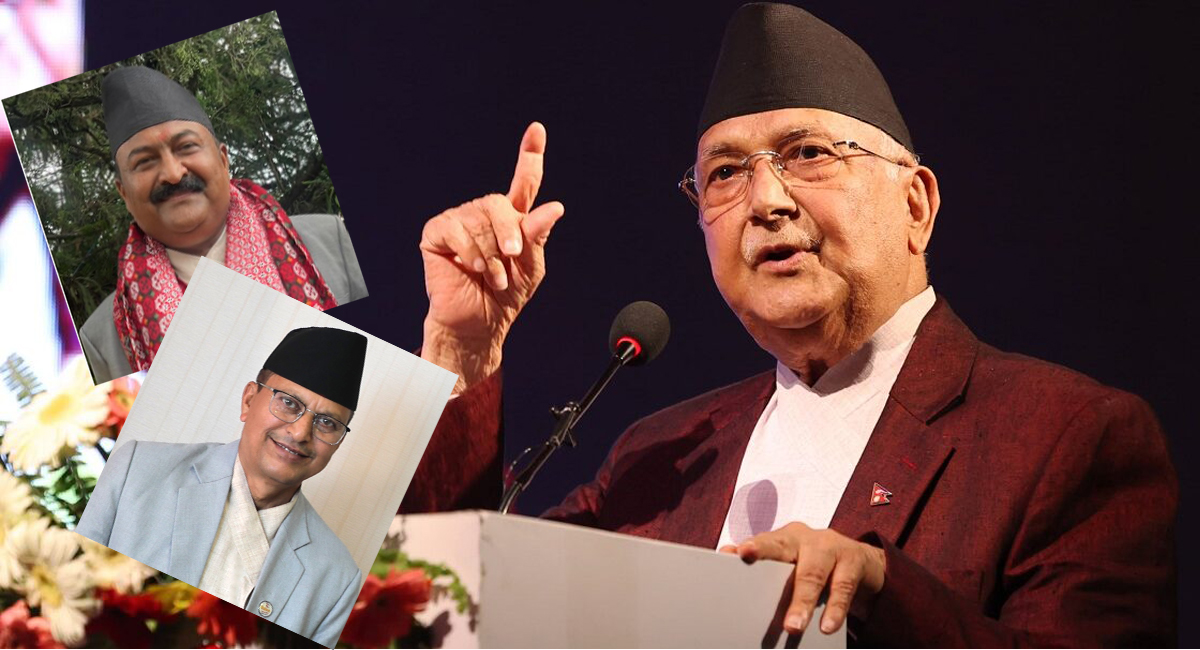
KATHMANDU: Prime Minister KP Sharma Oli is facing increasing pressure and political uncertainty over the fate of two cabinet ministers implicated in a recent bribery scandal.
Federal Affairs and General Administration Minister Rajkumar Gupta and Minister for Land Management, Cooperatives and Poverty Alleviation Balram Adhikari have both been linked to a major corruption case involving audio recordings and alleged cash exchanges.
Despite the gravity of the accusations, Prime Minister Oli has yet to take decisive action. On Monday morning, he reportedly held a one-hour meeting with Minister Gupta at Baluwatar, raising concerns over the government’s reluctance to act swiftly.
That same day, Oli attended a hospital inauguration program organized with Bhaktapur-based Bhatbhateni Supermarket but made no mention of the scandal. Instead, he urged the public to join the “Healthy Nepal” campaign, avoiding the ongoing political controversy.
The Prime Minister’s silence is being widely criticized, especially given the viral nature of audio recordings that allegedly expose the ministers negotiating and accepting bribes.
The contrast between Oli’s earlier speeches, where he claimed he would never look a corrupt person in the eye, and his current inaction has fueled growing public frustration.
This is not the first time the Prime Minister has been accused of shielding embattled ministers. In the recent human smuggling scandal linked to visit visas, Home Minister Ramesh Lekhak was also under fire, with allegations that over Rs 5 million in illegal fees were collected daily for facilitating travel.
Despite mounting pressure, Lekhak remained in office, reportedly with the backing of both PM Oli and Nepali Congress President Sher Bahadur Deuba.
But the case of Gupta and Adhikari appears more complicated. Unlike the visit visa scandal, the current bribery case includes audio evidence. According to sources, Minister Gupta has admitted that a bribe was delivered to his official residence, though he denies receiving it in a personal bank account or in cash.
The audio recordings, made public three days ago, reportedly capture a deal involving Rs 7.8 million in exchange for a favorable appointment at the District Land Commission in Kaski.
The conversation also suggests that Minister Adhikari was to receive Rs 2 million. A complaint, backed by these audio files, has been submitted to the Commission for the Investigation of Abuse of Authority (CIAA).
Amid these developments, the Prime Minister, who had just returned from Jhapa after a three-day stay, is said to be weighing two options, either sacking the two ministers or reshuffling the cabinet entirely now that the government has completed one year in office.
A senior member of the Prime Minister’s secretariat confirmed that discussions with the Nepali Congress are ongoing and that a broader cabinet reshuffle involving both parties is being considered.
Opposition parties have seized the moment to step up pressure inside Parliament. Meanwhile, Minister Gupta has claimed that the viral audio was generated using artificial intelligence, a claim that has been widely dismissed.
The ministers’ refusal to resign on moral grounds is also drawing attention. In past cases, UML leaders such as Sher Bahadur Tamang and Gokul Baskota resigned from their positions after far less serious controversies.
Tamang stepped down over a slip of the tongue involving Nepali students in Bangladesh, and Baskota resigned after an audio leak revealed a Rs 700 million bribery negotiation. In both instances, the resignations came swiftly and were seen as decisions rooted in personal accountability.
In contrast, Gupta and Adhikari continue to hold office, defying growing demands for accountability. The longer the Prime Minister delays action, analysts say, the more damage it could do to the credibility of his government.





Comment