




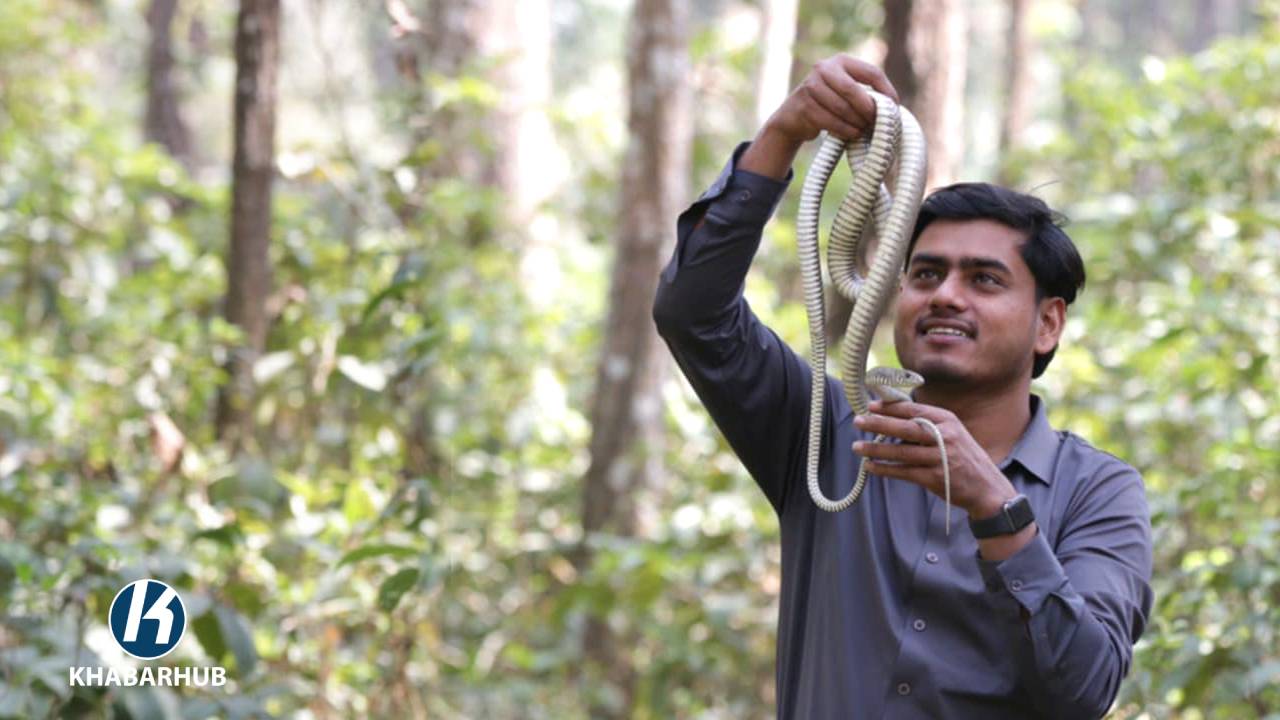
URLABARI: As evening fell over Urlabari in Morang, panic spread through a household when a large snake slithered into their kitchen. Terrified, the family called someone they knew could help—Ramesh Bhandari.
Bhandari, calm and composed, arrived swiftly. He reassured the family, identified the species, and safely rescued the snake. For most, this would be a nerve-wracking encounter. But for Bhandari, now 29, it’s routine. For the past eight years, he and his team have been rescuing snakes across eastern Nepal.
A resident of Urlabari-4, Bhandari has rescued over 1,500 snakes from fields, homes, schools, barns, ponds, roadsides—even drains. Whether venomous or not, if there’s a snake, Bhandari responds.
His fascination with snakes began at 20. With guidance from forest technician Prem Bista, he learned the skills needed to safely handle them. He started with non-venomous species, but as his confidence grew, he expanded to highly venomous ones—cobras, kraits, even Russell’s vipers.
“Snakes don’t attack unless provoked. It’s human panic that leads to unnecessary danger,” Bhandari says.
Snakes play a critical ecological role, preying on pests like rats, lizards, and insects. But as human development encroaches on forests and water bodies, snakes are pushed into human settlements for survival. Ramesh sees snakes not as threats, but as misunderstood neighbors.
He regularly conducts awareness sessions in schools, community centers, and farming groups to debunk myths and reduce fear.
“Without snakes, rodents would destroy our crops,” he says. “Yet people still view snakes negatively.”
With his own money, Bhandari prints posters, pamphlets, and shares snake facts online. Children sometimes write him thank-you letters—something he treasures more than any formal award.
Snake rescuing isn’t a 9-to-5 job. Calls can come at dawn or midnight, especially during the monsoon. Bhandari has retrieved snakes from beside sleeping people, inside cattle sheds, and even in children’s play areas.
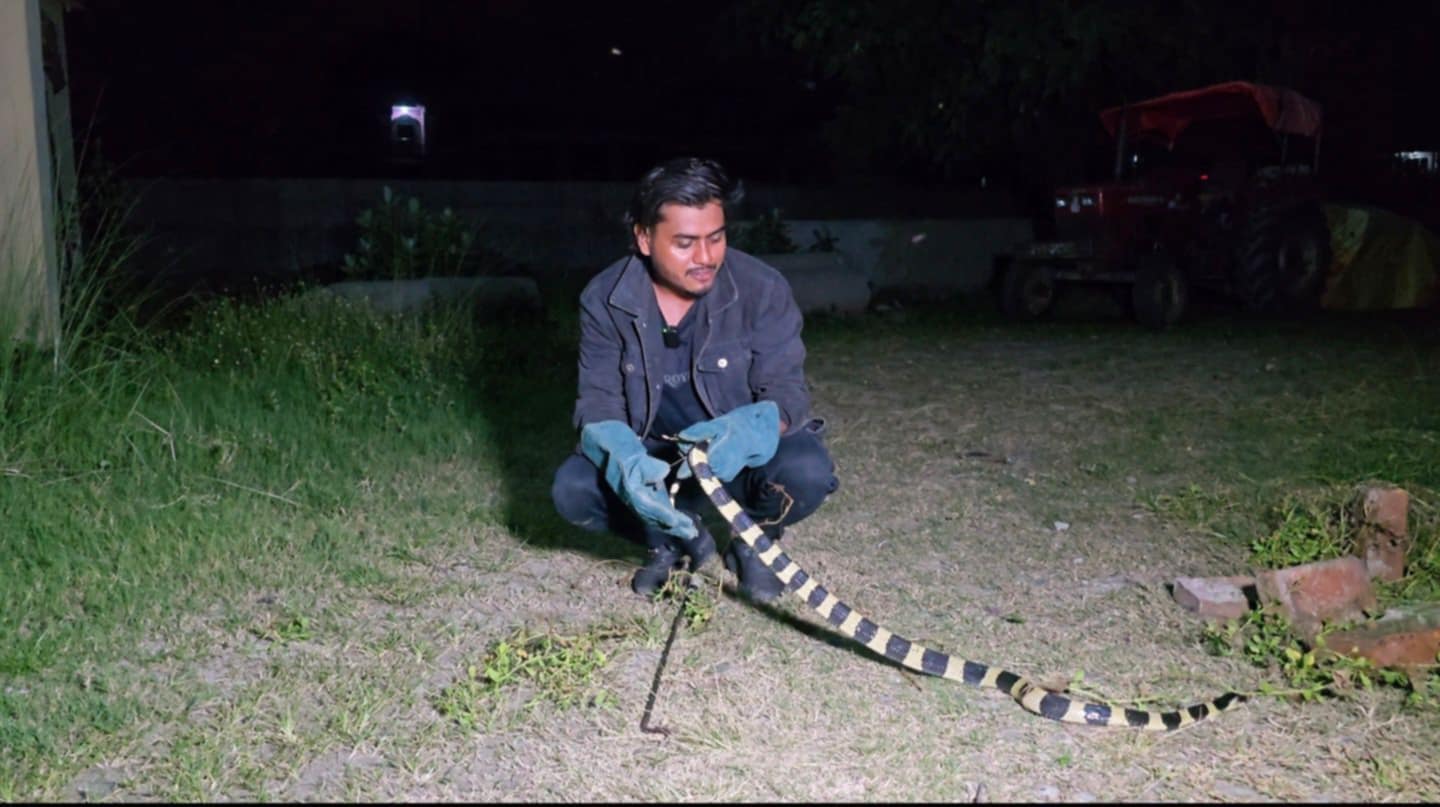
The job is risky.
“Sometimes, a cobra leaps toward your face. Other times, a krait hides silently in a bag. Once, a snake almost bit me while I thought it was asleep,” he says.
Initially, his family was worried. “Why do this dangerous work? Get a real job,” they would urge. But as he stuck to his mission, they began to understand—and now proudly call him ‘Snake Doctor.’ In his community, he’s a respected figure.
“I may not earn money, but I’ve earned trust. That’s my real wealth,” says Bhandari.
While some view his work as a hobby or profession, for Bhandari, it’s a calling. “I don’t get paid by any organization or government,” he says. “I’m a volunteer. Preserving harmony between humans and snakes is my duty.”
He dreams of establishing a proper rescue and education center someday. “We have a small team now,” he says. “But to do more, we need government or private sector support.”
His message is simple and powerful: “Killing snakes won’t keep us safe. Understanding them will.”





Comment