




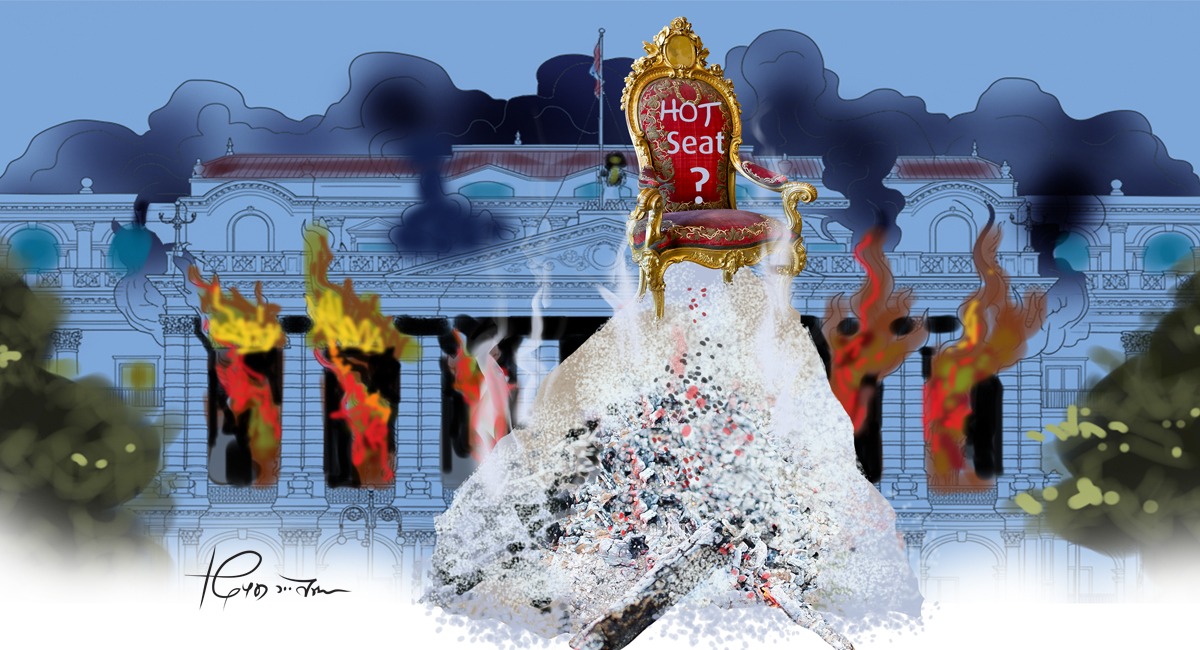
KATHMANDU: Historians are likely to mark September 9 as a black day in Nepal’s modern political history, a moment when anger at entrenched corruption exploded into flames that consumed parts of the nation’s most important institutions.
What was billed as a youth-led revolt against decades of graft and political stagnation has instead left the country reeling, both materially and morally.
The protests, largely spearheaded by Nepal’s so-called Gen Z activists, were initially framed as a fight to uproot corruption and demand accountability from a political class widely seen as self-serving. But in the course of a few days, anger boiled over into violence. Crowds stormed parliament, the Supreme Court, and Singha Durbar, the executive hub, leaving government buildings in ruins.
Observers note the symbolic weight of these acts. Singha Durbar, built under Prime Minister Chandra Shumsher in the early 20th century, carries with it not only architectural significance but also historical memory, one constructed with nationwide contributions, even down to villagers’ food grains. Its destruction has been described as the burning of heritage as much as of government.
Many see echoes of Nepal’s violent past. From the Kot Massacre in the 19th century to the Maoist insurgency in the early 2000s, power struggles have often scarred the nation. This new revolt, though led by a digital generation armed with drones and smartphones, seems to have repeated familiar patterns of rage without a roadmap for reconstruction.
“The youth spilled their blood on the streets, but what comes next?” one analyst asked. “Revolution can topple, but can it build?”
Critics say the movement risks being hijacked by opportunistic figures, pointing to the sudden prominence of controversial businessman Durga Prasai, who has sought to position himself as a leader of the uprising. Comparisons have already been drawn between his rise and past populist figures such as KP Sharma Oli, raising concerns that new faces may simply recycle old politics.
Meanwhile, Nepal’s traditional parties, Nepali Congress, UML, and Maoists, appear weakened but not dismantled. Political insiders liken them to banyan trees covered in creepers: with the right conditions, they may wither, but they may also outlast their challengers.
The damage is immense. Government officials estimate the cost of reconstruction could run into billions, with losses surpassing even the decade-long Maoist conflict. Computer systems storing vital records were destroyed, leaving newborns without birth certificates, the deceased without death registrations, and elderly citizens without access to allowances. Daily governance has been paralyzed.
At the heart of the protests lies a generation shaped by economic migration and inequality. Many of the young demonstrators grew up watching parents leave for Gulf states or Malaysia as laborers, while at home they saw their country governed by leaders trading power in cycles of corruption. For them, frustration has long been personal — unemployment, lack of opportunity, and the burden of systemic rot.
Yet the question remains whether this raw anger can transform into constructive politics. Analysts warn that without a clear vision for governance, the movement could end in disillusionment or worse, manipulation.
As the smoke clears from Singha Durbar’s rubble, Nepal faces a daunting dual challenge: repairing the physical scars of the uprising and restoring faith in the nation’s democratic institutions.





Comment