




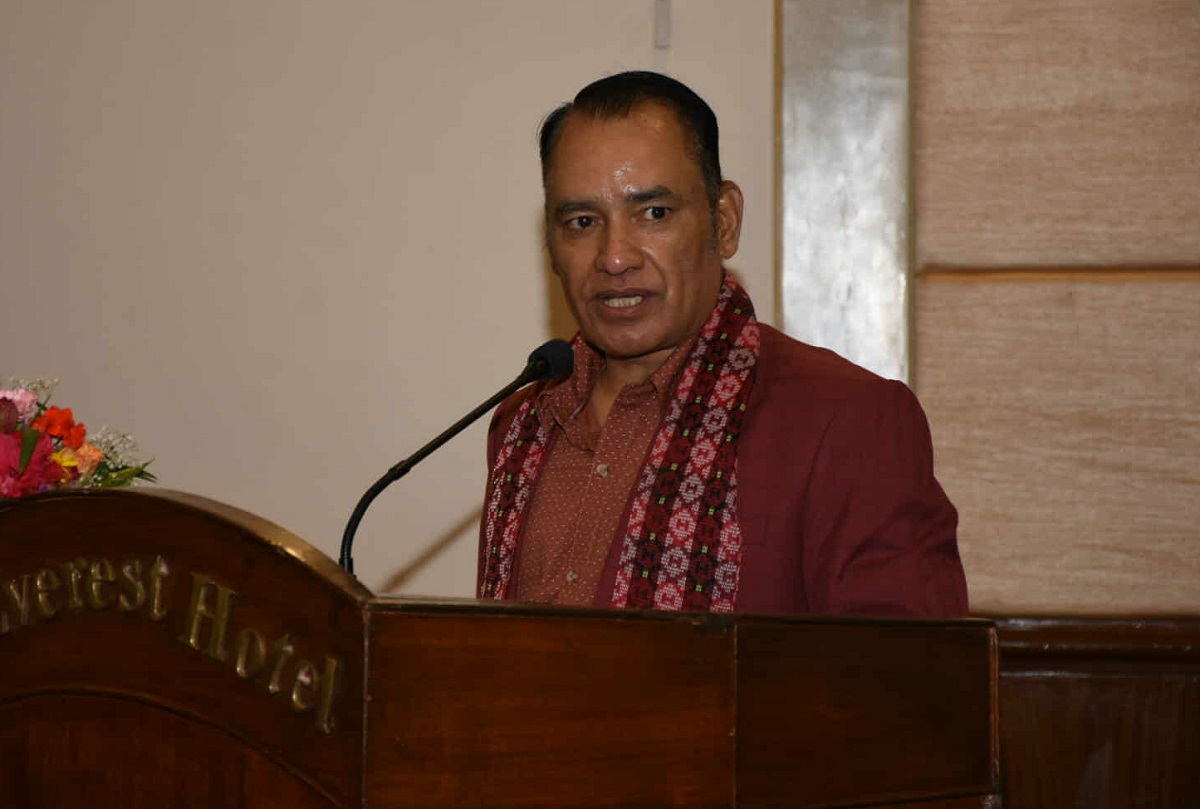
KATHMANDU: Former Executive Director of Nepal Rastra Bank (NRB), Nar Bahadur Thapa, has raised concerns over the central bank’s approach to formulating the upcoming monetary policy, stating that it appears to be rushed and lacking in sufficient public consultation.
Speaking at an interaction on budget and monetary policy coordination, organized by the Nepal Forum of Economic Journalists in collaboration with NADA Automobiles Association of Nepal, Thapa said the monetary policy should be crafted with a long-term vision and not in a hurried, “ambush-style” manner.
“Monetary policy should come only after extensive discussion, especially considering its long-term impacts on the economy,” Thapa said during his presentation.
He also called on the NRB to reverse the recent revision of the loan-to-value (LTV) ratio for electric vehicles (EVs), which had been tightened in the mid-term review of the monetary policy.
Thapa argued that since Nepal’s balance of payments remains stable, a more relaxed approach to auto loans would not adversely affect the economy.
Thapa noted that automobile dealers were dissatisfied with the LTV revision and expressed significant interest in how the upcoming monetary policy would address their concerns.
“There are signs that the policy will be released earlier than usual, even while stakeholder consultations are still ongoing,” he said.
He further added that while Nepal has imposed high taxes on vehicles, it hasn’t necessarily driven inflation—but it has made vehicles significantly more expensive compared to neighboring countries due to elevated costs.
Highlighting the growth of Nepal’s automotive sector, Thapa noted that vehicle assembly and spare parts manufacturing industries are gradually being established within the country.
As the release of the monetary policy approaches, Thapa’s comments reflect a growing call for greater transparency, inclusiveness, and industry-specific considerations in its formulation.




Comment