




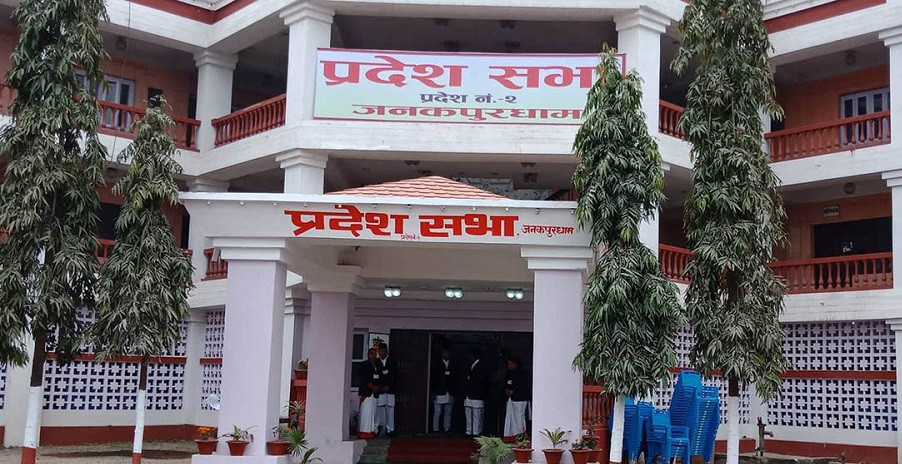
JANAKPURDHAM: Politics from Madhesh Province to the federal capital has been thrown into turmoil after Province Chief Sumitra Subedi Bhandari appointed CPN-UML Parliamentary Party leader Saroj Kumar Yadav as Chief Minister early Monday morning from a hotel in Bardibas, Mahottari.
Appointed as Province Chief during KP Sharma Oli’s premiership, Bhandari bypassed the Nepali Congress-led alliance and swore in Yadav as Chief Minister under Article 168 (3) of the Constitution from a Bardibas hotel.
The move has triggered sharp political reactions across party lines. Former Chief Minister Jitendra Sonal, who resigned only a day earlier, accused Bhandari of betraying the people of Madhesh by secretly appointing Yadav while pretending to leave for medical treatment in Kathmandu.
The Nepali Congress, which had been preparing to form a new government with the Maoist Centre and Madhesh-based parties after breaking away from the UML alliance, has also expressed outrage.
Congress General Secretary Bishwa Prakash Sharma took to social media platform X, calling the development a tragedy for federal politics.
“What has happened in Madhesh Province is deeply unfortunate. This ‘anti-politics’ will only fuel public frustration toward federalism,” Sharma wrote. “Even when a government could have been formed under Article 168 (2), this farce was staged. We expect the judiciary to correct it.”
The Rastriya Prajatantra Party (RPP) has also opposed Madhesh Province Chief Sumitra Subedi Bhandari’s controversial decision to appoint CPN-UML leader Saroj Kumar Yadav as Chief Minister from a hotel in Bardibas.
RPP Chairman Rajendra Prasad Lingden said the party’s attention had been drawn to its participation in the newly formed provincial government, calling it a serious violation of party discipline. In a statement posted on social media, Lingden directed all RPP members involved in the Madhesh government to withdraw immediately, warning of action if they failed to comply.
While the UML has defended the Province Chief’s move as constitutionally valid, the Congress and Maoist Centre have labeled it a political “drama.” Analysts say the controversy is likely to reach the courts soon, setting up a major constitutional test for provincial governance.




Comment