




KATHMANDU: The Nepali Congress (NC) and CPN-UML are preparing to approach the court, demanding the restoration of the dissolved House of Representatives (HoR) and questioning the legitimacy of the current government.
In the aftermath of the Gen-Z anti-corruption protests, leaders of major parties—including the Nepali Congress and the CPN-UML—have been reluctant to engage in serious internal discussion about the moral conduct and accountability of their leadership.
Instead, a growing reluctance toward elections, and resistance to demands for leadership change and generational transfer, appears to dominate the political atmosphere.
Why is the Nepali Congress, which once stood firm for democracy under Girija Prasad Koirala, now hesitant to face the electorate? Why can’t the party embrace elections, even when defeat seems imminent? Is the party preparing to contest under the same old leadership? Will the Nepali Congress and UML go to court together to seek parliamentary reinstatement?
What should the new government do to ensure fair and timely elections? Will the Congress convene a special general convention? How prepared is the party to face elections alongside the emerging younger generation?
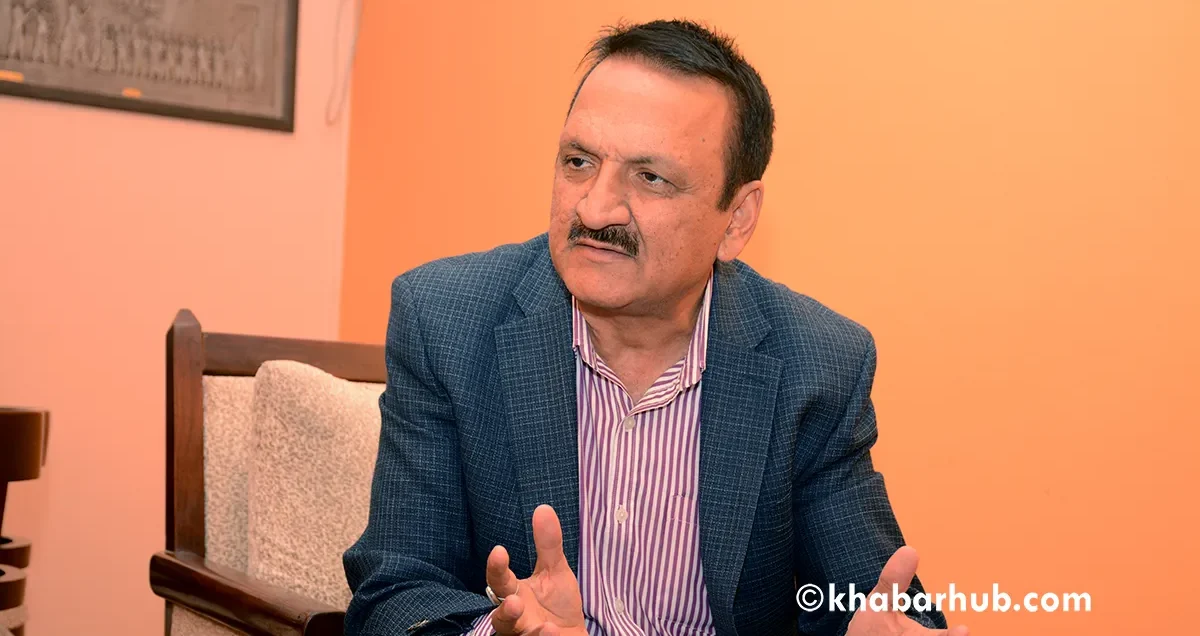
Focusing on these issues, here is an edited excerpt from a conversation with Dr. Prakash Sharan Mahat, Nepali Congress spokesperson and central committee member.
Will the Nepali Congress participate in the elections scheduled for March 5, 2026?
The Nepali Congress is focused on the elections, but we are not sure whether the government is genuinely preparing for them. Looting took place, yet the government directed not to take action. The police even released those who were arrested. We don’t know what those who escaped from prison are doing now. First, peace and security must be restored. Moreover, this government itself is unconstitutional. So was the dissolution of the Parliament.
We are seriously considering starting legal proceedings to restore the House of Representatives. If we want to create a real environment for elections, the legitimacy of political parties must be acknowledged. Right now, the government has not built any credible foundation for elections.
Gen-Z is saying this is not the way forward and is pushing for direct elections. The situation is uncertain. Therefore, elections must be held to protect the constitution and democracy.
So, is the Nepali Congress and UML preparing to go to court instead of focusing solely on elections?
Yes, because it’s necessary to safeguard the constitution. Some discussions are happening within both parties, though no formal decision has been made. But that option is still alive. The country is heading toward instability. We don’t oppose a new electoral mandate—but the state must first ensure a peaceful environment.
The rule of law must be maintained. Parliament was not to blame for the current crisis. Even Gen-Z has said that chaos was not their intention. Now, even parliamentary party whips are putting pressure. Many agree that legal avenues should be pursued.
What should the new government do to bring order and hold timely elections?
There has been significant looting and destruction of public property. Those responsible must be brought to justice. Should the police release offenders with clear evidence, and the government do nothing? That’s unacceptable. Has the government even promised action against those involved in arson and looting? If not, all the talk about elections is meaningless. Investigations are delayed and should be expedited.
But some point out that top leaders—including then PM KP Sharma Oli and Home Minister Ramesh Lekhak—should also be held accountable. What’s your response?
If there’s evidence, then yes—action must be taken. That’s why a commission was formed. It has been alleged that the police were directly involved in the shootings on September 9 and in the killing of protestors.
Those responsible must be investigated. Whether the Prime Minister or Home Minister gave the order, or whether there were lapses in command, it all must come to light. Investigations must be evidence-based.
If Gen-Z leaders or anyone else is found guilty, they too should face consequences. No one should be above the law. The movement itself may not be entirely justified. Misuse of power—by anyone—must not go unpunished.
So you’re saying that both government actors and Gen-G leaders should be investigated, but only based on evidence?
Exactly. This isn’t about targeting everyone. But if someone played a role in the chaos of the 23rd, they should be held accountable—based on credible findings. That’s what the commission is for. It must clearly state who gave orders—whether the CDO, the Prime Minister, or anyone else. Without concrete evidence, how can action be taken?
In a system governed by law, procedures must be followed. It’s not about labeling one party guilty or corrupt. There must be mechanisms for impartial investigation and good governance. We can’t randomly assign blame, but organized chaos cannot be accepted either.
What about the country’s worsening economic condition? Shouldn’t the leadership take responsibility?
Yes, the economic crisis is worsening. But the blame can’t be placed on political parties alone. The youth may be frustrated—and rightly so—but tearing everything down without offering alternatives is dangerous.
We in the party have assessed our shortcomings and are taking lessons. That doesn’t mean the entire system is broken. That mindset—believing nothing can work—is far more dangerous.
Is there no problem for the party to go to elections with the same old faces?
Whether someone wants change or not doesn’t matter—it’s ultimately up to the people. If voters are dissatisfied with the leadership, they will express it through the ballot. If they believe the existing leaders are no longer effective, they will elect someone new. The authority to decide lies with the people, not with any individual or faction within the party.
What’s happening now is an attempt to divide leadership along age lines. That’s not a healthy or democratic approach. Age should not be a disqualifying factor. The country belongs to everyone—young and old alike.
At different times, both generations have had their turn. Leadership should be based on necessity and capability, not age. If the people are unhappy with the current leadership, they will naturally seek change.
But leaders within the Congress are calling for a leadership change, aren’t they?
Yes, but let’s be honest—some of those voices are opportunistic. There are people who support the leadership when things are going well, but when the party faces a crisis, they either retreat or try to take advantage of the situation.
This tendency—to shy away from responsibility when it’s difficult but step forward when it’s convenient—is deeply problematic. Leadership should be about consistency, not convenience.
Of course, we must review our weaknesses. We should reflect on our mistakes, assess where we went wrong, and ask whether we have the right leadership in place.
I encourage all leaders to evolve with time. If there’s a problem within the party, it should be discussed constructively. But targeting leadership opportunistically when things don’t go one’s way is not the right approach.
So will Sher Bahadur Deuba lead the party into the next election?
He has already made it clear that he will not continue as party president after the next general convention. Some people are going around claiming that he’s signed on for the special convention.
That’s unnecessary and misleading. We conduct our regular conventions on schedule. Once that happens, Sher Bahadur Deuba will step down as he has promised. So, what’s the point of demanding a special general convention right now?
Will the party go to elections without holding a special general convention or by appointing a caretaker in place of Deuba?
Our party’s four-year term hasn’t expired yet. The current term ends only after December, so technically and legally, a special general convention is not possible before then. Once the term ends, if a general convention still cannot be held, we must go down the path of dissolving the existing structure and forming a preparatory committee. That’s the constitutional route.
As for leadership, Sher Bahadur Deuba is not someone who clings to power and shoulders everything alone, like KP Oli. He believes in collective leadership and in delegating responsibility. Everyone must share the burden—not just him.
Those advocating for a special convention must ask: where will this so-called “new generation” come from? Gen-G can beat the drum, but leadership doesn’t emerge just by making noise. We are preparing to hold the regular general convention on a fast track.
After convening the Central Committee, we can move forward within two to three months. There’s no need for theatrics. We must respect party policy and not exploit moments of uncertainty for personal gain. In times of crisis, leadership must be about unity and responsibility—not opportunism.
What is the party’s next step?
The Central Committee meeting scheduled for later this week will make the final decision. But let me be clear: running a signature campaign to push a factional agenda only weakens the party. It leads to polarization, and that is not in the Congress Party’s interest. We need unity, not division.
Finally, won’t it be difficult for senior leaders to contest elections alongside a new generation of voters—essentially, the generation of your grandchildren?
The important thing is: we’ve seen what the youth can do. They’ve already shown leadership during recent by-elections. But elections aren’t won just by putting forward a young face. Victory requires unity, cooperation, and strength on the ground—and Congress remains strong at the grassroots level.
Yes, the new generation has expectations, and we welcome them. But rather than divide the party along generational lines, we must move forward together. We’ll go to the elections as a united force—bringing both experience and youth. That’s the way forward.




Comment